
Chinese Robotics Face Commercial Reality Check as Industry Debates Edge Computing and Cloud Synergy
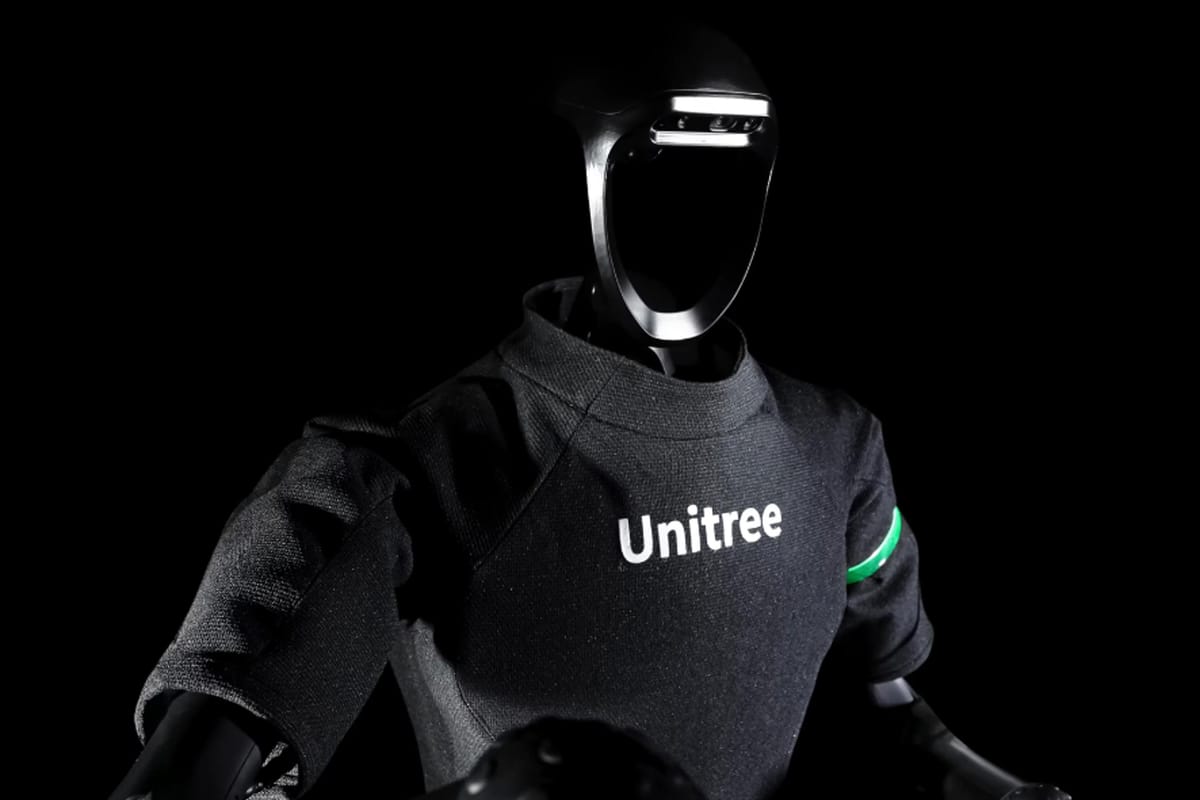
Chinese robotics developers are colliding with a severe commercial reality check in 2026, as plunging valuations force the sector to pivot from building viral laboratory prototypes to delivering AI-driven physical labor with immediate return on investment.
The shift in market appetite was starkly evident at the 26th China International Industry Fair, where industry executives exposed a widening gap between algorithmic optimism and lagging industrial adoption. Investors are aggressively demanding sustainable unit economics and zero-modification deployment frameworks over theoretical potential.
This sentiment pivot has triggered a harsh repricing across the ecosystem. Leading developer Unitree has seen its valuation plunge more than 50% from its peak, penalized by a stark disconnect in its revenue mix. According to the company's first-half 2026 financial report, research and education still account for a dominant 73.6% of sales, while commercial consumer applications make up 17.39%. Genuine industrial manufacturing, inspection, and logistics scenarios—the promised primary markets for embodied intelligence—stagnate at merely 9%.
Falling Valuations Accelerate Search for Commercial Viability
Despite dismal industrial adoption rates, Unitree founder Wang Xingxing projects that humanoids will enter the physical workforce within "one to two years," banking on the exponential iteration of large language models. With the integration of GPT-6 and the anticipated release of GPT-7, developers are testing foundation models that dramatically lower the barrier for embodied intelligence tasks.
However, underlying architectural bottlenecks dictate the pace of commercialization. Wang argues for a cloud-heavy approach, pushing complex decision-making off the robot's physical frame to mitigate battery drain, spatial constraints, and thermal overload. For Unitree, edge computing remains strictly confined to real-time motion control. Analysts note this strategy reflects a deeper vulnerability: relying on third-party cloud infrastructure often compensates for a deficiency in proprietary foundational AI capabilities.
Edge Architectures Challenge Cloud Dominance
Sharpa (Sharpa) co-founder Xiang Shaoqing argues that physical reality dictates a different compute architecture. Because dynamic physical environments cannot tolerate network latency, critical processing must occur on the edge. While acknowledging that current edge compute capacities remain insufficient for complex reasoning—necessitating a hybrid model for the next three to five years—Xiang projects that mass deployment will eventually choke cloud bandwidth.
This structural bottleneck will force the industry to migrate core computing back to the edge within the next decade. Alibaba Cloud founder Wang Jian echoed this trajectory, noting that the robotics compute debate mirrors the historical evolution of personal computing, which ultimately stabilized on a cloud-edge synergy to balance latency and processing power.
Retail Deployments Expose Immediate Revenue Streams
While humanoid developers chase factory floor dominance, the most viable near-term commercialization is materializing in structured retail environments. Capitalizing on enterprise demands for uninterrupted operations, Sharpa deployed an autonomous robotics system in a Dairy Queen store in Shanghai on August 28, 2026.
The deployment signals a critical shift from R&D metrics to unit economics. Operating continuously for 12 hours daily without human intervention, the system executes a 55-step production process using globally standardized commercial equipment. Crucially, the deployment required zero environmental modification—a fundamental prerequisite for mass scalability.
Sharpa plans to leverage this zero-modification framework to deploy 30,000 units across the catering, retail, and hospitality sectors. This strategy directly addresses the primary anxiety of enterprise clients: the ability to train and deploy robots using localized operational data without requiring in-house AI expertise. The market verdict in 2026 is clear: capital is flowing exclusively to developers who can seamlessly integrate hybrid compute architectures to deliver measurable utility in unmodified commercial settings.