
China’s Embodied AI Startup X Square Robot Hits RMB 20B Valuation on “Brain-First” Bet
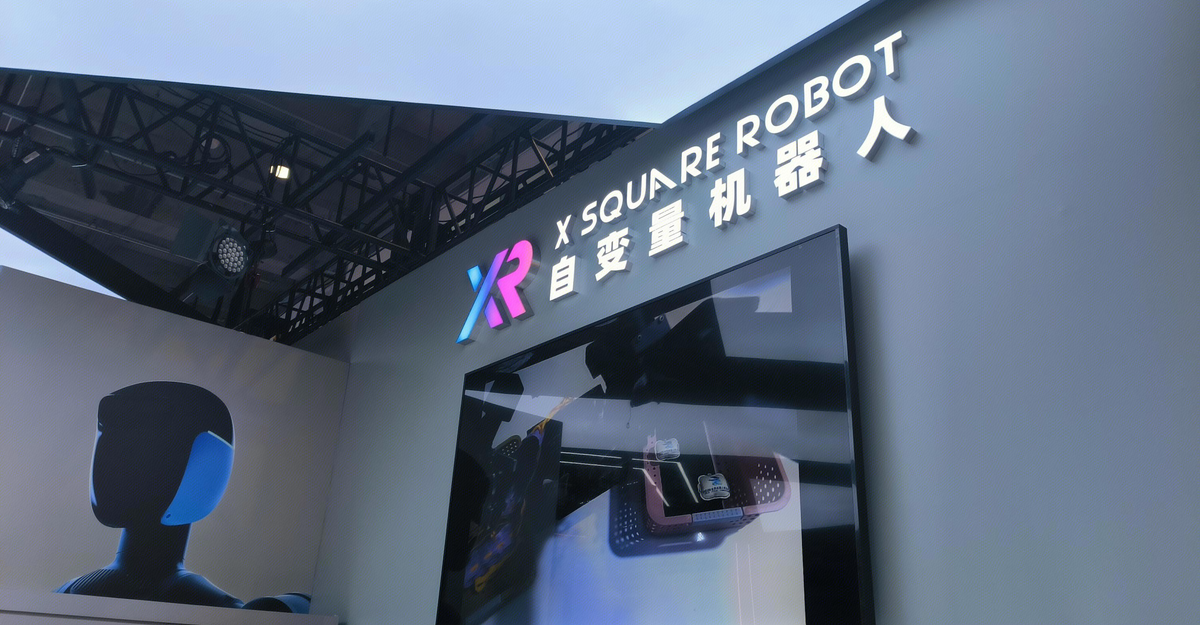
Completing three undisclosed funding rounds in just two months, X Square Robot has crossed a RMB 20 billion (US$2.78 billion) post-money valuation — making it the first and only embodied intelligence company in the Guangdong-Hong Kong-Macao Greater Bay Area to clear that threshold, and crystallizing a decisive industry shift: capital is migrating from robot hardware to the AI models that tell robots what to do.
The milestone, confirmed by Chinese tech publication ifanr on June 29, 2026, caps a remarkable 60-day sprint during which the roughly two-and-a-half-year-old Shenzhen-based startup quietly closed its Series B+, B++, and C rounds in succession — all fully settled. The pace itself is unremarkable in a sector where China's embodied intelligence companies disclosed more than 50 financing events in the first quarter of 2026 alone, a year-on-year surge of nearly 60% and the hottest quarter on record. What is remarkable is the composition of the cap table.
X Square Robot now holds a distinction no other domestic embodied AI company can claim: it is the only Chinese startup to have received lead investments from four separate internet majors across consecutive rounds. Meituan led its Series A, Alibaba led the A+, ByteDance led the A++, and Xiaomi — through its strategic investment arm — led the Series B announced in late April 2026, when the company's valuation had already eclipsed RMB 10 billion (US$1.39 billion). Xiaomi's arm has since reinvested across three rounds total, an unusually concentrated conviction bet from a single strategic backer.
State Capital Enters, Redefining the Risk Profile
The B+ through C round syndicate represents a structural evolution beyond the internet-giant playbook. National-level funds now anchor the register: the National Artificial Intelligence Industry Investment Fund, State Development & Investment Corp Innovation, China Insurance Investment, Shenzhen Investment Holdings, Jiangsu Province High-Tech Investment, and Bao'an District Guidance Fund all participated. Existing state-backed shareholders Guokai Kechuang and Guoke Investment doubled down. China Mobile invested across two consecutive rounds.
The entry of sovereign and quasi-sovereign capital fundamentally alters how the market should read X Square Robot's valuation. State funds in China's technology sector typically signal strategic national priority rather than pure return-seeking — in this case, embodied intelligence has been explicitly designated a core AI application layer by Beijing's industrial policy apparatus. Their co-investment alongside commercial venture capital effectively provides a de-risking floor that pure VC money cannot.
Industrial Capital Bets on Supply-Chain Integration, Not Just Returns
Alongside state funds, a cohort of industrial strategics participated in the recent rounds, and their motivations are operationally concrete. Honor, Chery Automobile, Shenyang Automobile, 58 Group, and Hongxin Electronics represent consumer electronics, automotive OEMs, and local services — three verticals where embodied robots have the most immediate deployment runway.
For 58 Group, the investment thesis maps directly onto its 58 Daojia home-services platform: a robot capable of performing domestic tasks. For Chery and Shenyang Automobile, the use case is factory-floor deployment on assembly lines. These are not passive financial positions. They represent forward integration agreements dressed as equity checks — a pattern that, if it translates into commercial contracts, would give X Square Robot a revenue pipeline that pure model companies typically lack at this stage.
Top-tier financial VCs complete the syndicate: Sequoia China, IDG Capital, Source Code Capital, Orchid Asia, CICC Capital, and Yida Capital.
Hardware Ceiling Forces Capital to Reprice the "Brain" Premium
The valuation arithmetic only makes sense against the backdrop of a structural bottleneck shift that has become the dominant consensus in China's robotics investment community in 2026. Robot hardware — actuators, sensors, structural frames — has commoditized rapidly. The performance gap between leading and lagging hardware vendors has compressed to the point where differentiation on the physical body alone is no longer a defensible moat.
The new scarcity is cognitive: which model can translate perception into correct action across the widest range of unstructured real-world tasks? That question has redirected capital from broad hardware bets to a concentrated wager on a handful of model leaders. By mid-2026, only a small number of companies have crossed the RMB 10 billion valuation threshold — Unitree Robotics, Galaxy General Robot, Zhiyuan Robot, Xinghaitu, and now X Square Robot.
The contrast between X Square Robot and Unitree is analytically instructive. Unitree is a hardware-first operator: it shipped humanoid and quadruped robots at scale in 2025, generates real cash flow, and cleared its IPO review in June 2026 — the closest among its peers to a public market listing. Its valuation rests on auditable unit economics. X Square Robot, by contrast, has not yet achieved comparable commercial-scale shipments. Placing both companies in the same valuation tier is a deliberate statement by investors that the market is pricing future cognitive generalization, not current revenue.
Proprietary Model Architecture Anchors the Technology Thesis
The investment case for X Square Robot's "brain-first" positioning is grounded in a specific technical approach that differentiates it from mainstream Vision-Language-Action (VLA) model assemblers. The company was founded by CEO Wang Qian, a Tsinghua University graduate who was among the early global researchers on neural network attention mechanisms and conducted embodied learning research at a top U.S. robotics laboratory during his doctoral studies. CTO Wang Hao, a Peking University computational physics PhD, previously led the Fengshenbang large model team at the IDEA Research Institute.
In April 2026, X Square Robot released WALL-B, which it describes as the world's first embodied large model built on a "World Unified Model (WUM)" architecture — jointly training vision, language, action, and physical prediction within a single network from scratch, rather than stitching together pre-trained modules as most VLA approaches do. The company has also released WALL-WM, a world model it claims is the first capable of "event-level" prediction, using event-based rather than fixed-interval frame alignment — a design choice the company says produces superior benchmark scores against comparable models including DreamZero.
Its open-source release WALL-OSS-0.5 reported that across 17 real-robot tasks, four tasks achieved autonomous completion rates above 80% using pre-training alone, without task-specific fine-tuning — outperforming mainstream open-source models including Pi 0.5 on manipulation and reasoning benchmarks, according to the company's own disclosures.
Data Pipeline Efficiency Becomes the Compounding Advantage
Beyond model architecture, X Square Robot has invested heavily in proprietary data infrastructure — a self-built data collection factory and a data pipeline it calls XR Zero, which the company claims reduces training data acquisition costs to one-twentieth of conventional methods. In a domain where real-world interaction data remains the primary constraint on model generalization, pipeline efficiency directly determines iteration velocity. This is not a glamorous capability, but it may prove to be the most durable competitive advantage in the sector.
The convergence of four distinct capital classes — internet strategics, national funds, industrial corporates, and top-tier VCs — around a single pre-revenue model company in a 60-day window is a signal that is difficult to dismiss as momentum-driven hype alone. Each investor type applies a different analytical lens and carries different return horizons. That all four arrived at the same conclusion, at the same time, suggests a shared conviction that the embodied intelligence software layer is approaching an inflection point — and that X Square Robot currently holds the strongest claim to leading it.
Related Coverage: