
China’s EREV Shakeout Begins: Li Auto Slips as Xiaomi Bets Against the Trend
The segment that turbocharged China's new-energy vehicle revolution is now shrinking, and the industry's strategic responses are diverging sharply — with profound implications for investors tracking the country's RMB 4 trillion (US$556 billion) auto market.
Wholesale volumes of extended-range electric vehicles (EREVs) in China fell 13.1% year-on-year in the first half of 2026, reaching just 504,000 units, according to data from the China Passenger Car Association. June posted the steepest single-month decline in five years, a jarring reversal for a powertrain technology that averaged more than 70% annual growth for four consecutive years between 2021 and 2024. The inflection point arrived in July 2025, when EREV volumes dropped 11.4% year-on-year even as China's broader new-energy vehicle market expanded 12% over the same period — a divergence that now looks structural rather than cyclical.
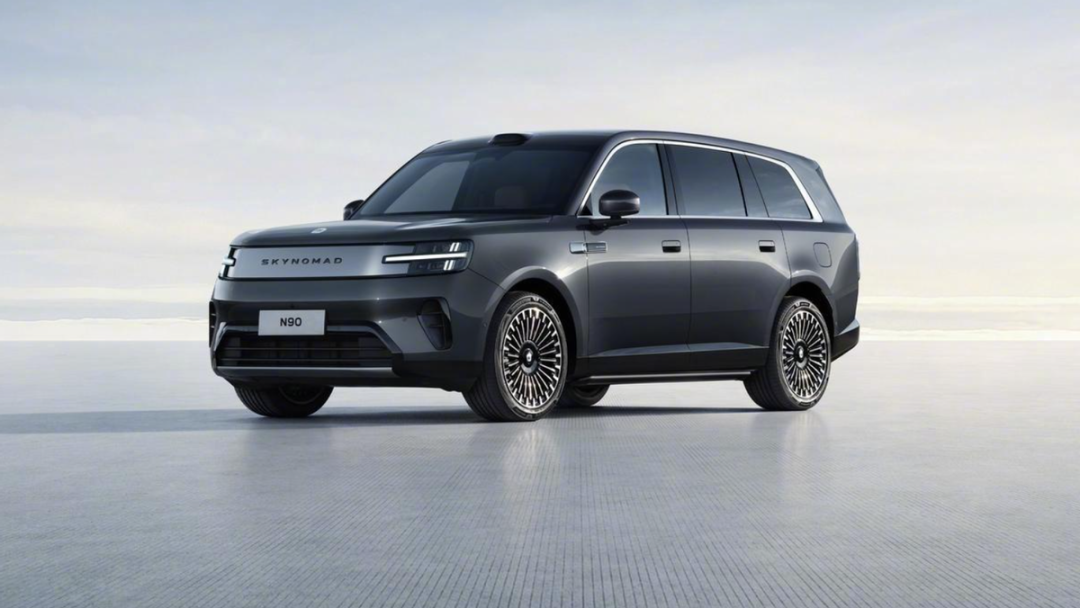
Against this backdrop, Xiaomi chose July 2026 to launch SkyNomad, a new brand dedicated exclusively to extended-range SUVs. The timing reads as either a contrarian masterstroke or a costly miscalculation, and the answer hinges entirely on whether the EREV market is experiencing a temporary reset or a terminal decline.
Charging Infrastructure Erodes EREV's Core Value Proposition
The original case for extended-range architecture rested on a single, durable consumer pain point: range anxiety. Li Auto founder Li Xiang built his company on that insight when he launched the Li ONE in 2019, and the market validated him spectacularly. Annual EREV sales climbed from roughly 30,000 units in 2020 to more than 1.23 million in 2025, capturing over 10% of China's total new-energy vehicle market at peak.
That moat is now being filled in from multiple directions simultaneously.
China's national charging infrastructure reached 22.497 million connectors as of end-May 2026, up 44.9% year-on-year, with highway service area coverage exceeding 98%, per the National Charging Facility Monitoring Service Platform. Simultaneously, 800-volt high-voltage fast-charging and 4C/5C high-rate battery packs have achieved mass-market penetration. BYD (比亚迪) has demonstrated megawatt flash-charging capable of delivering 400 kilometers of range in five minutes — functionally equivalent to a petrol refill. When the infrastructure gap closes, the EREV premium justification collapses.
Cost dynamics are shifting with equal force. Lithium carbonate prices have retreated sharply from 2022 peaks, pulling average battery pack costs down and compressing the price differential between comparable EREV and battery-electric vehicle (BEV) models in the critical RMB 300,000 (US$41,667) price band. Owners also bear the dual maintenance burden of both combustion and electric drivetrains — a cost friction that becomes harder to rationalize as BEV total cost of ownership improves.
Policy is now adding a third headwind. Beginning in 2026, EREV models must achieve a minimum 100 kilometers of pure-electric range to qualify for China's vehicle purchase tax exemption, up from the previous 43-kilometer threshold. Vehicles with smaller battery packs — historically a defining EREV design choice — face a material erosion of their price competitiveness.
Li Auto's Stumble Signals a Structural Reckoning for EREV Pioneers
No data point better encapsulates the sector's distress than Li Auto's first-half 2026 delivery figures: 193,500 units, down 5.1% year-on-year, representing just 39.7% of the company's full-year target. For the company that effectively invented the modern EREV category in China, this is not a quarterly blip — it is a verdict on the limits of single-powertrain dependency.
Li Auto's pivot to BEV has been turbulent. The Li MEGA, launched in March 2024 as its first pure-electric product, failed to gain commercial traction due to polarizing exterior design, disrupting the company's BEV roadmap for over a year. The subsequent Li i8, positioned as a cross-category "off-road-sedan-MPV" hybrid concept, similarly underperformed. The Li i6, by contrast, has delivered consecutive monthly volumes exceeding 20,000 units since March 2026, now accounting for approximately two-thirds of total Li Auto deliveries — but it wins on price competitiveness rather than the premium brand equity Li Auto has cultivated. That tension defines the company's strategic dilemma heading into the second half.
Leapcars, which adopted a "BEV-plus-EREV" dual-powertrain strategy in 2023, offers a more instructive case study. The company sold close to 600,000 vehicles in 2025, becoming the top-selling new-force brand by volume — yet founder Zhu Jiangming confirmed in November 2025 that EREVs accounted for only 20% of that total. Leapcars used EREV to open price-sensitive RMB 150,000–200,000 (US$20,833–27,778) market segments, then consolidated its position with BEV products. Management has consistently framed EREV as transitional, not terminal.
AITO Captures 30% EREV Market Share, Then Pivots Toward BEV
The most striking competitive data point in the EREV segment belongs not to Li Auto but to AITO, the brand co-developed by Seres Group and Huawei. In Q1 2026, AITO held three of the top four positions in the China Automotive Data Research extended-range and hybrid sales rankings, with four models generating combined sales of approximately 40,000 units — equivalent to 30% of the entire EREV market's Q1 volume of 204,000 units.
Huawei's brand ecosystem, HarmonyOS integration, and retail network provide AITO with structural advantages that competitors cannot replicate through hardware alone. Yet even AITO is repositioning: Seres President He Li has stated that the share of AITO customers choosing pure-electric driving has increased significantly in 2026, with pure-electric mileage now exceeding 70% of total kilometers driven across the fleet. The EREV winners are quietly becoming BEV companies.
New Entrants Redefine EREV as a Technology Platform, Not a Stopgap
The market contraction has not deterred a second wave of entrants — but their strategic logic differs fundamentally from the pioneers.
Xiaomi's SkyNomad brand targets the mid-to-large SUV segment, and the company's competitive positioning will almost certainly center on its established strengths in autonomous driving software and the "human-car-home" IoT ecosystem rather than powertrain technology per se. For Xiaomi, EREV is an entry vehicle into the premium SUV category where its existing Mi ecosystem can generate differentiated value — a rationale that has little to do with range anxiety.
XPeng introduced its first EREV product, the X9 Super Extended-Range MPV, in 2025, built around its proprietary "Kunpeng Super Extended-Range" system combining a high-efficiency range extender, large-capacity battery, and 5C fast-charging. XPeng Chairman He Xiaopeng has framed next-generation EREV as a convergence play: the goal is to match BEV charging speeds and driving experience while retaining the psychological safety net of a fuel tank. The company reports that X9 EREV sales in northern Chinese cities grew more than 300% year-on-year, validating a niche strategy focused on cold-weather performance where BEV range degradation remains a genuine consumer concern.
Even joint-venture brands are entering the space. SAIC Volkswagen recorded 5,004 units of the ID. ERA 9X in May 2026, topping the large EREV SUV monthly sales chart — a data point that underscores how the technology is migrating from Chinese-brand innovation to mainstream adoption, even as overall volumes compress.
Impact Assessment: What the EREV Contraction Means for Investors
The EREV market's trajectory carries three investable implications. First, the powertrain premium that Li Auto and early EREV adopters extracted from the market is permanently impaired; margin recovery for EREV-dependent revenue models requires either successful BEV transition or defensible niche positioning. Second, battery suppliers and fast-charging infrastructure operators are structural beneficiaries regardless of which powertrain wins — the infrastructure buildout that is killing EREV's value proposition is itself a durable growth driver. Third, the EREV segment is bifurcating: commodity EREV products with small batteries and no ecosystem differentiation face accelerating obsolescence, while technology-intensive EREV platforms — particularly those integrating autonomous driving and smart-home connectivity — retain credible growth vectors in specific use cases including cold-climate markets and long-distance touring.
The era when any automaker could enter the EREV segment and capture volume through a simple formula of "smaller battery, lower price, no range anxiety" is over. What replaces it is a more demanding competitive environment where product precision, software capability, and ecosystem depth determine survival. For Li Auto, the next twelve months represent a critical test of whether its brand equity can survive a forced technology transition. For Xiaomi, the question is whether consumer electronics ecosystem loyalty translates into automotive purchasing decisions at scale. The market will render its verdict in the H2 2026 delivery data.
Related Coverage:
Xiaomi Launches SkyNomad Sub-Brand, Targeting Premium Family SUVs at Up to RMB 450,000