
China's EV Giants Pivot to Humanoid Robots as Auto Price Wars Erode Margins to Breaking Point
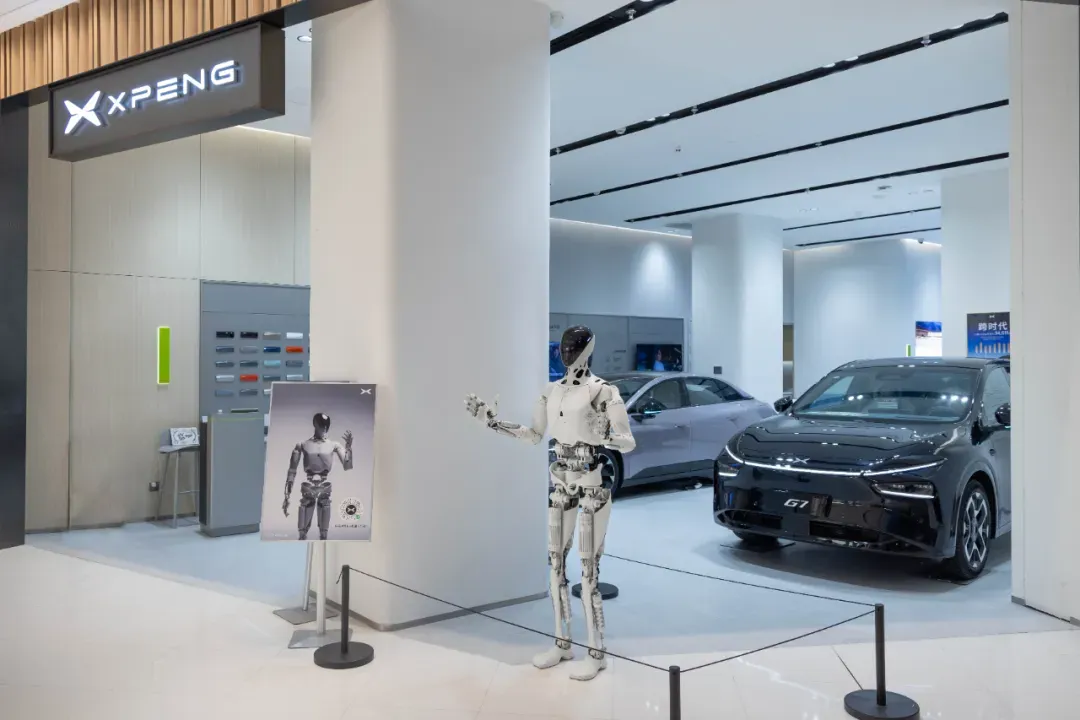
China's electric vehicle manufacturers are making an aggressive push into humanoid robotics, driven not merely by technological ambition but by a stark commercial imperative: years of brutal price competition have compressed industry profit margins below the 4.5% industrial average, forcing automakers to seek new revenue streams before their core business deteriorates further.
The strategic pivot is accelerating rapidly. XPeng Inc., BYD Company Limited, Chery Automobile, and Li Auto have each staked out concrete production timelines, with 2026 widely designated within the industry as the inaugural year of humanoid robot mass production. The announcements carry significant market implications, as they signal a potential reallocation of tens of billions of yuan in capital expenditure away from vehicle platforms and toward robotics infrastructure.
Yet the pivot carries substantial execution risk. Supply chain bottlenecks, unresolved unit economics, and the looming threat of overcapacity — flagged explicitly by China's National Development and Reform Commission — cast a long shadow over what is shaping up to be one of the most capital-intensive industrial bets in recent memory.
The Margin Crisis Forcing a Strategic Rethink
The commercial logic behind the EV-to-robotics pivot is rooted in a deteriorating competitive landscape that has left many manufacturers with few palatable options.
China's domestic new energy vehicle penetration rate surpassed 50.8% in 2025, marking a structural shift from a high-growth market to a mature, zero-sum competitive environment. Simultaneously, three overlapping cost pressures have squeezed margins across the industry.
Lithium carbonate prices surged approximately 140% in the second half of 2025, with average prices breaking above RMB 140,000 per metric ton (approximately US$19,300), effectively eliminating profitability in lower-end vehicle segments. Automotive-grade DRAM chip prices rose 180% over a three-month period, with premium DDR5 automotive chips seeing spot-market premiums of 300%. Inventory conditions have also deteriorated sharply: as of January 2026, China's passenger vehicle industry was sitting on 3.57 million units of unsold inventory, representing a 70-day supply cycle that is straining dealer networks.
The cumulative effect has been the compression of average industry profit margins below 4.5% — a threshold that places a significant portion of the industry in existential territory. For many automakers, the search for a second growth curve is no longer a strategic preference; it is a survival necessity.
Why Robotics Is the Logical Extension
The case for automakers entering humanoid robotics rests on a more substantive foundation than opportunism. According to Shen Yang, a professor at Tsinghua University, embodied intelligence systems rely on what he describes as VLA large models — architectures that fuse visual, language, and action capabilities. Intelligent vehicles, he argues, are a natural carrier of this logic: cameras and radar provide visual input, smart cabin systems handle language interaction, and drive-by-wire chassis execute physical actions.
Industry analysis further supports the thesis of technological adjacency. Core component overlap between humanoid robots and intelligent vehicles — spanning motors, electronic control units, battery systems, reducers, domain controllers, and high-performance computing platforms — is estimated at more than 60%.
Critically, automakers possess a structural advantage that pure-play robotics startups lack: captive deployment environments that enable a closed-loop cycle of development, deployment, and iteration. Xpeng's IRON robot is already operating on its P7+ production line, handling sorting, handling, and quality inspection tasks, while also serving in customer-facing roles at dealerships. BYD has announced plans to deploy 20,000 robots internally across its own factories by 2026. Tesla has gone further, reportedly curtailing production of several high-volume vehicle models to repurpose assembly lines for robot manufacturing, with plans to begin scaled production by end-2026 with an initial annual capacity target of 50,000 to 100,000 units.
The factory-as-laboratory model is central to the investment thesis: automotive plants provide the most natural deployment environment for humanoid robots, offering repetitive, structured tasks in welding, assembly, logistics, and inspection that allow for rapid capability iteration without the complexity of open-world deployment.
Production Timelines and the Race to Scale
The competitive landscape is crystallizing around a narrow window that industry participants broadly identify as 2026 to 2028 — the critical verification period for transitioning from prototype to mass production.
Xpeng has committed to initiating production of its next-generation IRON robot by end-2026, with an initial annual capacity target of 50,000 units. In his 2026 new year letter to employees, Xpeng Chairman He Xiaopeng described the IRON as targeting the distinction of being the world's first high-capability humanoid robot to achieve scaled production.
BYD has allocated capital at a scale that reflects its ambition: the company has earmarked funding in the hundreds of billions of yuan for AI and robotics, with a deployment trajectory of 2,000 units internally in 2025 scaling to 20,000 units in 2026. More disruptive to competitive dynamics is BYD's stated unit price target of RMB 200,000 (approximately US$27,600)—roughly one-third of the current industry average of US$100,000—a pricing posture that, if achieved, would materially lower adoption barriers and accelerate commoditization pressure on specialized robotics firms.
Chery is targeting tens-of-thousands-unit production scale in 2026 and global commercial scale by 2028. Li Auto has outlined a more conservative path: prototype validation in 2026, followed by preparation for tens-of-thousands-unit production in 2027.
Structural Barriers: Where the Ambition Meets Reality
Despite the momentum, significant structural challenges remain unresolved and could delay or derail the timelines being publicly communicated.
On the manufacturing side, humanoid robots depend on high-power-density motors, precision reducers, force-control sensors, and integrated joints — components that remain in small-batch, high-cost, low-yield production states. A single robot contains dozens of joints, and any failure in precision or reliability across the supply chain can halt production scaling entirely. Current assembly processes remain heavily manual, lacking the automated production lines and standardized manufacturing protocols that automotive-grade consistency demands.
The economics are equally challenging. The bill of materials for a high-capability humanoid robot remains in the hundreds of thousands of yuan, with core components accounting for more than 60% of total cost. Even with automotive supply chain leverage, costs remain far above the threshold required for broad industrial or consumer adoption. Operational performance compounds the problem: current humanoid robots achieve roughly 30% of human labor productivity while generating costs across procurement, deployment, maintenance, and software iteration that push payback periods beyond five years — in some cases exceeding the operational lifespan of the equipment itself.
Business model clarity remains elusive. Direct product sales face high price points and limited volume; leasing and subscription models are characterized by volatile pricing and margin erosion from maintenance costs; customized integration projects resist replication at scale; and consumer-facing applications remain non-essential purchases without the demand characteristics needed to support stable cash flows.
Overcapacity Risk and the Coming Shakeout
Perhaps the most significant systemic risk is one that mirrors the dynamics that destabilized the EV industry itself: overcapacity driven by competitive overinvestment.
In November 2025, China's National Development and Reform Commission issued an explicit warning against the clustering of homogeneous products and low-quality redundant capacity expansion, calling on the industry to shift from volume growth to quality improvement. The regulatory signal reflects a broader concern that the robotics sector is replicating the investment patterns that led to the EV industry's current margin crisis.
Supply chain data from Goldman Sachs indicates that annualized capacity plans among domestic component manufacturers already represent a multiple of projected demand over the next decade, with an estimated overcapacity ratio of approximately 25%. A significant number of companies are expanding production aggressively without secured large-scale orders, creating conditions for both resource misallocation and a renewed price war.
The competitive dynamics between automakers and pure-play robotics companies will intensify this pressure. When EV manufacturers deploy automotive-grade supply chains — with motors, reducers, controllers, batteries, and drive-by-wire systems already proven at millions-of-units scale — they gain structural cost and reliability advantages that laboratory-focused startups and small-batch specialists will struggle to match.
The implication for the broader industry is stark. As 2026 emerges as an inflection point for humanoid robot commercialization, the competitive filter will shift decisively. The question is no longer which companies can build a humanoid robot. It is which companies can manufacture at scale, achieve unit economics that support genuine commercial adoption, and sustain operations long enough to reach profitability. For many participants in what is currently a crowded field, the answers to those questions will determine survival.