
Honor Unveils 'Robot Phone' and Humanoid Robot at MWC 2026, Signals Deeper AI Pivot
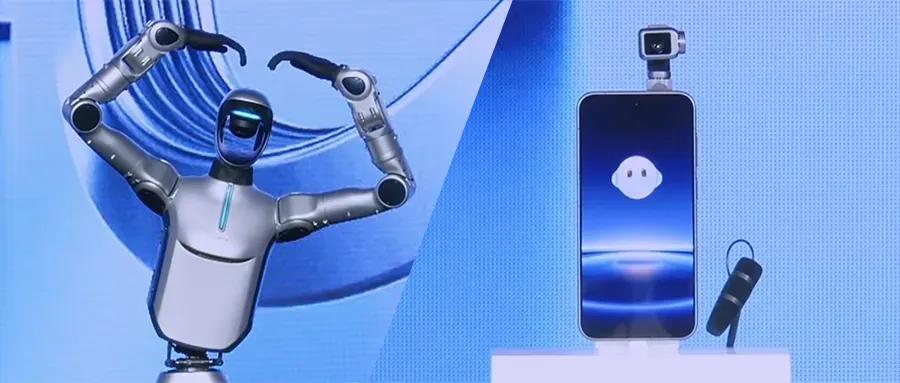
Honor made its most ambitious product statement to date at Mobile World Congress 2026 in Barcelona, unveiling the industry's first so-called "Robot Phone" alongside a consumer-oriented humanoid robot — moves that underscore a fundamental repositioning of the Chinese smartphone maker away from hardware cycles and toward an AI-driven ecosystem play.
The dual debut, anchored by CEO James Li's formal introduction of the company's "AHI — Augmented Human Intelligence" framework, represents the first tangible output of the Alpha Strategy Honor announced at MWC 2025, when it pledged $10 billion in investment over five years. The strategic shift carries direct implications for how investors and competitors assess Honor's long-term differentiation in a global smartphone market where hardware margins are under persistent pressure.
Market reaction to the announcements will hinge on execution. While the Robot Phone and humanoid robot generated significant floor buzz in Barcelona, Honor withheld live product demonstrations and declined to disclose pricing or detailed specifications for either device — a calculated restraint that simultaneously sustains anticipation and raises questions about commercial readiness.
The Robot Phone: Engineering Ambition Meets Unanswered Questions
The Robot Phone is Honor's most structurally unconventional product to date — a device that integrates a motorized, gimbal-mounted camera system directly into a smartphone chassis, creating what the company describes as a phone with "hands and feet." Conceptually, it merges the form factor of a handheld stabilized camera, comparable to DJI's Osmo Pocket, with a full smartphone, but with AI-driven interactivity layered on top.
The engineering challenge was substantial. Honor's technical team developed what it claims is the industry's smallest micro-motor and the smallest four-degree-of-freedom (4DoF) gimbal system, achieving this through micron-level structural optimization of individual components. The motor's core components use the same high-performance materials employed in Honor's foldable screen products — a cross-platform materials strategy that reflects the company's attempt to leverage existing supply chain expertise in novel directions.
The camera system supports three-axis optical image stabilization, houses a 200-megapixel sensor, and is capable of 90-degree and 180-degree motorized rotation for autonomous tracking shots — a capability Honor positions as delivering cinematic-quality footage from single-handed operation. The AI layer enables the gimbal to autonomously track subjects, interpret contextual cues, and express what the company terms "emotional body language" through physical movement.
On the imaging partnership front, Honor announced a strategic technical collaboration with ARRI, the professional cinema camera manufacturer, with initial results to be integrated first into the Robot Phone. The partnership signals Honor's intent to compete on imaging credibility with professional-grade provenance — a positioning move that targets the premium content-creation segment.
The Robot Phone will be powered by Qualcomm's fifth-generation Snapdragon 8 Elite chip. Despite the technical disclosures, the absence of a live demo at the launch event — and a closed, non-interactive display at the post-show exhibition floor — leaves the device's real-world performance unverified by independent observers.
The Humanoid Robot: Spectacle With Strategic Ambiguity
The humanoid robot stole the visual narrative of the evening. It walked onto the Barcelona stage under its own power, performed a moonwalk, executed a back flip on command from CEO Li, and engaged in a handshake and conversation with him — a sequence designed to demonstrate fluid locomotion, responsive instruction-following, and basic social interaction.
Post-event, the robot interacted with attendees on the exhibition floor, performing simple gestures such as waving and making heart signs. Li framed the product philosophically: "If a smartphone is an extension of the mind, then a robot is our second pair of hands."
However, Honor provided no product name, pricing, or technical specifications for the humanoid robot, and the "consumer-grade" characterization it applied remains undefined. The omission is strategically significant. Pricing will be the critical variable determining whether Honor can convert the robot from a demonstration asset into a commercial category — and the industry is watching closely. The company's Alpha Laboratory, its dedicated R&D unit, has identified human-computer interaction, motion control, and on-device AI modeling among 12 priority research domains, suggesting the humanoid robot program is still in active development rather than pre-launch refinement.
AHI Framework: Reframing the AI Narrative Around Human Centrality
Beyond the hardware, the conceptual architecture Li introduced in Barcelona may prove more consequential for Honor's long-term competitive positioning. The AHI framework explicitly rejects a capability-first AI narrative — "Don't ask what AI can do; ask what AI should do" — and instead frames intelligence as a tool for augmenting human adaptability and emotional awareness.
Honor's model divides intelligence into three layers: Personal Intelligence, encompassing portable devices that learn individual habits and proactively serve users; Global Intelligence, a cloud-based "super brain" that integrates third-party large language models including Google's Gemini, OpenAI's ChatGPT, and Alibaba's Qwen; and Edge Intelligence, comprising physical agents such as robots and low-altitude aerial vehicles that sense and interact with the physical world.
Li described the structure metaphorically: AHI is the lighthouse, IQ and EQ are its two beams of light, and the Alpha Phone, Alpha Store, and Alpha Laboratory represent three successive waves beneath it. The framework is notable for its explicit inclusion of emotional intelligence — EQ — as a design requirement, not merely a feature, positioning Honor's AI development philosophy in contrast to purely performance-oriented approaches from rivals.
Google's presence at the event reinforced the depth of Honor's international AI partnerships. Google Senior Vice President TT Ramgopal appeared on stage, highlighting deep collaboration on AI photography query functions and agent capabilities for Honor's overseas devices, and signaling forthcoming image-generation features. The partnership is structurally important for Honor's ability to compete in Western markets where domestic Chinese AI services have limited reach.
Magic V6: Incremental Records, Sustained Foldable Momentum
Alongside its conceptual launches, Honor delivered a more conventional but commercially significant product in the Magic V6 foldable smartphone. At 8.75mm when folded — thinner than many flagship candy-bar phones — the Magic V6 represents the fourth time in three years that Honor has broken its own foldable thinness record, a consistent engineering cadence that has helped establish the brand as the second-largest player in China's foldable market.
Battery capacity exceeds 7,000mAh, enabled by a new-generation Qinghai Lake battery technology with silicon content raised to 32%. The device weighs 219 grams — comparable to premium non-folding flagships — and carries IP68 and IP69 dust and water resistance ratings. The hinge components use aerospace-grade shield steel with a tensile strength of 2,800MPa, supporting drop resistance and bend endurance certifications.
Qualcomm Senior Vice President and General Manager of Mobile, Chris Patrick, appeared at the event to note that the Magic V6 is the first mobile device to achieve fully on-device personalized experiences through Qualcomm's Sensing Hub — a technical distinction that reinforces the chipmaker's strategic alignment with Honor's AI differentiation agenda.
Strategic Calculus: Ambition Outpacing Disclosure
Taken together, the MWC 2026 announcements reveal a company executing a coherent but high-risk transformation. Honor is attempting to simultaneously redefine the smartphone form factor, enter the humanoid robotics consumer market, and establish a proprietary philosophical framework for human-centered AI — all while maintaining competitive pressure in the foldable segment through iterative hardware refinement.
The strategic logic is clear: in a mature smartphone market, differentiation increasingly requires platform thinking rather than spec competition. The AHI framework, the Robot Phone's AI-physical integration, and the humanoid robot's consumer positioning all point toward a future in which Honor's revenue model extends well beyond device sales.
The near-term risk is equally apparent. Both the Robot Phone and the humanoid robot remain commercially opaque — no pricing, no launch timeline, no open hands-on access. For investors and industry analysts, the central question is whether Honor's engineering demonstrations in Barcelona reflect products approaching market readiness, or whether they represent a longer-horizon research agenda packaged for maximum launch-cycle impact. The answer will likely define how Honor's $10 billion AI investment is ultimately judged.