
China's Smartphone Prices Set for Sharpest Rise in Five Years as Memory Chip Costs Spiral
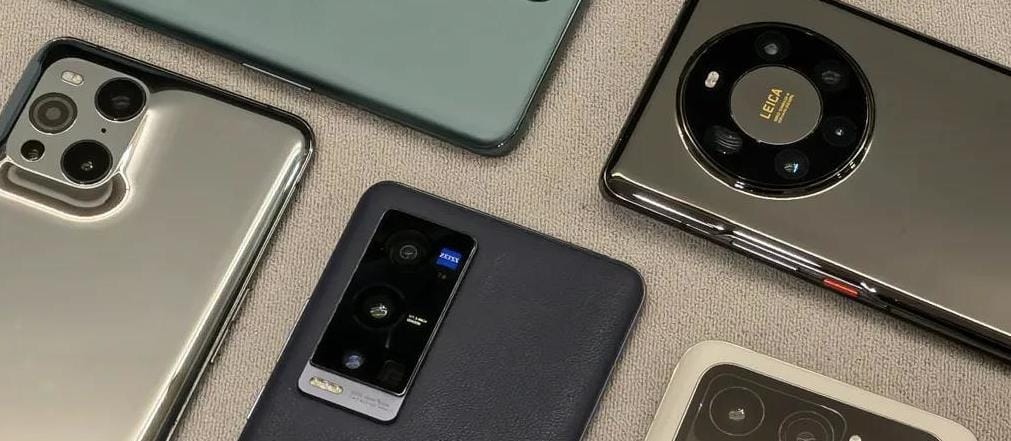
China's smartphone market is bracing for its most significant and broad-based price increase in half a decade, driven by a relentless surge in memory chip costs that has pushed some budget handset makers into negative gross margin territory and forced the entire industry to reprice products at multiple points within a single year.
Starting in March 2026, major Chinese smartphone brands including OPPO, vivo, Xiaomi, Honor, iQOO, and OnePlus are expected to raise prices on both new launches and existing models, with entry-level new devices set to cost at least RMB 1,000 yuan (approximately US$138) more than their predecessors. Mid-range and high-end flagship models could see increases of RMB 2,000 to RMB 3,000. Market research firm Counterpoint Research projects that the average selling price of new smartphones in China after March will rise 15% to 25% compared with equivalent-tier models in 2025.
The pricing shock has resonated well beyond industry circles. On February 26, topics related to an across-the-board smartphone price hike in China trended on Weibo, China's dominant social media platform, with consumers expressing alarm and some indicating they would forgo device upgrades altogether, opting instead to replace batteries on existing handsets.
Memory Costs at the Root of the Repricing Wave
The proximate cause of the price surge is a sharp and accelerating increase in DRAM and NAND flash memory costs — components that have become increasingly central to smartphone bill-of-materials as manufacturers compete on storage capacity.
Industry data cited by Cailian Press shows that general-purpose DRAM contract prices are expected to rise 55% to 60% quarter-on-quarter in the first quarter of 2026, while NAND flash prices are projected to increase 33% to 38% over the same period. Consumer-grade, high-capacity QLC NAND products face increases of no less than 40%.
The scale of the move in server-grade memory illustrates the broader trend. A single 256GB DDR5 server memory module was priced at RMB 45,999 yuan (approximately US$6,345) in early January 2026 on JD.com. By late February, the same specification was listed at RMB 56,999 yuan — a roughly 30% increase within less than two months. Topics such as "memory prices surpassing gold" had already trended on Weibo earlier in 2026, signaling that the cost pressure had captured mainstream public attention.
Multiple supply chain sources confirmed to the Science and Technology Innovation Board Daily that procurement costs for smartphone memory chips have risen more than 80% year-on-year, with no signs of deceleration. A representative from Honor told reporters that memory prices are rising in a "completely runaway" fashion.
Budget Segment Bears the Heaviest Burden
While the price increases affect the entire handset market, the distribution of impact is uneven — and the implications for the budget segment are structurally more severe.
Memory and storage components now account for nearly 30% of the bill of materials for mid-to-low-end smartphones. Industry sources indicate that some devices in the sub-RMB 1,000 yuan price bracket have already slipped into negative gross margin territory, meaning manufacturers are effectively selling at a loss. This leaves budget-tier brands with little room to absorb further cost increases and makes price hikes not merely a commercial decision, but an operational necessity.
By contrast, flagship products, which carry higher retail prices and wider absolute margins, are better positioned to absorb the cost shock. An OPPO representative acknowledged that high-end models would likely see price increases exceeding RMB 1,000 yuan, but noted that the relative impact on premium-tier profitability is comparatively contained.
The squeeze on the low end carries broader market implications. Budget smartphones are the primary upgrade vehicle for a large segment of Chinese consumers, and a structural repricing of that category risks compressing replacement cycles and dampening overall unit volume in the world's largest smartphone market.
A Pricing Cycle That May Not Stop at One Round
What distinguishes this repricing episode from previous cost-driven adjustments is its potential duration and frequency. Industry participants and analysts suggest that 2026 could mark the first time in the history of China's modern smartphone market that manufacturers raise prices multiple times within a single calendar year.
The groundwork was already being laid before 2026 began. Since late 2025, several handset makers have incrementally raised prices on new launches. Recent models including the Redmi K90 series and the iQOO 15 were priced RMB 100 to RMB 600 higher than their predecessors. Lenovo and OPPO have also raised prices on mid-range models, with some seeing increases of up to 20%.
Supply chain sources and ODM manufacturers indicate that several leading brands have finalized plans to implement a further round of price adjustments in early March. According to industry participants, this will constitute the largest and most pronounced collective repricing in the smartphone sector in approximately five years.
The memory cost cycle itself provides little near-term comfort. After bottoming out in the second half of 2024, smartphone memory and storage chip prices have risen for multiple consecutive quarters, with the pace of increase accelerating into 2026. The absence of any visible plateau in upstream pricing means that downstream brands retain limited ability to commit to price stability for the remainder of the year.
Meizu Pivots Away From Hardware Amid Industry Turbulence
The pricing environment is also reshaping competitive dynamics among smaller players. On February 27, Meizu Technology published a statement on Weibo denying rumors of bankruptcy, business suspension, and market exit, pledging legal action against those spreading what it characterized as misinformation.
However, the company simultaneously confirmed a significant strategic realignment. Meizu said it would suspend domestic self-developed hardware projects for new smartphone products and is actively seeking third-party hardware partners. The company framed the shift as a deliberate pivot toward an AI-driven, software-led business model, with its Flyme operating system ecosystem positioned as the foundation of its future commercial architecture.
The announcement underscores a broader dynamic: as input costs rise and margin pressure intensifies, smaller handset brands with limited scale and negotiating power in component procurement face a structurally more challenging operating environment. For Meizu, the decision to step back from proprietary hardware development — while denying it constitutes a market exit — reflects the difficulty of sustaining a viable smartphone business when memory costs are rising at rates that disproportionately disadvantage companies without the purchasing leverage of industry leaders.