
China's EV Market Opens 2026 With Diverging Fortunes as Pre-Holiday Sales Soften
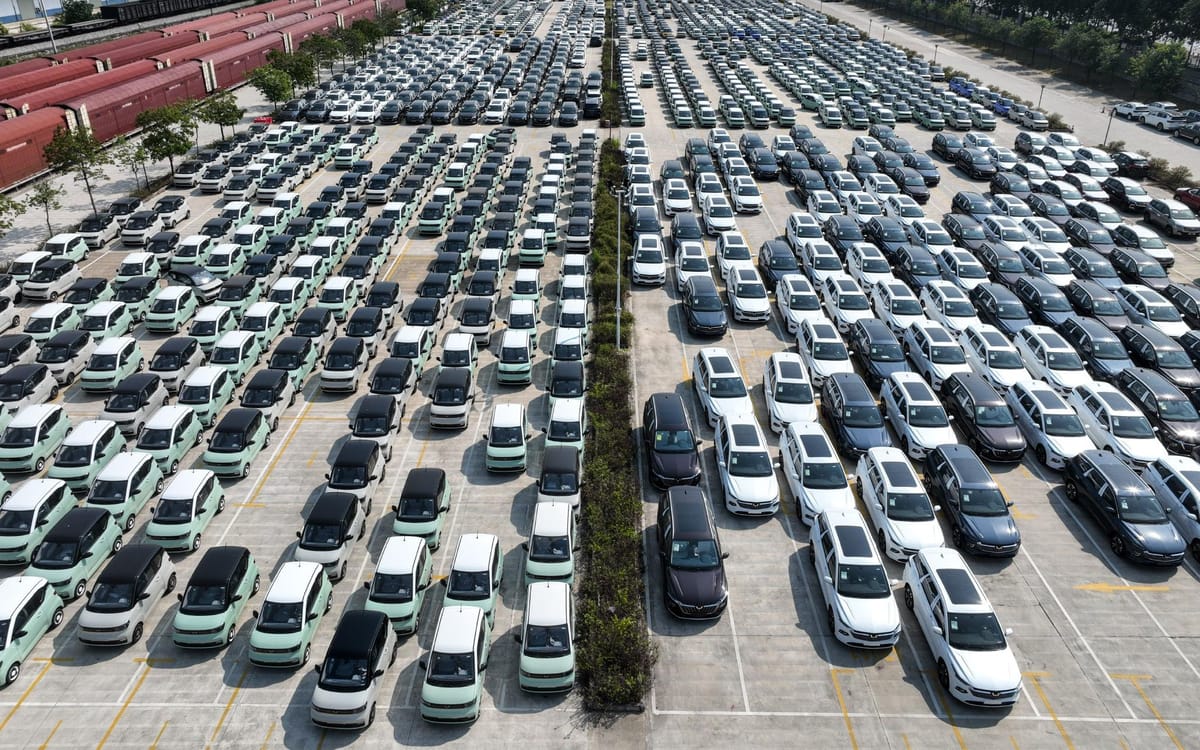
China's leading electric vehicle makers reported mixed January sales results, with most experiencing sequential declines ahead of the Lunar New Year holiday but showing divergent year-on-year performance that underscores intensifying market segmentation. BYD maintained its dominant position with 205,518 units sold, though volumes fell sharply from December, while emerging players including Xiaomi and NIO posted near-doubling growth rates driven by new model launches.
The January figures, released February 1 by major automakers, reflect typical seasonal patterns as consumers delay purchases before the holiday period, with nearly all brands posting month-on-month declines exceeding 20%. However, the year-on-year comparisons reveal a market increasingly split between established leaders facing tough prior-year comparisons and newer entrants gaining traction through product innovation and expanding distribution networks.
The contrasting trajectories highlight how China's maturing EV sector is shifting from pure volume growth toward competition centered on intelligent features, profitability, and sustainable business models. With multiple high-profile launches scheduled for 2026 and several brands pursuing international expansion, industry observers expect intensified rivalry across price segments.
Market watchers anticipate a rebound in February and March as consumer activity normalizes post-holiday, though the sustainability of growth for newer entrants and the ability of traditional leaders to defend market share remain key questions for the year ahead.
BYD Holds Top Position Despite Sharp Pullback
BYD's passenger vehicle sales declined 50.5% month-on-month and 30.7% year-on-year in January, marking a significant retreat from recent peaks. The drops reflect both a challenging comparison against last year's strong January performance and concentrated year-end deliveries in December that pulled forward demand. Despite the declines, BYD retained its commanding lead in China's new energy vehicle market by absolute volume.
The company's results underscore the challenges even market leaders face from seasonal fluctuations and increasingly difficult year-over-year comparisons as the EV market matures. BYD's January performance will test investor confidence in its ability to sustain growth momentum throughout 2026.
Geely and Zeekr Demonstrate Resilience
Geely reported January sales of 124,252 new energy vehicles, down 19.5% sequentially but up 2.6% year-on-year, securing second place in the rankings. The relatively modest declines compared to peers suggest stronger underlying demand stability.
Within Geely's portfolio, the Zeekr brand delivered 23,852 units, nearly doubling its year-earlier volume with 99.7% growth. The premium electric brand's performance indicates successful positioning in the higher-end market segment and validates Geely's multi-brand strategy. The group's overall resilience positions it as a consistent competitor in China's increasingly crowded EV landscape.
Huawei-Backed Brands and Xiaomi Lead Growth
Harmony Intelligent Mobility Alliance, the automotive ecosystem backed by Huawei, sold 57,915 vehicles in January, down 35.4% from December but up 65.6% year-on-year. The brand coalition, which includes the Aito, Luxeed, and Stelato nameplates, benefited from continued strong demand for the Aito M7 and M9 models while newer entries including the Stelato S9 and Zhijie R7 began ramping production.
Xiaomi's automotive division delivered over 39,000 units, declining 22.0% month-on-month but surging 95.0% year-on-year. The technology giant's YU7 model has become the sales driver as production capacity expands and the company extends its retail network into lower-tier cities. The near-doubling growth rate demonstrates Xiaomi's successful transition into automotive manufacturing and its ability to leverage existing brand equity and distribution channels.
Established Startups Show Mixed Results
NIO delivered 27,182 vehicles in January, down 43.5% sequentially but up 96.1% year-on-year, with the redesigned ES8 SUV accounting for over 17,000 units and serving as the primary growth engine. The company's Onvo L60 model continued production ramp-up, while NIO's battery-swapping network provided competitive differentiation.
Li Auto sold 27,668 units, declining 37.5% month-on-month and 7.5% year-on-year, as the company navigates a transition period with updated L-series models and the new pure-electric i6 not yet contributing significant volume. XPeng delivered 20,011 vehicles, down 46.6% sequentially and 34.1% year-on-year, with the MONA M03 providing some support but overall performance falling short of expectations amid product renewal pressures and intensifying competition.
Leapmotor reported sales of 32,059 units, down 46.9% month-on-month but up 27.4% year-on-year, as vehicles built on its LEAP 3.5 architecture continued generating incremental volume.
Traditional Automakers Navigate Transition
GAC Aion, the electric vehicle subsidiary of Guangzhou Automobile, sold 23,591 units in January, declining 41.1% sequentially but rising 63.9% year-on-year. The Hyper premium sub-brand contributed to growth alongside promotional activity for the Aion Y series, marking a return to expansion after previous declines.
Chery New Energy reported sales of 47,393 units, down 43.1% month-on-month and 16.7% year-on-year, reflecting product cycle transitions and competitive pressures. Great Wall Motor sold 18,029 new energy passenger vehicles, declining 53.7% sequentially and 19.0% year-on-year, with the Tank 300 PHEV and Shanhai MPV remaining core models but new product launches proceeding slower than anticipated.
Voyah Auto, the premium brand of Dongfeng Motor, delivered 10,515 units, down 34.1% month-on-month but up 31.3% year-on-year, with stable orders for the Dreamer PHEV minivan and Zhuiguang sedan helping establish the brand in the premium segment.
Market Outlook Points to Intensified Competition
The January sales data reveal a market characterized by sequential declines but divergent year-over-year trends, with established leaders facing difficult comparisons while newer entrants leverage fresh products and ecosystem advantages to capture share. The performance gap between fast-growing brands like Xiaomi, NIO, and Hongmeng Zhixing versus struggling players like XPeng illustrates how product competitiveness and brand strength are becoming decisive factors as China's EV market matures beyond its initial growth phase.
Industry participants expect sales to rebound following the Lunar New Year holiday as consumer activity normalizes and multiple automakers launch significant new models throughout 2026. The year's competitive dynamics will increasingly focus on intelligent driving capabilities, international market expansion, and the ability to achieve sustainable profitability rather than pure volume growth, marking a new phase in China's electric vehicle industry evolution.