
China’s EV Pecking Order in July Shifts as Leapmotor Breaks 100K, Rivals Stall
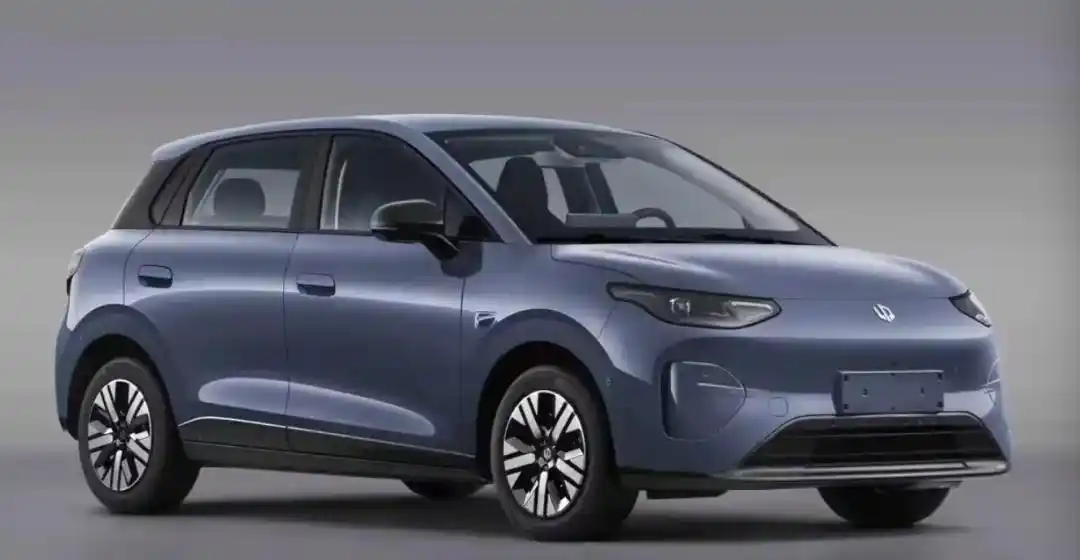
Leapmotor's 101,267-unit July delivery print—the first monthly six-figure tally ever recorded by a Chinese new-energy vehicle startup—has cleaved the domestic EV field into three distinct tiers, exposing a structural fault line between brands with diversified product portfolios and those betting survival on a single undelivered model.
The result lands against a deteriorating macro backdrop: China's passenger vehicle retail market contracted an estimated 16.8% year-on-year in July to roughly 1.52 million units, according to the China Passenger Car Association, making Leapmotor's 102% year-on-year surge all the more anomalous. Markets are watching closely as six new models launched by competing startups on July 16 alone—spanning a RMB 120,000–350,000 (US$16,700–US$48,600) price corridor—begin phased deliveries in August, threatening to reshuffle a ranking that has already shifted dramatically from the 2025 full-year standings.
The July data also highlights a widening execution gap: Leapmotor and NIO are scaling through multi-brand or multi-series architecture, while Xpeng, Xiaomi, and Li Auto each remain dangerously reliant on a single vehicle cycle or an as-yet-undelivered launch to close the distance to their annual targets.
Leapmotor Breaks the Ceiling—Then Immediately Faces a New One
Leapmotor's 101,267 deliveries in July were powered by three converging forces: a dense product refresh cycle, aggressive consumer incentives, and an overseas channel that is now generating structural volume rather than opportunistic exports.
The company's A10 sedan—launched in late March—contributed 28,593 units, nearly 28% of total deliveries. The refreshed B and C series, upgraded with 800V fast-charging platforms and AR-HUD at the RMB 100,000 (US$13,900) price point, provided mid-market coverage. The flagship D19 crossed 10,000 units in a single month for the first time, though at under 10% of total volume it remains a brand-building exercise rather than a volume driver. A summer promotion package and four lifetime warranty commitments lowered purchase friction further.
Overseas is no longer a rounding error. Leapmotor disclosed that first-half international shipments reached approximately 96,300 units—already surpassing full-year 2025 overseas volume—with Q2 exports accounting for more than 20% of quarterly deliveries. No other pure-play EV startup in the cohort of six approaches that export ratio.
The milestone, however, immediately defines the next problem. Through July, Leapmotor has delivered roughly 457,000 units against a full-year target of 1.05 million—a 44% completion rate. Hitting the goal requires monthly deliveries averaging approximately 118,000 units over the remaining five months, roughly 17,000 above July's record print. Leapmotor Senior Vice President Cao Li acknowledged at the B01 and B10 launch events that each of the company's factories produces only around 30,000 units per month, making sustained six-figure output a supply-chain stress test rather than a marketing exercise.
Huawei's AITO Ecosystem Slides for a Second Straight Month, Eyes M9 Recovery
Harmony Intelligent Mobility Alliance (HIMA)—the cross-brand ecosystem aggregating AITO, Luxeed, and Stelato under Huawei's software umbrella—delivered 45,046 units in July, down 11% month-on-month and 5% year-on-year, extending a two-month sequential deceleration.
The mechanics of the pullback are straightforward. June was a half-year-end push month; HIMA surged above 50,000 units as channel partners front-loaded deliveries, consuming near-term demand. July arrived with no new model launches and no promotional campaign, the classic post-sprint hangover. More structurally, the AITO M6—which achieved 30,000 deliveries within 54 days of its launch—has now exhausted its initial order bank, and no equivalent volume driver has yet entered the pipeline.
HIMA's July activity was concentrated in software: a summer OTA update delivered 34 new features across ADS 5 autonomous driving and HarmonyOS Cabin. The Stelato G9 also received a Beijing L3 road-testing license, though industry sources note that regulatory validation and production approval typically require several additional months, making August deliveries unlikely. HIMA's first FUV (Functional Utility Vehicle), the Luxeed RX, opened pre-orders in late July; a full delivery launch before September appears improbable given standard homologation timelines.
The near-term verdict from channel analysts: August recovery hinges almost entirely on whether AITO M9 monthly volume can be meaningfully scaled.
Xpeng Fires Orders It Cannot Yet Ship; NIO Raises Prices While Rivals Discount
Xpeng's L03 Launch Generates Demand Without Near-Term Delivery
Xpeng delivered 38,027 units in July, down 5.2% from June and up only 3.6% year-on-year—the weakest growth rate among the top four. The divergence between order intake and delivery capacity was the defining story of the month.
The MONA L03, launched at RMB 123,800 (US$17,200)—RMB 20,000 below its pre-sale guidance—triggered immediate order momentum but contributed negligible July deliveries as production ramp-up lagged. Citi Research surveys indicate some prospective buyers shifted to competitor comparisons while awaiting fulfillment. Xpeng has committed to accelerating nationwide L03 deliveries in August; Citi projects 8,000–10,000 units in August and approximately 15,000 in September.
July's delivery base was consequently carried by legacy models—MONA M03, P7+, G6, and G7—while the high-end GX remained supply-constrained and the flagship X9 faced a recall of 33,473 vehicles due to an air suspension fault triggered by extreme heat conditions.
Through July, Xpeng has accumulated 204,000 deliveries against a full-year target of 550,000–600,000 units. The remaining five months require a monthly run-rate of 70,000–80,000 units, roughly double July's output. That gap is almost entirely predicated on L03 scaling without disruption.
NIO Bucks the Discount Cycle, Absorbs Margin Risk
NIO's 35,934 July deliveries represented a 71% year-on-year increase—the highest growth rate in the cohort—but an 11.5% sequential decline, the sharpest month-on-month drop since February 2026. All three sub-brands contracted in parallel: the NIO flagship brand delivered 20,008 units (down 8.7% month-on-month), Onvo 10,155 units (down 13.5%), and Firefly 5,771 units (down 16.9%).
The more consequential signal was pricing strategy. As Leapmotor and others deployed promotional packages worth tens of thousands of renminbi, NIO raised prices on key models by RMB 5,000–10,000. CEO William Li cited input cost inflation—aluminum, copper, and lithium carbonate pushing per-vehicle costs up nearly RMB 20,000 on the ES8—as the rationale for protecting gross margin rather than chasing volume.
The ES8 five-seat variant, launched July 9 at RMB 382,800 (US$53,200), began deliveries the following day but had only roughly 20 days of production in the month. The BaaS battery-as-a-service entry point at RMB 274,800 (US$38,200) may attract new buyers while cannibalizing ES6 and six-seat ES8 demand internally.
NIO's year-to-date delivery completion rate of 46.4%–49.8% against a 456,000–489,000 unit annual target is the most comfortable in the peer group; the second half requires only approximately 46,000 units per month. The question is whether price increases hold in a market where Huachuang Securities data shows industry discount rates have plateaued after six months of escalation.
Li Auto and Xiaomi Remain Trapped at the 30,000-Unit Threshold
Li Auto's Supply Chain Fragility Becomes a Strategic Liability
Li Auto delivered 30,468 units in July—down 0.9% year-on-year and 1.4% month-on-month—the only brand in the top six to post declines on both metrics simultaneously. The year-to-date cumulative total of 223,940 units represents a 4.6% year-on-year contraction, an outlier in a cohort where most peers are growing at double-digit or higher rates. Morgan Stanley cut its Li Auto delivery estimates for 2026–2028 by 8% in early July; the stock has declined 46% year-to-date, prompting the company to initiate share buybacks.
Two factors compressed July output. The new-generation L6, priced at RMB 249,800 (US$34,700) with a mid-month launch, had insufficient lead time to contribute meaningfully to July deliveries; its first full delivery month is August. Separately, the i6 electric sedan suffered a headlight supply disruption in mid-to-late July, reducing production by approximately 4,000 units before normal operations resumed on July 27.
The supply disruption is symptomatic of a deeper structural issue: Li Auto's volume remains concentrated in a small number of models, leaving the brand acutely exposed to single-component failures. Reaching the full-year target of approximately 488,000 units requires roughly 53,000 monthly deliveries over the remaining five months—a gap that only a breakout performance from the new L6 can close.
Xiaomi Launches Extended-Range SUV Series to Escape Monthly Plateau
Xiaomi delivered "over 30,000" units in July—the fourth consecutive month at that level—despite deploying its most aggressive financial incentives of the year: a RMB 49,900 (US$6,900) down payment on the new SU7, monthly installments from RMB 538, and time-limited purchase credits of up to RMB 61,000 (US$8,500). The promotional intensity reflects a structural order-book challenge: the initial reservation pool accumulated at launch has been substantially drawn down, and incremental volume must now be generated from current-period demand.
Against a full-year target of 550,000 units and an estimated cumulative delivery of approximately 215,000 units through July, Xiaomi requires roughly 67,000 monthly deliveries through year-end—more than double its current run-rate. The SU7 and YU7 two-model lineup is structurally insufficient to bridge that gap.
Xiaomi's response was to launch the "Sky Nomad" extended-range SUV series at the end of July, opening pre-orders for the N70 Max and N90 Max. The first deliveries are scheduled for September, with meaningful production volume unlikely before Q4. The implication: Xiaomi's monthly delivery rate will remain near 30,000 units through at least September, leaving the annual target dependent on a steep Q4 ramp that has yet to be demonstrated.
Traditional OEMs Compress the Middle Tier, Raising the Stakes for All Startups
The competitive pressure on new-energy startups is not solely internal. BYD reported July total sales approaching 420,000 units, up 22% year-on-year, with exports of nearly 180,000 units surging 124.3%. BYD's Fang Cheng Bao sub-brand delivered 41,000 units—approaching HIMA's total—while Denza contributed nearly 20,000.
Chery posted July sales of 277,000 units (+23% YoY), with exports of 203,000 units (+70.1% YoY), setting a fifth consecutive monthly record for Chinese automotive single-month exports. Geely exceeded 250,000 units, with overseas exports topping 100,000 for a second straight month (+202% YoY); its Zeekr brand hit a record 36,000 units (+111% YoY).
The insurgent performance of OEM-incubated brands—Changan's Qiyuan near 40,000 units, GAC Aion at 35,000, BAIC Arcfox at 23,500—is systematically occupying the 20,000–40,000 unit band that constitutes the competitive core of the startup tier. The pressure on the "NIO-Xpeng-Li-Xiaomi" cohort is therefore bilateral: Leapmotor pulling away from above, legacy EV brands compressing from below.
H2 Outlook: Product Cadence and Supply Chain Execution Separate Winners From Stragglers
The year-to-date cumulative ranking has already diverged from the 2025 full-year standings. Through July, Leapmotor leads by approximately 170,000 units over second-placed HIMA—a gap that has effectively closed the top-two contest. In the middle tier, NIO has climbed from sixth place in full-year 2025 to third year-to-date; Li Auto and Xiaomi hold fourth and fifth; Xpeng has slipped from third to last in the cohort.
The annual target completion matrix is unambiguous in identifying where execution risk is concentrated:
|
Brand |
YTD
Deliveries (Jan–Jul) |
Annual
Target |
Required
Monthly H2 Run-Rate |
|
Leapmotor |
~457,000 |
1,050,000 |
~118,000 |
|
NIO |
227,057 |
456,000–489,000 |
~46,000 |
|
Xpeng |
204,000 |
550,000–600,000 |
~70,000–80,000 |
|
Xiaomi |
~215,000 |
550,000 |
~67,000 |
|
Li Auto |
223,940 |
~488,000 |
~53,000 |
The brands with diversified product architectures—Leapmotor across four domestic series plus an overseas channel, NIO across three sub-brands—have demonstrated the ability to absorb single-model volatility. The brands concentrated on one cycle or one pending launch have no such buffer. With seven new models entering phased delivery from August onward, production ramp speed and supply-chain resilience will determine second-half rankings more than any promotional campaign.
Related Coverage:
Leapmotor Breaks EV Delivery Record With 81,569 Units, But the Hard Part Begins