
Leapmotor Breaks EV Delivery Record With 81,569 Units, But the Hard Part Begins
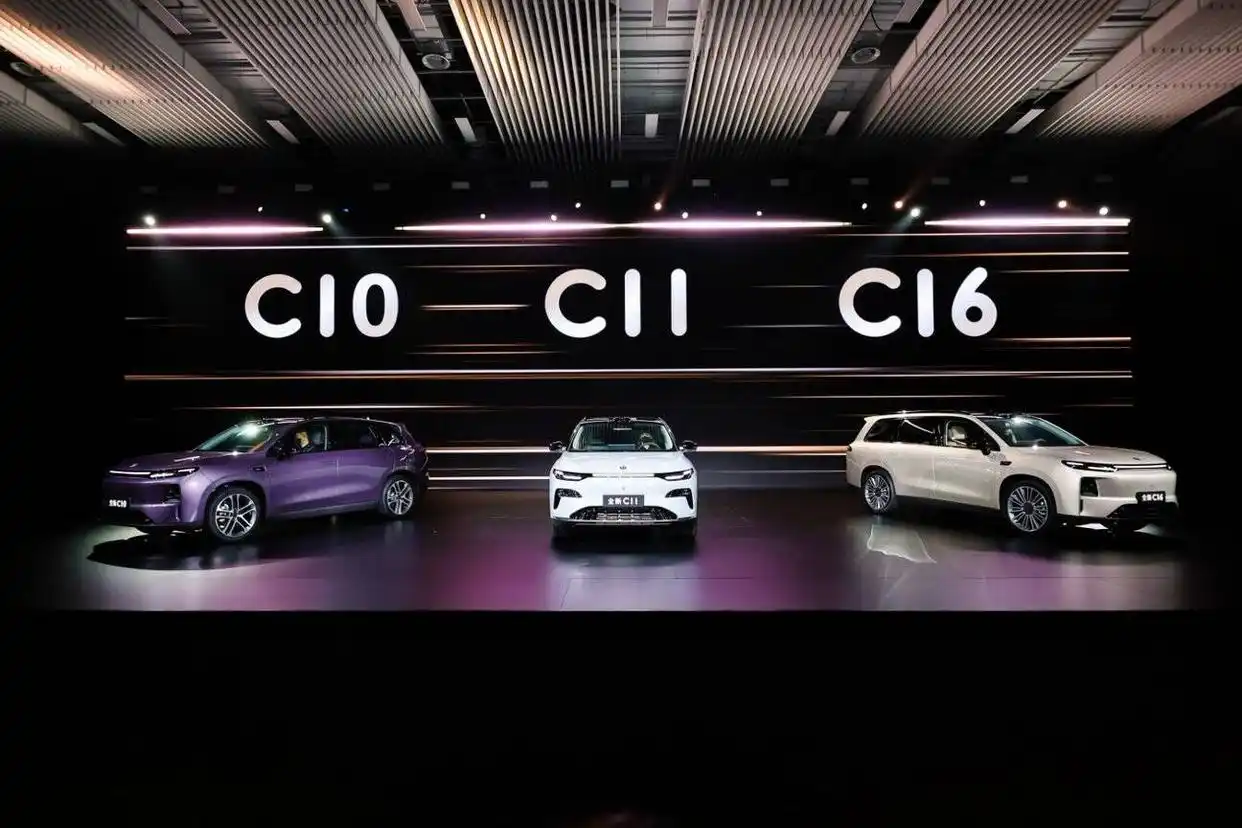
Leapmotor posted 81,569 vehicle deliveries in May 2026 — the highest single-month figure ever recorded by a Chinese new-energy vehicle startup — a milestone that simultaneously validates its value-segment playbook and raises a more consequential question: whether volume alone can construct a durable competitive moat.
The number lands with force precisely because of the comparisons it demolishes. Nio has never exceeded 48,100 monthly deliveries; Xpeng peaked at 42,000; Li Auto, widely regarded as the most commercially disciplined of the cohort, only touched 58,000 in December 2024. Leapmotor's May print is not an incremental improvement — it is a structural step-change that repositions the company at the top of the startup tier.
Market skepticism has followed the headline. Accusations of margin-destructive volume-chasing and even data integrity questions circulated on Chinese social media in the days after the disclosure. The financial record, however, pushes back on the narrative: Leapmotor's gross margin turned positive in Q3 2023 and achieved its first full-year positive reading of 0.5% that same year — a threshold that eluded now-defunct peers Neta and WM Motor throughout their own volume peaks, both of which burned cash faster as deliveries rose.
Vertical Integration Drives Cost Wedge Against Rivals
The structural explanation for Leapmotor's margin resilience sits inside its factory walls. The company's flagship D19 sedan carries an in-house development and manufacturing ratio of 65% across components including lighting systems and electronic-electrical architecture — a figure management targets to raise above 80%. CEO Zhu Jiangming has disclosed that self-developed lighting units carry a bill-of-materials cost equivalent to 70% of the industry average; integrated electronic door handles save more than RMB 100 (approximately US$13.90) per vehicle.
Across an 81,000-unit monthly run rate, per-unit savings of even a few hundred renminbi aggregate into tens of millions in quarterly cost advantage — a compounding benefit that took nearly eleven years to engineer and cannot be replicated on a short timeline by competitors deploying capital alone.
This cost architecture distinguishes Leapmotor's position in the RMB 100,000–200,000 (approximately US$13,900–US$27,800) price band from a simple low-price land-grab. Its primary volume segment is one where achieving positive gross margins has historically been structurally difficult for asset-light startups reliant on third-party component suppliers.
Stellantis Partnership Turns Europe Into a Meaningful Second Engine
Overseas markets are no longer a rounding error in Leapmotor's delivery mix. In the first five months of 2026, the company delivered a cumulative 263,100 vehicles, of which more than 75,000 — approximately 28.5% — were exported. In Q1 2026 alone, the overseas share reached 37.1% of 110,200 total deliveries, the highest ratio among Chinese EV startups by a significant margin.
The mechanism behind that penetration is a technology-licensing and local-production agreement with Stellantis, the Franco-Italian-American automotive group. Rather than bearing the full capital and operational cost of building independent European infrastructure, Leapmotor leverages Stellantis's existing factory capacity and dealer network. The result: more than 1,000 sales and after-sales service points globally, with approximately 850 in Europe alone. Xpeng, which has invested heavily in its own European expansion, operates roughly 290 European outlets by comparison.
The commercial outcomes are tangible. Leapmotor's C-series and B10 models topped Italy's pure-electric sales chart in March 2026 and ranked as the best-selling Chinese EV brand in Germany. Since the start of 2025, the company has sold more than 140,000 vehicles overseas — a base that provides both revenue diversification and a structural hedge against intensifying domestic price competition.
Vice President Zhou Ying acknowledged internally that overseas market-building — covering channel setup, parts logistics, and financial and insurance infrastructure — demands resource commitments that may exceed domestic market investment. The Stellantis model, in that context, is not merely a distribution shortcut but a capital-efficiency decision with strategic implications for how quickly Leapmotor can scale internationally without diluting domestic investment.
Product Architecture Reflects a Deliberate "Toyota Blueprint"
Leapmotor's product cadence has been unusually disciplined for a startup. Since the C11's launch in September 2021 at a post-subsidy price of RMB 159,800–199,800 (approximately US$22,200–US$27,800), the company has introduced at least two entirely new models per year. The current lineup spans the entry-level A10, the compact B-series, the volume-driving C-series, and the premium D19 — a deliberate architecture Zhu has described as "rooting down with A, reaching up with D, and supporting the middle with B and C."
Even the weakest performer in that lineup, the B01, delivered close to 4,000 units in May — a figure that compares favorably to products from several rivals that struggle to clear three-digit monthly sales.
Zhu has been explicit since 2017 about his ambition to build "China's Toyota." The analogy is instructive in both its promise and its demands. Toyota's global scale rests on Corolla and Camry volumes, but its profit engine is Lexus. A Leapmotor that remains confined to the RMB 100,000–200,000 band cannot close that loop. The D19's 7,000-unit first-month delivery figure is a credible start for a higher-priced offering, but the "value-for-money" brand perception remains deeply embedded — a ceiling that higher-end aspirations must eventually break through.
Industry sources indicate Leapmotor is evaluating the launch of a separate premium sub-brand to house products above its current price ceiling, a structural move that would mirror the approach taken by BYD with its Yangwang and Fang Cheng Bao lines.
Quality Consistency Emerges as the Near-Term Risk Variable
Scale introduces execution risk, and user feedback surfaces early warning signals. Owner accounts reviewed by this publication describe recurring software issues following OTA updates on the A10 — including a Bluetooth unlock function that requires the app to remain in the foreground — and autonomous driving behavior on the same model that is overly conservative to the point of triggering steering interventions.
Owners of the D19, Leapmotor's most expensive current model, have reported slow in-car system boot times, steering wheel vibration, and voice recognition performance that falls short of the C10 predecessor within the first weeks of ownership. One owner noted that the expectation of smartphone-like reliability in vehicle software is one "ordinary families cannot absorb" if it requires constant tolerance for friction.
At 81,000 monthly units and growing, quality consistency is no longer a brand-building issue — it is an operational risk. Warranty costs, service network capacity, and customer retention rates will increasingly determine whether Leapmotor's gross margin trajectory continues upward or plateaus.
First-Mover Advantage Narrows as Rivals Adapt
Leapmotor's current position reflects timing as much as structural differentiation. Its vertical integration strategy parallels BYD and Tesla — both of which execute the same model at far greater scale. Its overseas partnership model is replicable by any startup with sufficient strategic flexibility. Xpeng and Nio have both signaled intent to compete more aggressively in the mid-market price band that Leapmotor currently dominates.
Zhu himself has been candid about the impermanence of leadership positions. "Nio, Li Auto, and Xpeng have all been the monthly sales leader. So have Neta and WM Motor," he said publicly. "Temporary leadership is normal. The auto industry is a long marathon, and nobody knows yet who will reach the finish line."
That humility reflects an accurate reading of the competitive landscape. Leapmotor has earned a seat at the table for the next phase of China's EV consolidation — one where the survivors will be determined not by who reaches 80,000 monthly deliveries first, but by who builds the scale-to-premium-to-profit feedback loop that sustains margins across an entire economic cycle.
The 81,569-unit May print is the opening bid in that argument. The response from the market — and from rivals — will define whether it is also the foundation of something durable.
Related Coverage:
Leapmotor Q1 Loss Highlights Margin Pressure Amid 442% Export Surge