
Huawei’s AITO Diversifies Battery Supply Chain, Challenging CATL’s Dominance
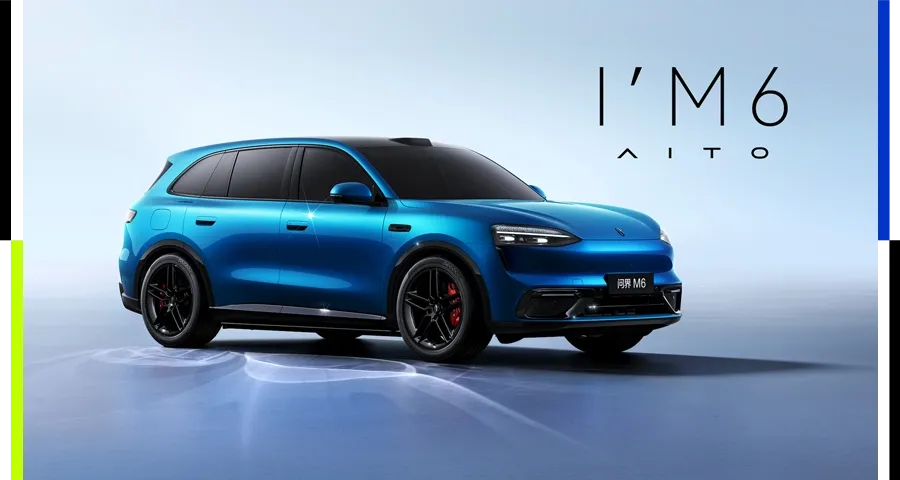
Huawei's electric vehicle brand is undertaking a significant supply chain restructuring, broadening its battery sourcing beyond its long-standing exclusive reliance on Contemporary Amperex Technology (CATL) as it faces mounting cost pressures and slowing sales growth, according to an exclusive report by Chinese tech media outlet 36Kr.
According to 36Kr's report published on June 16, 2026, Huawei's Harmony Intelligent Mobility Alliance — the automotive ecosystem that encompasses the AITO, Luxeed, Shangjie, and Maextro brands — is introducing secondary battery suppliers across nearly all of its vehicle lines, with the exception of the ultra-premium Maextro brand, which currently lacks the production scale to support a second supplier.
Industry sources cited in the report indicate that AITO, which has operated under an exclusive battery supply agreement with CATL since August 2022, will now bring in Gotion High-Tech and CALB as alternative suppliers. Specifically, the AITO M6 has been nominated for Gotion's 81 kWh battery pack, with Gotion reportedly receiving the nomination letter from Harmony Intelligent Mobility Alliance as early as last year. Two new variants of the AITO M6 — priced at RMB 229,800 (approximately US$31,800) and RMB 249,800 yuan — have already been added to the lineup using the new battery configuration, pushing the model's entry price below that of rivals including Xiaomi's YU7 and Li Auto's i6.
The Luxeed brand, previously supplied by CATL and CALB, is also set to add Gotion and Xinwangda to its supplier roster. Sources told 36Kr that the Luxeed V9 and R7 models may adopt Xinwangda's 53 kWh LFP battery packs, while Gotion's 81 kWh LFP pack is being evaluated for the Luxeed RX and R7. Gotion's 81 kWh pack is also under consideration for the Shangjie brand lineup.
The diversification strategy is being driven by a combination of cost pressures and competitive urgency. At a recent automotive forum in Chongqing, Seres Group Chairman Zhang Xinghai disclosed that per-vehicle costs for the AITO brand have risen by RMB 15,000 to 20,000 (approximately US$2,100–US$2,800), citing surging prices for memory chips and lithium carbonate — the latter having climbed from around RMB 80,000 per ton last year to approximately RMB 180,000 per ton in 2026. Battery industry sources told 36Kr that Gotion and Xinwangda are offering LFP battery packs at roughly 10% below CATL's pricing, a discount that could translate to approximately RMB 2,000 in cost savings per vehicle on an 81 kWh unit.
The push to cut costs also reflects a sales gap that Harmony Intelligent Mobility Alliance must urgently address. Cumulative deliveries for the first five months of 2026 stood below 200,000 units, with over 130,000 contributed by the AITO brand alone — well short of the annual target of one million to 1.3 million vehicles set by Huawei Executive Director Richard Yu at the end of 2025. Year-on-year sales growth in May reached only approximately 3.8%, trailing competitors such as Leapmotor and Xpeng Motors.
CATL is not expected to cede ground without a response. Sources indicate the battery giant is reassessing its pricing strategy to defend its position as Harmony Intelligent Mobility Alliance's primary supplier.
Should the supplier transitions receive regulatory approval — a step industry insiders note remains pending — the move could meaningfully expand Huawei's pricing flexibility in the mid-to-low end vehicle segment, where cost competitiveness is increasingly decisive.
Related Coverage:
CATL vs. BYD: Who Is Winning the EV Superfast Charging Race in 2026?