
CATL vs. BYD: Who Is Winning the EV Superfast Charging Race in 2026?
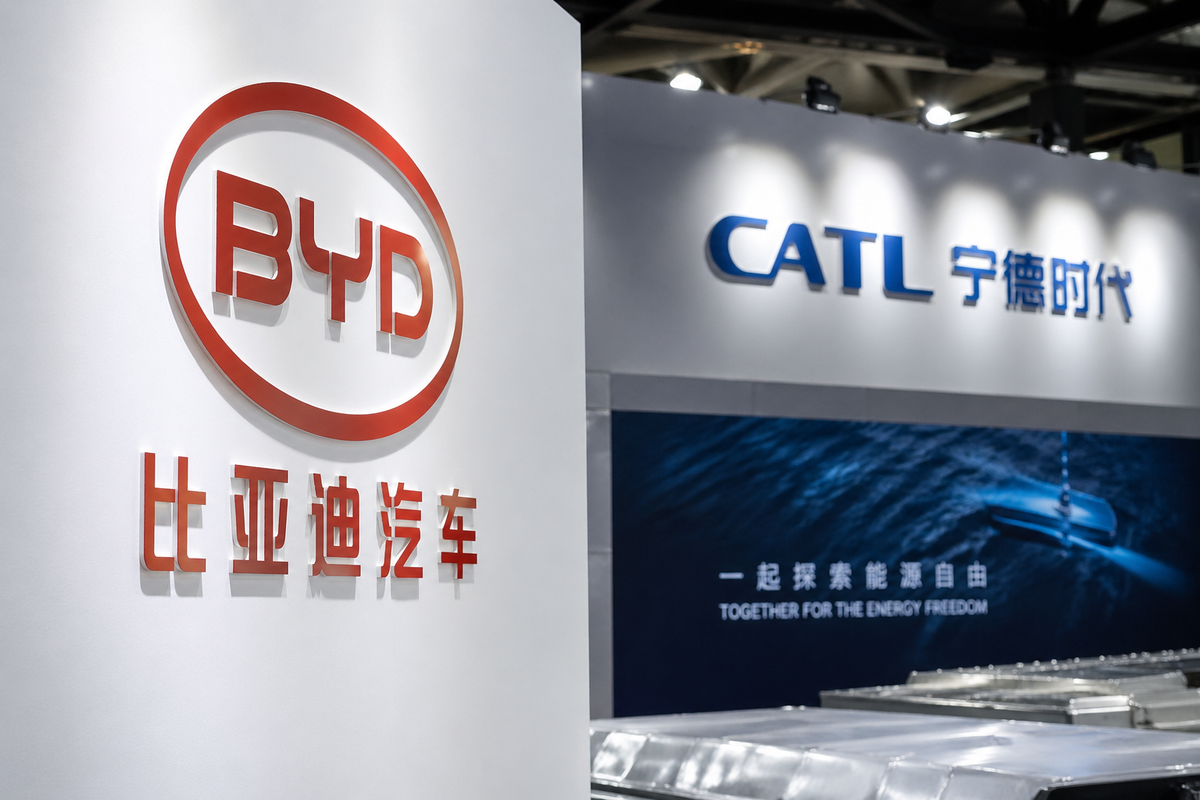
In late April 2026, CATL unveiled its third-generation Shenxing and Qilin battery systems, reigniting one of the most closely watched technology competitions in the global electric vehicle industry. The announcement prompted immediate questions from investors and analysts: does CATL's latest achievement undermine BYD's competitive position — and what does the intensifying rivalry mean for the broader EV market?
A research note published by UBS on April 27, 2026, offers a detailed comparative assessment. The findings reveal a more nuanced picture than a simple winner-takes-all narrative.
The Charging Numbers: What Each Battery Can Actually Do
CATL Third-Generation Shenxing and Qilin:
- 10% to 80% charge: 3 minutes 44 seconds
- 10% to 98% charge: 6 minutes 27 seconds
- 20% to 98% in temperatures below -30°C: 9 minutes
BYD Second-Generation Blade Battery:
- 10% to 70% charge: 5 minutes
- 10% to 97% charge: 9 minutes
- 20% to 97% in temperatures below -30°C: 12 minutes
On raw performance metrics, CATL's third-generation system outperforms BYD's current offering by approximately 2–3 minutes across comparable charging scenarios. For cold-weather performance — a critical metric in northern Chinese markets, Europe, and Canada — CATL achieves a 3-minute advantage at sub-freezing temperatures.
However, both Chinese manufacturers sit in an entirely different category from their global peers. Western EV batteries, including those used in leading European and North American models, currently require a minimum of 30 minutes for comparable charging cycles. The gap between Chinese and Western fast-charging capability is therefore not a marginal difference — it is a structural one, measured in multiples rather than percentages.
Why the Technology Lead Doesn't Automatically Translate to Market Lead
The distinction between laboratory or announcement-stage battery performance and real-world consumer availability is critical to understanding the competitive dynamics between CATL and BYD.
BYD's integrated model — in which it manufactures both the batteries and the vehicles — allows it to compress the timeline between battery development and consumer availability. As of late April 2026, BYD has approximately 10 vehicle models on the market equipped with its second-generation blade battery. These include both premium and high-volume models:
- Premium/specialty: Yangwang, Denza, Fangchengbao
- High-volume: Seal 06, Song Ultra, Yuan Plus/Atto 3
CATL, as a battery supplier rather than a vehicle manufacturer, must go through a more extended commercialization process. Its third-generation batteries need to be adopted by original equipment manufacturers (OEMs), integrated into new vehicle platforms, validated, certified, and launched. According to UBS analysts, this process could take up to one year before CATL-powered extreme fast-charging vehicles are available to consumers.
This gives BYD a 6–12 month effective head start in bringing superfast charging to market — despite CATL holding the technical performance advantage on paper.
Historical Context: How This Competition Evolved
The rivalry between CATL and BYD has intensified significantly over the past three years, driven by parallel advances in lithium iron phosphate (LFP) battery chemistry and cell-to-body integration technologies.
CATL introduced its first-generation Shenxing battery in late 2023, marking its initial entry into the extreme fast-charging segment. BYD responded with its second-generation blade battery, which prioritized both charging speed and cold-weather performance — areas where LFP chemistry had historically been considered inferior to nickel-manganese-cobalt (NMC) alternatives.
The third-generation CATL announcement in April 2026 represents the latest iteration of what has become a roughly annual technology cycle between the two companies. Each announcement has progressively raised the baseline expectation for what constitutes acceptable charging performance in the Chinese market — and, increasingly, in global export markets.
What This Means for Different Stakeholders
For Chinese consumers: The immediate practical implication is straightforward: consumers who want extreme fast-charging capability today have BYD options available across multiple price points. Those willing to wait 6–12 months may have access to CATL-powered vehicles with marginally faster charging. UBS analysts note that some consumers may rationally delay purchases in anticipation of next-generation models — a pattern that could create a short-term headwind for EV sales volumes in China.
For global automakers: The charging performance gap between Chinese and Western EVs has grown wider, not narrower, over the past two years. While several Western incumbent automakers — including major European and American brands — have announced delays or cancellations of EV programs amid profitability pressure and uncertain US policy direction, CATL and BYD have continued to invest in and deliver successive generations of improved battery technology. The 30-minute versus 5–10 minute charging gap represents a meaningful consumer experience difference that Western manufacturers have not yet closed.
For investors: UBS maintains a Buy rating on both CATL (listed on both the Shenzhen A-share market as 300750.SZ and Hong Kong as 3750.HK) and BYD (1211.HK). The investment thesis, as articulated in the April 2026 note, rests not on one company defeating the other, but on both companies collectively widening their technology leadership over global peers. The analysts characterize the CATL-BYD competition as "generally positive," with the structural effect of removing one of the last significant consumer deterrents to EV adoption over internal combustion engine vehicles.
The Broader Significance: Redefining the EV Objection
For much of the past decade, charging time has been cited alongside range anxiety as a primary reason consumers hesitate to switch from internal combustion engine vehicles to EVs. The 30-minute fast-charge benchmark, while significantly faster than earlier generation charging, still represented a meaningful behavioral change compared to a 3–5 minute refueling stop.
At 5–10 minutes — and trending toward under 4 minutes — that objection becomes substantially weaker. Chinese consumers purchasing vehicles equipped with current or next-generation CATL and BYD batteries are experiencing charging times that, in many real-world scenarios, are competitive with the total time required to stop at a petrol station.
The competitive race between CATL and BYD is therefore not simply a corporate rivalry. It is accelerating the resolution of what has been one of the most durable structural barriers to mass EV adoption globally — and doing so at a pace that Western battery developers and automakers have not matched.
Data sourced from UBS Global Research, China Auto Sector report dated April 27, 2026. All charging figures represent manufacturer specifications as cited in the UBS analysis. This article is for informational purposes only and does not constitute investment advice.
Related Coverage:
CATL vs BYD: Chemistry Wars Go Infrastructure
CATL: The Battery Giant Redefining Energy Storage
BYD's Ultra-Fast Charging Battery Puts Nio's Swap Model Under Pressure in 2026