
China's EV Price War Reverses as Soaring Supply Costs Crush Margins
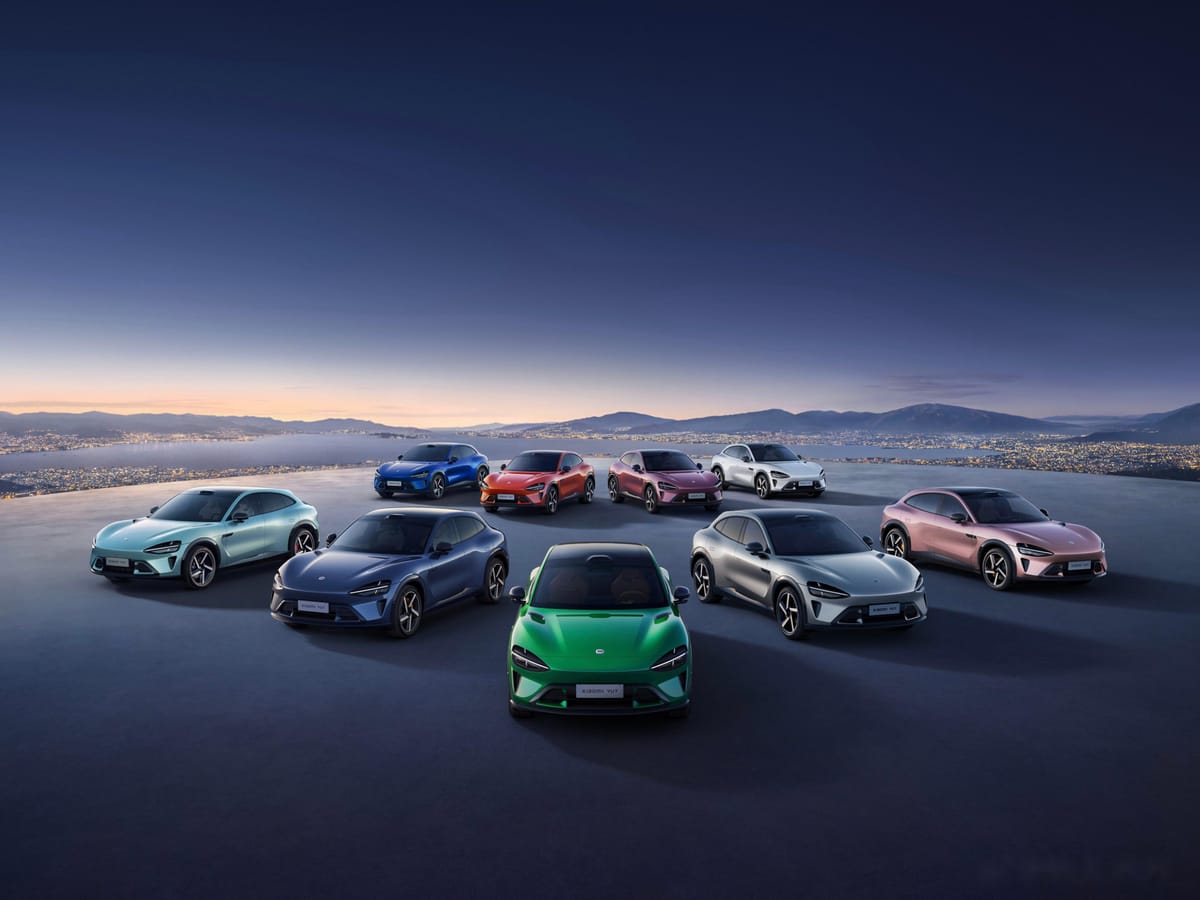
Nearly 20 electric vehicle models have raised prices since March 2026, ending a three-year deflationary spiral — but the shift exposes how badly the industry's profit engine has broken down.
The abrupt reversal of China's EV price war is less a sign of industry confidence than a distress signal: automakers are raising prices not because they can, but because they must. With the domestic auto sector's profit margin collapsing to 3.2% in Q1 2026 — barely half the 6% historical average for Chinese manufacturing — the era of loss-leader pricing has hit a structural wall.
The inflection point arrived in Q2 2026, when a cascade of cost shocks from the supply chain converged with a reckoning on the income statement. Battery-grade lithium carbonate has surged more than 125% since July 2025, approaching RMB 200,000 per tonne (approximately US$27,800), while automotive-grade DRAM prices have climbed roughly 180% over the past three months, with spot DDR5 prices up more than 300%. According to UBS estimates, memory-chip inflation alone adds RMB 3,000–7,000 (US$417–972) to the per-unit cost of an intelligent EV. For a mid-range smart EV priced at RMB 150,000 with a historical net margin of 5–8%, that cost increase compresses profit by 73–93%.
Pricing Moves Reveal a Three-Track Strategy Across the Industry
The repricing wave began on March 4, when Huawei's Harmony Intelligent Mobility Alliance raised the sticker price of the Aito M9 by RMB 10,000 following an upgrade to next-generation LiDAR. The Zunjie S800 Star Honor Edition simultaneously moved from RMB 788,000 to RMB 808,000 (US$112,222).
Xiaomi followed days later, lifting its entire SU7 lineup by RMB 4,000 across all trims — Standard at RMB 219,900, Pro at RMB 249,900, and Max at RMB 303,900. At the launch event, CEO Lei Jun disclosed that material costs alone had risen by approximately RMB 20,000 per vehicle; the RMB 4,000 increase represented what he described as a deliberate decision to absorb the majority of the shock.
BYD opted for a more surgical approach. Rather than adjusting vehicle MSRPs, it raised the price of its "Eye of God B ADAS LiDAR Edition" driver-assistance add-on package from RMB 9,900 to RMB 12,000 — a RMB 2,100 increase — across the Han L EV, Tang L EV, and Seagull 07 EV under its Dynasty, Ocean, and Fang Cheng Bao sub-brands.
Changan Qiyuan cited surging automotive-grade chip costs in a formal notice, raising the Q07 Tianshu Intelligent LiDAR Edition by RMB 3,000 effective May 7. NIO increased prices on the 2026 ES6 and ET5 by RMB 5,000–10,000 while simultaneously eliminating complimentary battery-swap entitlements. Xpeng raised its XNGP full-scenario advanced driving package by RMB 2,000 and converted lifetime software access to an annual subscription model.
Even joint-venture brands adjusted. Volkswagen's ID. series rose RMB 4,000–7,000 on select variants; Toyota's bZ4X added RMB 6,000. Analysts classify the overall repricing into three categories: direct MSRP increases (Tesla, NIO), software and hardware package hikes (BYD, Xpeng), and benefit curtailment — what the industry is calling "stealth pricing" (Zeekr). For consumers, the net effect is an overnight increase in total acquisition cost of RMB 2,000 to over RMB 10,000 depending on configuration.
Q1 Earnings Lay Bare the Depth of the Margin Crisis
The financial rationale for the pivot is unambiguous. Q1 2026 results from China's leading automakers showed across-the-board deterioration. BYD's net profit attributable to shareholders fell 55.38% year-on-year to RMB 4.085 billion (US$567 million). Meanwhile, Great Wall Motor reported net profit of RMB 945 million (US$131 million), down 46.01% year-on-year.
New energy pure-plays fared no better. Li Auto swung to a net loss of RMB 2.276 billion (US$316 million). Xpeng's net loss widened 169.7% year-on-year to RMB 1.78 billion. Leapmotor lost RMB 390 million. NIO, despite reporting a four-year high in gross margin, still posted a net loss of RMB 332 million.
The gross margin divide is now the clearest indicator of survival capacity. Seres, BYD, Xpeng, and NIO maintain gross margins above 18%, preserving a buffer. Li Auto, Leapmotor, and GAC have seen gross margins fall to single digits, placing them at what analysts describe as an operational red line.
Vehicle Weight Creep Compounds the Cost Spiral
A structural factor compounding upstream cost pressure is the steady increase in vehicle curb weight — a trend driven by the industry's arms race in battery capacity and intelligent hardware. Ministry of Industry and Information Technology data shows that from January 2025 through April 2026, the average curb weight of in-market NEVs exceeded 2,005 kg, with a median of 1,945 kg.
By powertrain type, extended-range EVs are the heaviest at an average 2,373 kg, followed by plug-in hybrids at 2,144 kg and pure EVs at 1,914 kg. At the brand level, Li Auto averages 2,561 kg per vehicle. Zeekr, NIO, IM Motors, and Tesla all average above 2,100 kg.
Heavier platforms require larger battery packs to maintain range targets, and impose higher engineering specifications on chassis, suspension, braking, and tires — creating a self-reinforcing cost escalation loop that price cuts had previously masked.
ICE Makers Cut Deeper as Demand Collapses
While EV makers raise prices, the internal combustion engine segment is engaged in a parallel and more desperate dynamic. According to data released by the China Passenger Car Association, retail sales of conventional fuel vehicles fell 37% year-on-year in April 2026, with May expected to extend the decline. Dealer inventory ratios for joint-venture and premium brands reached 2.24 months and 1.99 months respectively at end-April — well above the 1.5-month threshold considered healthy.
Fitch Ratings Asia-Pacific Director of Corporate Ratings Yang Jing attributed the demand collapse partly to surging oil prices driven by Middle East geopolitical tensions, which triggered a sharp drop in fuel vehicle demand from mid-March onward.
The discounting is severe. BMW China has adjusted retail guidance on 31 models in 2026, with 24 models cut by more than 10% and five cut by more than 20%. Mercedes-Benz has reduced pricing on the C-Class and GLC by up to RMB 69,000. Dongfeng Nissan's Sylphy Classic 2026 Edition, with a list price of RMB 79,900, is transacting at a minimum of RMB 50,200. According to CPCA Secretary-General Cui Dongshu, the average conventional fuel vehicle sold in January–April 2026 carried a discount of RMB 34,000 — a 14.6% reduction — with April's average discount reaching 17.2% on models averaging RMB 131,000.
The Divergence Signals a Structural Shift, Not a Cyclical Blip
The "EV up, ICE down" dynamic playing out in China in mid-2026 is not simply a pricing anomaly — it reflects the maturation of a technology transition. EV makers are raising prices specifically on intelligent driving hardware, a signal that consumer willingness to pay for autonomous-capability features is now sufficient to support premium pricing. Entry-level domestic NEVs priced around RMB 100,000 now routinely include highway NOA (Navigate on Autopilot), a feature absent from comparably priced joint-venture combustion vehicles.
For the ICE segment, the comparison to Nokia at the end of the feature-phone era is increasingly apt in analyst circles: technically competent products, but structurally disadvantaged in an ecosystem where software and intelligence define perceived value. Absent a differentiated proposition beyond price, further margin compression appears inevitable.
The central question for investors is whether EV price increases will hold. With gross margins still thin across most of the sector and upstream cost pressures unlikely to reverse quickly, the industry's ability to sustain higher pricing — without ceding volume to better-capitalized rivals — will define which balance sheets survive 2026 intact.
Related Coverage:
China EV Price War Stalls as Surging Supply Chain Costs Squeeze Profit Margins