
China's EV Startups Eye Q4 Profitability As Margin Pressures Mount
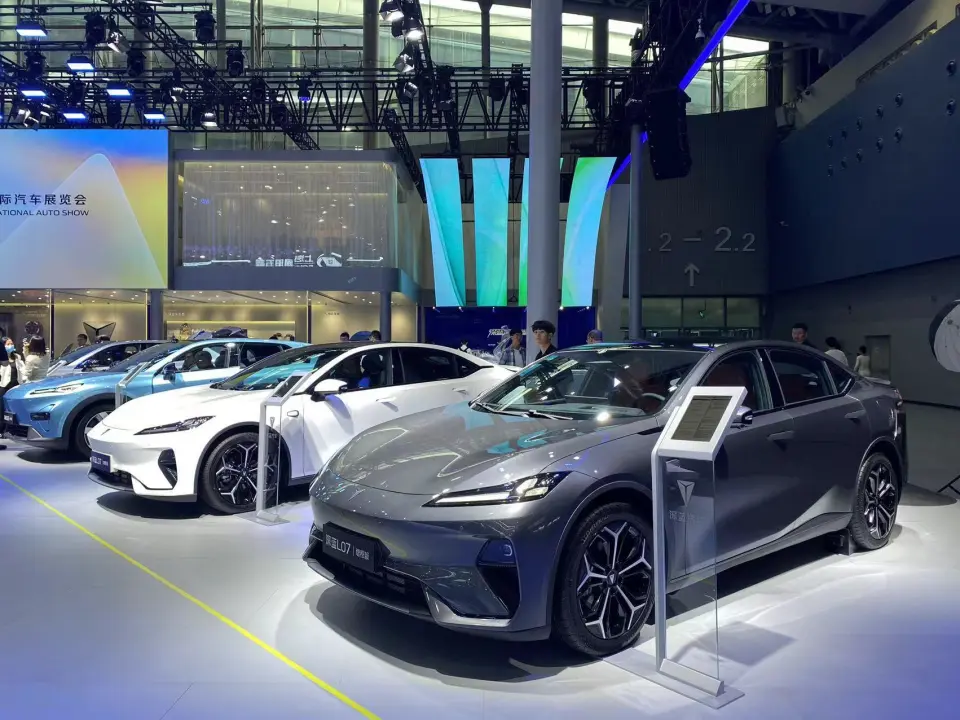
Morgan Stanley initiated its preview of China's electric vehicle startup earnings season on November 6, signaling that fourth quarter results will be critical in determining whether these cash-burning manufacturers can finally achieve sustainable profitability amid intensifying competition and potential cyclical headwinds in 2026.
The investment bank's analysis, led by equity analyst Tim Hsiao, suggests that while third quarter results are expected to largely meet market expectations, investors will scrutinize operational metrics and forward guidance more closely than ever. The central question: can new model launches and refined pricing strategies offset mounting sector pressures?
Mixed Margin Outlook Across The Board
For XPeng, Morgan Stanley projects third quarter vehicle gross margin to edge up just 0.2 percentage points quarter-over-quarter to 14.5%, with scale benefits offsetting slower ramp-up of the G7 model and sustained sales mix of the budget-friendly Mona 03. The company's third quarter deliveries of 116,000 units landed within guidance of 113,000-118,000 units, generating revenue around RMB 20.4 billion yuan (US$2.8 billion).
Despite incremental improvements, XPeng remains unprofitable, with Morgan Stanley expecting a net loss around RMB 500 million yuan (US$69 million) for the third quarter, roughly matching the RMB 478 million yuan loss in the second quarter. Fourth quarter volume is projected to grow 12-16% sequentially to 130,000-135,000 units, driven by the new P7 ramp-up and contributions from the X9 extended-range electric vehicle.
Li Auto, facing its own challenges, is expected to report flat vehicle gross margins of 19.4% in the third quarter. The company's 93,000 unit deliveries met guidance but implied a sharp 40% year-over-year revenue decline to RMB 25.7 billion yuan (US$3.5 billion). Morgan Stanley projects a modest RMB 0.3 billion yuan net profit, translating to just RMB 2,900 yuan per vehicle sold—down dramatically from RMB 9,900 yuan in the second quarter. Higher discounts and launch expenses for the i8 and i6 models are weighing on profitability.
NIO's Path to Breakeven Remains Long
NIO, perhaps the most closely watched of the trio, is expected to narrow its losses but remains deeply unprofitable. Morgan Stanley forecasts a third quarter net loss of RMB 4.3 billion yuan (US$592 million), an improvement from RMB 5 billion yuan in the second quarter but still substantial.
The company's 87,000 third quarter deliveries arrived at the low end of guidance, generating estimated revenue of RMB 21.9 billion yuan (US$3.0 billion). Vehicle margins should improve to 12.5%, up 2.2 percentage points quarter-over-quarter, as restructuring efforts begin bearing fruit with operating expenses falling to RMB 6.7 billion yuan.
The fourth quarter outlook appears more promising, with Morgan Stanley expecting NIO to guide for 72% sequential volume growth to 150,000 units, driven by the Onvo L90 and refreshed ES8 models.
The 2026 Question
Beyond near-term results, Morgan Stanley emphasizes that investors will demand clarity on 2026 model pipelines and pricing strategies. The analysts note that "EV startups' non-vehicle/AI hard-/software initiatives would carry more weight in stock valuation," suggesting the market is increasingly focused on longer-term technology differentiation rather than pure volume growth.
This shift reflects the harsh reality facing China's EV sector: intensifying competition, potential demand softness, and persistent cash burn are forcing manufacturers to prove their business models are viable beyond subsidies and aggressive pricing.
Morgan Stanley maintains its "In-Line" view on the China Autos & Shared Mobility sector, with overweight ratings on all three major EV startups covered in the preview. However, the firm's probability-weighted valuations incorporate substantial bear case scenarios reflecting risks from weakening sales volumes, delayed model launches, and moderating overall auto sales growth.
As the earnings season kicks off mid-November, the market will be watching not just whether these companies can hit their fourth quarter profitability targets, but whether they can articulate a credible path to sustainable margins in an increasingly crowded and competitive market.