
XPeng Unveils "Physical AI" Vision With Robotaxis, Humanoid Robots, and Flying Cars; BofA Lifts Price Target to $27
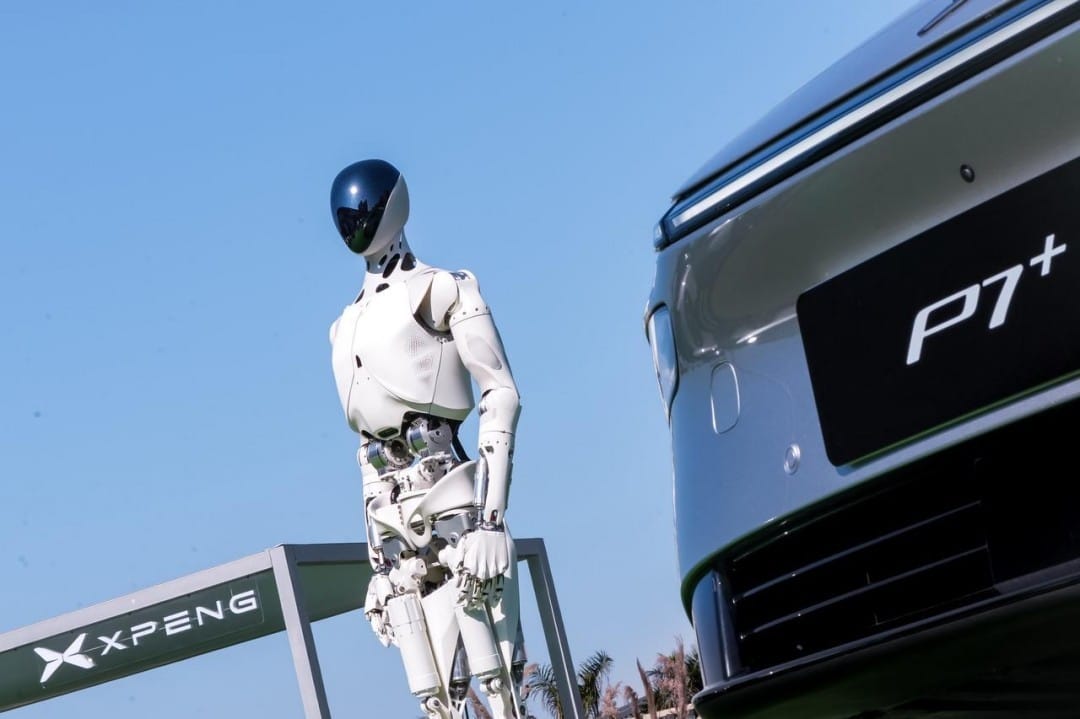
Bank of America Securities raised its price target on XPeng to US$ 27 per ADS US$26 following the Chinese EV maker's ambitious 2025 AI Day event on November 5, where the company positioned itself as an explorer in what it calls the "Physical AI" world—artificial intelligence deeply integrated with the physical realm. The event showcased four major AI-defined applications that signal XPeng's intention to evolve far beyond a traditional automaker into a comprehensive mobility and robotics company.
For investors watching China's EV sector consolidation and the race toward autonomous driving, XPeng's announcements represent both a strategic pivot and a significant capital commitment that could differentiate the company from peers like NIO and Li Auto, though execution risk remains substantial.
VLA 2.0: The Operating System for Physical AI
At the core of XPeng's vision is VLA 2.0, what the company describes as the "OS controlling cerebellum" in Physical AI—essentially a vision-centered foundation model that makes decisions through understanding, prediction, and generation. According to the company, VLA 2.0 features "human-like learning for minimal information loss, higher inference efficiency, and quicker response."
The system is powered by XPeng's proprietary Turing AI chip, delivering up to 2,250 TOPS (trillions of operations per second) computing power with 12x improvement in inference efficiency. Perhaps more significantly, VLA 2.0 adopts a 30,000-card compute cluster on Alibaba Cloud based on a 72-billion parameter foundation model, enabling one full-cycle iteration every five days.
XPeng announced that Volkswagen has become the launch customer for VLA 2.0 and has booked orders for Turing AI chips—a notable validation of XPeng's technology stack that could evolve into meaningful licensing revenue. The company plans to invite pioneer users to experience VLA 2.0 in late December 2025, with a full rollout to Ultra trim customers in first-quarter 2026.
Three Robotaxi Models Coming in 2026
On autonomous vehicles, XPeng is making a clear distinction between driver-absent robotaxis (B2B, requiring regulatory approval) and driver-present L4 models (B2C, no regulatory approvals needed). The company will launch three robotaxi models in 2026 featuring dual hardware redundancy designed for L4 autonomy with primary and failover systems.
These robotaxis will be powered by four Turing chips (3,000 TOPS total) and adopt VLA 2.0, supporting adaptation to driving cultures worldwide for global deployment potential. XPeng emphasized its advantages in mass-scale production and larger operation areas as "China's first full-stack self-developed production robotaxi."
Critically, Amap (Alibaba's mapping service) has become XPeng's first global ecosystem partner for robotaxi deployment. The company will also introduce a "Robo" trim for select models, sitting above existing Max/Ultra configurations.
IRON Humanoid Robot Targets End-2026 Mass Production
XPeng unveiled its new-generation IRON humanoid robot, targeting mass production by end-2026. The robot features what the company describes as the most human-like design in the industry, with a human-like spine, bionic muscles, full-coverage soft skin, head-mounted 3D curved display, bionic dynamic shoulders, and dexterous hands with 22 degrees of freedom.
IRON will be the first robot in the industry to adopt all solid-state batteries, reducing weight by 30% while lifting energy density by 30% and improving safety. Like the robotaxis, IRON uses 2,250 TOPS computing power and is powered by a combination of VLT (vision language task) large model for autonomous actions, VLA for body control, and VLM (vision language model) for interactions.
Rather than targeting household applications like screw tightening or housework, XPeng plans commercial deployment in settings such as tour guides, shopping guides, and patrol services. Baosteel has already committed to using IRON for inspections.
ARIDGE Flying Cars: Factory Operational, 2026 Deliveries Planned
XPeng's ARIDGE unit unveiled the A868, a fully tiltrotor hybrid six-seater flying car that has entered the flight test phase. The A868 features 500km+ cruise range with maximum speed of 360km/h. ARIDGE is now operating what it claims is the world's first mass-production intelligent flying car factory with planned annual capacity of 10,000 units (initial capacity of 5,000 units), and the first prototype has already rolled off the production line.
The company plans to start mass production and delivery of the ARIDGE land aircraft carrier—a vehicle designed for individual use—in 2026, alongside the A868 for group travel.
Earnings Revisions and Valuation
BofA analysts, led by Ming Hsun Lee, lifted 2025/26/27 volume estimates by 0.2%/0.2%/0.3% based on the latest sales data, translating to similar revenue increases. However, they tweaked down gross margin estimates on product mix changes. Net result: the firm now expects 2025 non-GAAP net loss to widen by 37% to RMB1.1 billion (US$153 million), while lowering 2026/27 non-GAAP net profit estimates by 4%/6%.
The new US$ 27 price target (HKD 105 per share) is derived from an average of EV/sales valuation (implying US$ 30) and DCF valuation (US$ 24.4),using a 1.5x EV/sales multiple on 2026 revenue and an 21.79% close referenced in the report.
BofA maintains its Buy rating, citing a "strong model pipeline in 2H25-26," though the widening near-term losses and ambitious technology roadmap across vehicles, robots, and aircraft suggest execution will be critical. For a company with market value around US$20.7 billion, the capital intensity of simultaneously developing three distinct hardware platforms—autonomous vehicles, humanoid robots, and flying cars—represents both the opportunity and the risk in XPeng's Physical AI bet.