
China's EV Startups Post Stronger Sales but Every Major Player Misses Half-Year Target
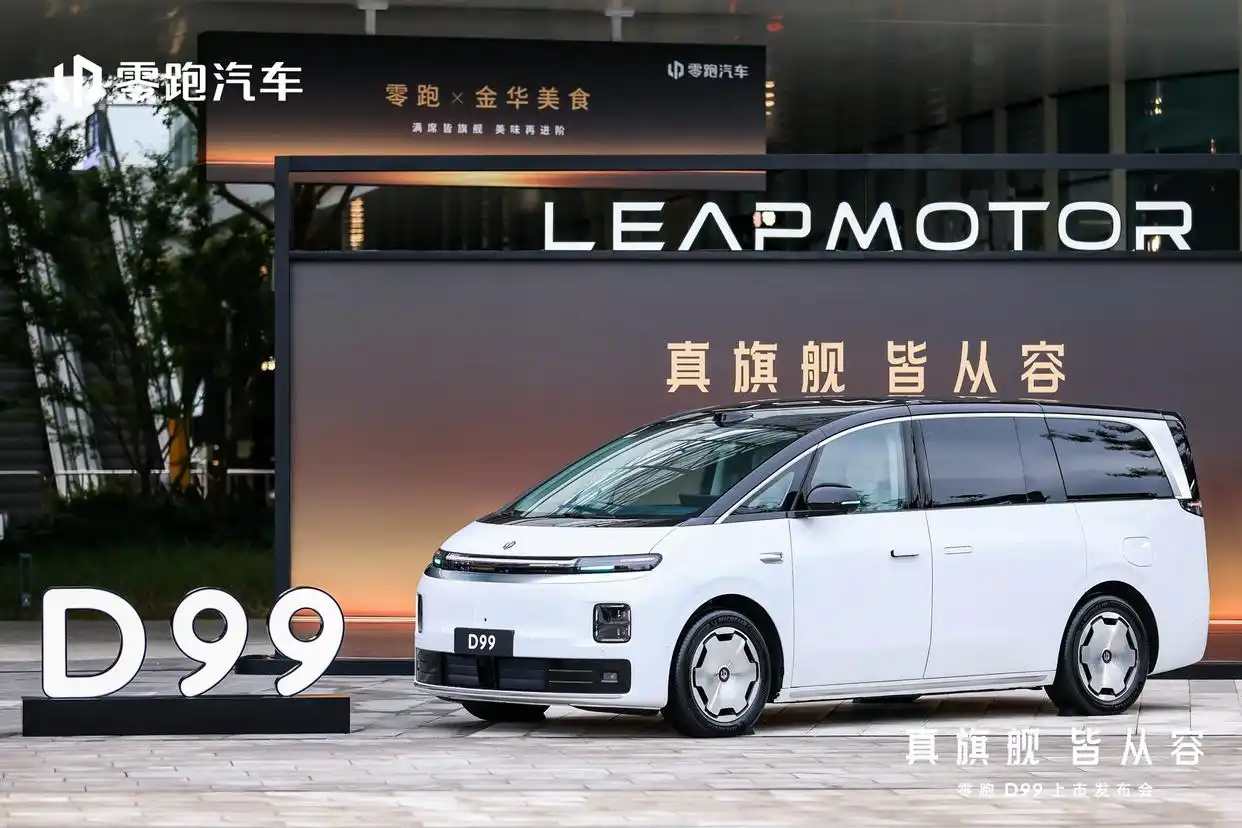
Not one of China's leading electric vehicle startups has crossed the halfway mark on its 2026 annual delivery target — a collective shortfall that exposes the brutal arithmetic of a market shifting from growth to survival.
The H1 2026 mid-term scorecard for China's new-energy vehicle upstarts reveals a widening chasm between volume leaders and profit generators. Leapmotor seized the top delivery ranking with 356,487 units — a 61.2% year-on-year surge — yet its Q1 gross margin collapsed to 9.4% from 14.9% a year earlier, producing a net loss of RMB 390 million (US$54.2 million). The pattern is industry-wide: sales are rising, but sustainable profitability remains elusive.
The backdrop is unforgiving. China's overall passenger car retail market contracted 6.2% in H1 2026 to 10.318 million units, according to the China Passenger Car Association, even as new-energy vehicles expanded 16.7% to 5.923 million units. NEV penetration hit 57.4% for the half-year period and breached 63% in June alone — a threshold that signals the market has crossed from incremental adoption into zero-sum competition for existing buyers.---
Leapmotor Dominates Volume While Burning Margin
Leapmotor's H1 performance is the defining story of the period. Its 356,487 deliveries outpaced the second-ranked competitor by more than 110,000 units, and June's single-month record of 93,376 units — up 95% year-on-year — marked the first time any pure-play startup approached the 100,000-unit monthly threshold.
Yet the cost of that volume is visible in the income statement. The company's value-pricing strategy, combined with heavy in-house cost-reduction investment, compressed Q1 gross margin by 550 basis points year-on-year to 9.4%. To hit its full-year target of 1 million units, Leapmotor must average 107,000 deliveries per month in H2 — a pace that will almost certainly require sustained terminal discounting, further pressuring an already thin margin profile.
On the international front, Leapmotor is the only startup to have achieved meaningful overseas scale. H1 exports approached 100,000 units, already surpassing its full-year 2025 export total, with overseas deliveries representing nearly 30% of total volume. June exports reached 21,000 units. As European localized production capacity comes online, Leapmotor is positioned to be the first among its peer group to establish a commercially self-sustaining overseas operation.---
Li Auto Slides as Transition Costs Bite Hard
The most consequential reversal belongs to Li Auto, which delivered 193,500 units in H1 2026 — a 5.1% year-on-year decline and the only negative-growth figure among major startups. June deliveries fell on both a year-on-year and month-on-month basis.
The financial damage is sharper than the volume numbers suggest. Li Auto's Q1 vehicle gross margin plummeted to 6.1% from 19.8% in the same period of 2025, and the company swung to a net loss of approximately RMB 2.3 billion (US$319.4 million). The company is simultaneously defending its dominant extended-range SUV segment against intensifying competition and funding an accelerated push into the pure-electric market — a two-front campaign that is compressing profitability at precisely the moment when investor patience for loss-making growth is thinning.---
Nio Rebounds; Xpeng and Xiaomi Reveal Structural Limits
Nio, long criticized for its multi-brand complexity and capital intensity, delivered 191,123 units in H1 2026, up 67.4% year-on-year — its strongest half-year performance. The company's battery-swap ecosystem and tiered brand architecture appear to be generating returns. Q1 group gross margin reached 19.0%, with vehicle-specific gross margin at 18.8%, improving on both a sequential and annual basis. Nio holds over RMB 40 billion (US$5.56 billion) in cash, providing meaningful runway even as operating profitability remains out of reach.
Xpeng delivered 165,977 units in H1, a modest 15.9% increase, as aging model lines faced compression in the mid-market segment. The company's Q1 group gross margin of 20.6% — the highest among leading startups, though supported significantly by high-margin services revenue — provides a financial buffer, but the pace of model refreshes and new launches lags competitors.
Xiaomi Automotive delivered over 180,000 units in H1 on the strength of just two models, sustaining a monthly run-rate of approximately 30,000 units. The concentration risk is increasingly apparent: with a thin product matrix, near-term volume upside is constrained unless new models arrive on schedule.
Huawei-backed Harmony Intelligent Mobility posted 240,000 H1 deliveries, up 18.6%, retaining second place in the rankings. However, its H1 target completion rate of approximately 20% is the weakest among all major players, and its 1-million-unit annual ambition now appears structurally unachievable given current trajectory.---
Target Completion Rates Reveal a Sector-Wide Reckoning
The aggregate target completion data is the clearest indicator of industry stress. Among the major startups, H1 completion rates cluster around 30% for Li Auto, Xpeng, and Xiaomi — meaning each must deliver roughly 70% of its annual goal in the second half. Leapmotor's 35.6% completion rate, while the highest among peers, still demands an H2 acceleration that implies ongoing price concessions.
The contrast with traditional automaker-backed NEV brands is instructive. Zeekr, Deep Blue, and Voyah — all incubated within established automotive groups — reported H1 target completion rates above 50%, with Zeekr reaching 60%. These brands benefit from manufacturing scale, established supply chains, and more conservative goal-setting discipline, attributes that pure-play startups have historically undervalued.---
Profitability Becomes the New Benchmark as Volume Loses Its Halo
The H1 2026 data crystallizes a structural shift in how investors and industry analysts are evaluating NEV brands. In a market where NEV penetration has already exceeded 60%, incremental volume growth no longer differentiates winners from losers. The new benchmark is the path to sustainable unit economics.
By that measure, no major startup has yet passed. Xpeng and Nio lead on gross margin but remain loss-making at the operating level due to elevated sales and R&D expenditure. Both carry cash reserves exceeding RMB 40 billion (US$5.56 billion), providing time to close the gap. Leapmotor's volume leadership comes at the cost of margin deterioration. Li Auto faces the most acute near-term pressure, with both volume and profitability moving in the wrong direction simultaneously.
The second half of 2026 will force a strategic binary: accelerate discounting to chase volume targets and sacrifice margins further, or revise annual guidance downward and defend the balance sheet. Either path sustains the high-intensity competitive environment that has defined the sector — and neither resolves the fundamental question of which startup will be the first to demonstrate that scale and profitability can coexist in China's new-energy vehicle market.
Related Coverage:
China EVs End H1 Strong, Leapmotor Nears 100K Monthly Deliveries