
China’s EV Winter Test Shows Surge in Reliability as Local Tech Buoys Foreign Brands
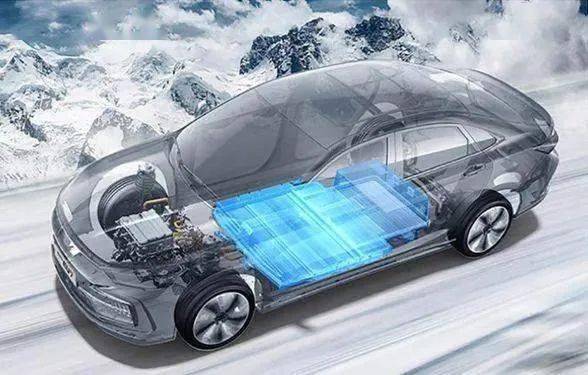
China’s new energy vehicles (NEVs) have demonstrated a significant leap in cold-weather resilience and mechanical reliability in 2025, dispelling lingering concerns over battery performance in extreme climates. Data from the latest comprehensive winter testing indicates that the technological maturity of the sector has largely stabilized, with critical component failures becoming increasingly rare even under severe freezing conditions.
The 2025 Autohome Winter Test reveals that 90% of participating models successfully withstood high-intensity testing in sub-zero environments without experiencing functional breakdowns. This marks a sharp improvement from previous years, where issues such as frozen door handles, door closure failures, and touchscreen malfunctions were commonplace. With NEV market penetration reaching 59.5% in November 2025, the results suggest that electric drivetrains are now sufficiently robust to meet mass-market demands across China's diverse climatic zones.
Crucially, the assessment highlights a shifting competitive landscape where international automakers adopting "Reverse Joint Venture" strategies—integrating Chinese supply chains for core electrification technologies—are outperforming traditional luxury peers. While models utilizing local technology stacks demonstrated superior range retention, the test also exposed widening gaps in active safety systems on icy surfaces, specifically regarding Automatic Emergency Braking (AEB) capabilities.
Despite the overall gains in powertrain stability, the industry continues to face challenges in thermal management and smart driving reliability on low-friction terrain. While battery chemistry differences have narrowed, the inability of most vehicles to rapidly heat cabins or autonomously brake effectively on snow suggests that software calibration and thermal efficiency remain the next frontiers for engineering optimization in the world’s largest auto market.
Resilience in Extreme Cold
The 2025 winter assessment subjected vehicles to a combination of high-intensity driving and outdoor static soaking in temperatures ranging from -25°C to -10°C. Only five vehicles experienced operational failures, characterized as low-voltage battery depletion preventing start-up, heating system failures, or temporary air suspension malfunctions. This reliability rate represents a substantial upgrade for the sector.
In terms of range performance, plug-in hybrids (PHEV) and extended-range electric vehicles (EREV) achieved an average comprehensive range retention rate of over 52%. Pure electric vehicles (BEVs) followed with an average achievement rate of 42%. Among the 32 BEV models tested, which had an average battery capacity of 79 kWh, the average real-world range in extreme cold was 257 kilometers.
Notable performers included the Yangwang U7, a model under BYD, which achieved the longest real-world range of 372.9 kilometers. The P7 model from XPeng recorded the highest range achievement rate among pure EVs at 54%. Furthermore, the performance gap between battery chemistries has effectively closed. Vehicles powered by Lithium Iron Phosphate (LFP) batteries achieved an average range retention rate of 42.0%, slightly outperforming Nickel Cobalt Manganese (NCM) batteries at 41.6%, indicating that LFP technology no longer suffers from significant disadvantages in low-temperature environments.
Success of "Reverse Joint Ventures"
The testing data validates the strategy of legacy international brands deepening ties with Chinese technology partners. Foreign brands that have localized their supply chains for batteries, motors, and electronic controls generally performed better than those relying on traditional global architectures. Overseas mainstream brands achieved an average pure electric range retention rate of 43.7%, leading other segments.
The Nissan N7, a product integrating Chinese NEV supply chains, delivered a retention rate of 47.4%. Similarly, the Bozhi 3X under Toyota and the Buick Zhijing achieved rates of 40% and 38%, respectively. In contrast, traditional luxury entrants struggled to match these metrics. The Mercedes-Benz CLA New Energy, despite boasting the highest nominal CLTC range of 866 kilometers, achieved a real-world range of only 320 kilometers, resulting in a 37% retention rate—the largest disparity between advertised and actual performance in the test group.
Safety and Efficiency Bottlenecks
Despite powertrain improvements, cabin heating efficiency remains a weakness across the board. In tests conducted between -22°C and -16°C, only 18% of vehicles could raise the front row cabin temperature to a comfortable 18°C or higher within 15 minutes of activating maximum heating. The majority of vehicles (38%) could only reach temperatures between 10°C and 18°C, while some underperforming models failed to raise cabin temperatures above freezing.
Active safety systems also showed significant limitations on winter roads. While 98% of tested vehicles were equipped with AEB, the pass rate on snowy surfaces at 20 km/h was only 18.4%. The Tesla Model 3 failed to respond in the low-speed snow test. At higher speeds, performance deteriorated further; only 6.1% of models successfully braked at 60 km/h. Models equipped with intelligent driving systems from Huawei demonstrated the most robust performance, accounting for the vehicles that successfully avoided collisions at speeds of 40 km/h and above.