
China's Exoskeleton Robot Market Hits RMB 1.6B as Consumer Demand Takes Over
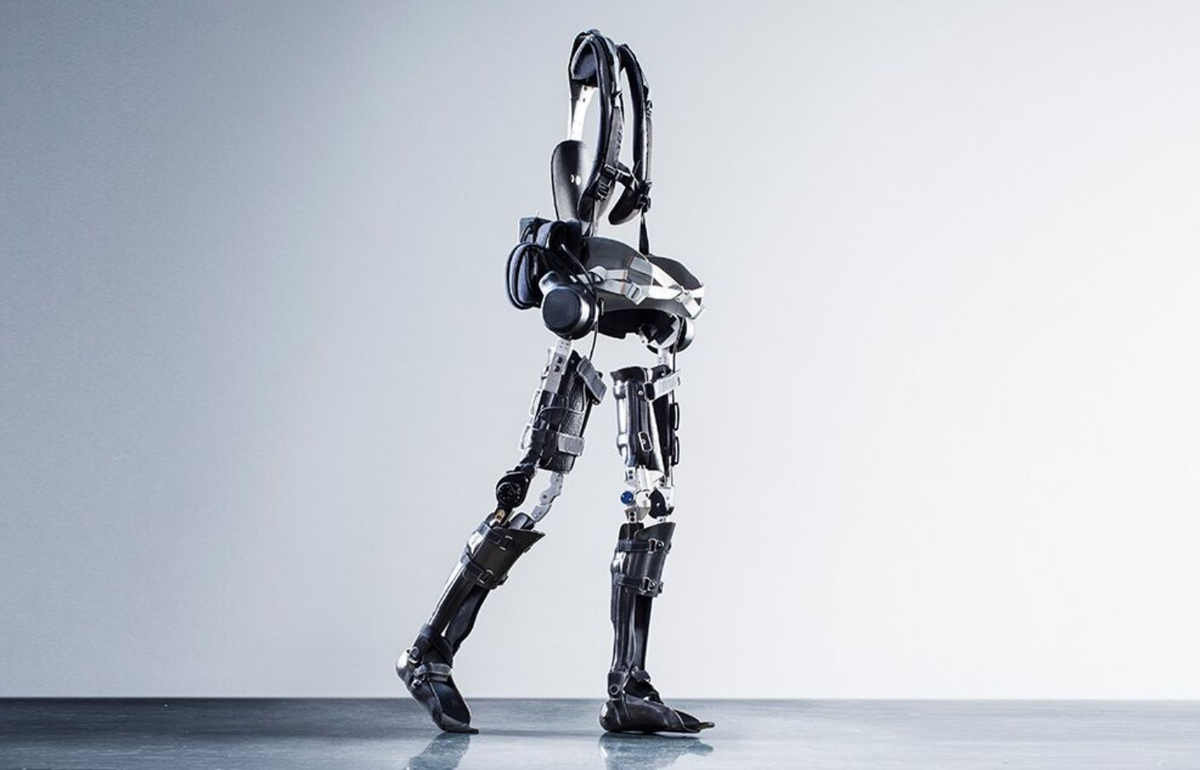
IDC's first unified market report reveals a structural split: medical rehabilitation captures 88% of revenue while consumer-assist devices drive 73% of unit shipments — a divergence that forces investors and manufacturers to rethink where value is actually created.
International Data Corporation (IDC) on August 4, 2026 released its inaugural China Exoskeleton Robot Market Share, 2025 report, placing the total market at RMB 1.6 billion (US$222 million) on shipments of approximately 26,000 units. The data marks the first time IDC has consolidated all three application verticals — medical rehabilitation, consumer-assist, and industrial — into a single market framework, a methodological choice that itself signals the sector has reached sufficient commercial maturity to warrant cross-segment benchmarking.
The headline figures, however, mask a structural paradox that carries direct implications for capital allocation. Medical rehabilitation accounts for RMB 1.42 billion (US$197 million), or 88.3% of total revenue, yet its unit volume — roughly 3,200 devices — represents just 12% of total shipments. Consumer-assist exoskeletons, by contrast, generated only RMB 110 million (US$15.3 million), or 6.8% of revenue, while contributing approximately 19,000 units, or 73% of all shipments. Industrial applications shipped an estimated 3,800 units for RMB 78 million (US$10.8 million). The gap between where the money is today and where the volume is going defines the sector's central strategic tension heading into the second half of this decade.
Medical Segment Holds Revenue Crown but Faces a Volume Ceiling
The medical rehabilitation vertical's dominance in value terms rests on structural advantages that are difficult to replicate quickly in other segments. Clinical validation pathways, established hospital procurement channels, and reimbursement linkages have allowed vendors to sustain high average selling prices. Hospitals' rehabilitation departments, specialist rehabilitation hospitals, and rehabilitation centers remain the primary deployment environments.
Fourier Intelligence, RoboCT, and Fourier's sector peer MileBot hold leading positions in this vertical, according to the IDC report. Fourier Intelligence, one of the earliest domestic entrants into medical-grade exoskeletons, describes the commercialization arc as inherently sequential: clinical institutions first, then elder-care facilities and nursing homes, and finally residential home penetration — with institutional elder care representing the medium-to-long-term primary battleground before mass home deployment becomes viable.
Shanghai-based rehabilitation medicine clinicians interviewed by Yicai confirm that upper-limb exoskeletons addressing post-stroke recovery and hand-function restoration, alongside lower-limb devices targeting gait and postural correction, have become increasingly standard in hospital settings in 2026. More notably, AI-assisted decision support embedded in these devices is enabling treatment protocols to be transmitted to affiliated hospitals in underserved regions, effectively extending specialist-level care into China's primary healthcare tier.
The medical segment's constraint, however, is structural: hospital procurement cycles are long, unit counts are limited by clinical capacity, and pricing pressure from domestic substitution is intensifying. The volume ceiling is real.
Consumer-Assist Shipments Surge, Driven by Aging Demographics and Falling Unit Costs
The consumer-assist segment's 19,000-unit shipment figure is the market's most consequential data point for forward-looking investors. The combination of accelerating population aging, the expansion of China's "silver economy" policy framework, and a sustained decline in bill-of-materials costs is compressing the price point at which exoskeleton-assisted walking aids become accessible to individual buyers and rental operators.
RoboCT, Kenqing Technology, and Jike lead this segment. Use cases are expanding beyond clinical-adjacent applications into daily mobility assistance, outdoor recreation, and tourism-experience rentals — the last of which represents a particularly capital-efficient distribution model that avoids the inventory risk of direct consumer sales.
Liu Yun, chairman of Huayi Capital, told Yicai that the convergence of silver-economy tailwinds, AI integration, and functional augmentation is what the market is actually pricing when it evaluates exoskeleton companies. His forecast: within three years, exoskeleton devices will transition from "assistive medical equipment" to "everyday wearable gear," following a pattern in which clinical credibility in the medical segment unlocks consumer and industrial adoption at scale.
The per-unit economics of the consumer segment — at roughly RMB 5,800 per device implied by the revenue-to-shipment ratio — remain well above mass-market thresholds but are on a downward trajectory consistent with broader robotics hardware cost curves.
Industrial Applications Move From Pilot to Scale, Anchored by Safety Mandates
The industrial vertical's 3,800-unit shipment base is the smallest in absolute terms but carries the highest optionality value given the breadth of addressable applications: logistics and warehousing, automotive manufacturing, power and energy infrastructure, construction, and emergency response. The common commercial driver across all these use cases is occupational injury reduction and labor productivity enhancement — both of which are increasingly subject to regulatory pressure under China's evolving workplace safety standards.
ULS Robotics, RoboCT, and Mebotx lead the industrial segment. The transition from pilot deployments to systematic rollout is underway, with manufacturing-sector smart-upgrade initiatives providing policy tailwinds. At RMB 78 million in 2025 revenue against 3,800 units, implied average selling prices in the industrial segment are approximately RMB 20,500 per unit — reflecting the more demanding durability, payload, and safety certification requirements of factory-floor environments.
AI Intent Recognition Emerges as the Defining Competitive Moat
Across all three verticals, the IDC report and market participants converge on a single technical differentiator: AI-powered motion intent recognition, combined with lightweight mechanical design and closed-loop data algorithms, constitutes the true barrier to entry — not hardware assembly.
Liu Yun articulates the investment thesis with precision: the underlying algorithms for torque multi-source fusion, motion intent recognition, and individual adaptive response are functionally reusable across medical rehabilitation assessment, consumer running-assist applications, and industrial load-bearing tasks. Companies that route cross-scenario data back into a unified model can amortize single-scenario development costs across multiple revenue streams, creating a compounding moat that pure-play hardware vendors cannot replicate.
The strategic implication for capital allocation is direct: investors and industrial policy evaluators are increasingly scoring companies not on individual segment market share but on cross-scenario technology reusability and platform scalability. For smaller vendors, Liu recommends a sequenced approach — establish a high-willingness-to-pay anchor segment (medical rehabilitation or tourism rental) as a profit pool, then use that cash flow to cultivate a high-growth-rate segment (home consumer or industrial) as a valuation driver, avoiding multi-front inventory exposure that has historically stressed hardware startups.
Impact Assessment: What the RMB 1.6 Billion Baseline Means for 2026 and Beyond
The IDC report's release carries significance beyond its data points. The decision to publish a unified three-vertical market share framework for the first time reflects an industry structure that has consolidated sufficiently for standardized benchmarking — a prerequisite for institutional capital deployment at scale. The RMB 1.6 billion (US$222 million) 2025 baseline, while modest relative to China's broader robotics market, represents a commercialization inflection point that multiple structural forces — demographic aging, AI cost reduction, industrial safety regulation, and elder-care infrastructure buildout — are positioned to accelerate.
The divergence between revenue concentration in medical and volume concentration in consumer is not a contradiction; it is a roadmap. Medical rehabilitation validates the technology and builds clinical credibility. Consumer-assist scales the supply chain and drives unit economics down. Industrial applications convert that cost reduction into enterprise procurement. Companies that can execute across all three — with a shared AI stack at the core — are the ones the market will reward with pricing power, both domestically and globally.
Related Coverage:
China's Exoskeleton Boom: Ant, Meituan, and the Race for China's 323 Million Seniors