
China's First 10 Billion Yuan Embodied Intelligence Unicorn Emerges in Shenzhen
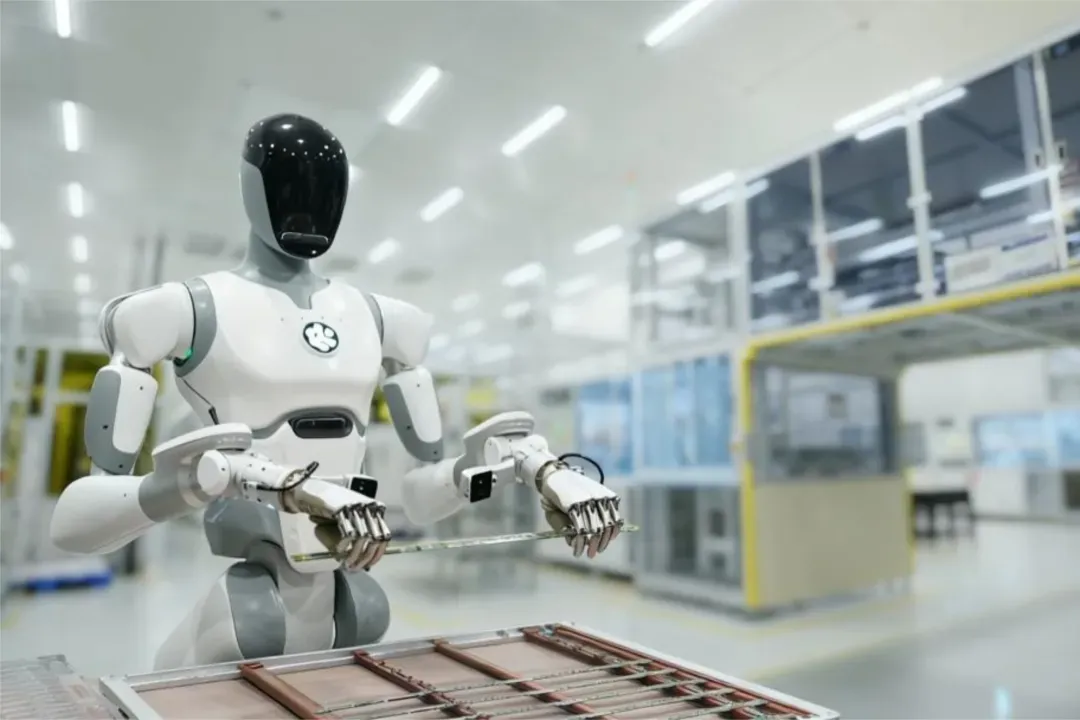
AI² Robotics has completed a Series B funding round exceeding 1 billion yuan (US$138 million), pushing its valuation past 10 billion yuan (US$1.38 billion) and establishing itself as Shenzhen's first embodied intelligence unicorn of this magnitude. The company, founded just two years ago, has now completed 12 funding rounds within a single year, attracting investors including CRRC Capital, Baidu Ventures, and multiple Tesla supply chain leaders.
The rapid ascent marks a pivotal moment for China's embodied intelligence sector, where the convergence of AI foundation models and robotics is creating genuine commercial opportunities. AI² Robotics has distinguished itself through its full-stack approach and end-to-end large model architecture, a technical path that, at its inception in 2023, was shared only with Tesla's robotics division globally.
The company's latest funding round signals growing investor confidence in production-oriented robots capable of delivering measurable economic value. AI² Robotics has secured what Morgan Stanley identifies as the world's largest single order for productivity robots—a three-year contract for 1,000 units with HKC Corporation, the world's third-largest panel manufacturer.
The funding comes as China's embodied intelligence industry reaches an inflection point, where commercial viability increasingly separates survivors from casualties in an overcrowded field.
Technical Foundation Built on Original Research
AI² Robotics was founded in early 2023 by Guo Yandong, a researcher who previously served as chief scientist at XPeng Motors and OPPO. Guo, who earned his doctorate from Purdue University in 2013 under two American Academy of Engineering fellows, spent years at Microsoft's Seattle headquarters before returning to China. His experience bridging AI research and hardware deployment shaped the company's strategy of developing proprietary foundation models rather than relying on open-source alternatives.
The company pioneered GOVLA, the world's first full-domain, full-body Vision-Language-Action model. Its initial version, GOVLA 0.0 (RoboMamba), achieved over 80% performance improvement compared to Google's comparable model while using only one-twentieth the model size—work that drew attention from Turing Award winner Yann LeCun. The subsequent GOVLA 0.5 (FiS-VLA) introduced the industry's first heterogeneous input and asynchronous frequency dual-system VLA model, establishing new benchmarks for robots that are simultaneously fast and intelligent.
AI² Robotics has maintained thousand-GPU computing clusters since inception and developed proprietary training acceleration systems to maximize data efficiency. In 2025 alone, the team published dozens of papers accepted by top-tier conferences, including six at NeurIPS, covering world models, multimodal understanding, and VLA architectures. Morgan Stanley's 2025 robotics industry report identified AI² Robotics as a representative company in embodied foundation models.
The team comprises scientists and engineers from Microsoft, Google, OPPO, XPeng, Momenta, and leading institutions including Tsinghua University, Peking University, Chinese Academy of Sciences, Carnegie Mellon University, and UC Berkeley. Five members rank among Stanford's global top 2% scientists, creating one of the highest concentrations of scientific talent in robotics startups.
Manufacturing Scale Meets Commercial Deployment
AI² Robotics launched its proprietary production line in September 2025, achieving hundred-unit monthly output of its AlphaBot 2 model by December. The wheeled dual-arm robot features core components with over 50,000 hours of failure-free operation, meeting industrial reliability standards. The company plans to scale production capacity to 10,000 units annually in 2026.
The AlphaBot series has penetrated industrial flexible manufacturing, entering automotive production, semiconductors, biotechnology, and semiconductor display panels. At HKC facilities, robots handle sorting, transfer, labeling, and assembly assistance tasks. The three-year, 1,000-unit HKC contract stands out for its clear delivery schedule and defined use cases.
In public services, AlphaBot operates in complex open environments including major transportation hubs. The company has deployed "Smart Cube," the world's first modular embodied intelligence service space, in Beijing, Shenzhen, Shanghai, Wuxi, and Changzhou. These robots work over 10 hours daily, producing hundreds of coffees and ice creams with zero production errors.
This diverse, high-volume real-world data enables the foundation model to learn efficiently from complex environments, significantly enhancing generalization capabilities. The operational scale provides a feedback loop that accelerates model improvement while creating barriers to competition.
Funding Velocity Reflects Strategic Alignment
AI² Robotics raised its angel round in August 2023 from SEE Fund, Tsinghua Capital, and SDIC Fortune. The company entered explosive growth in 2025, completing multiple hundred-million-yuan rounds within six months. Its January Pre-A round was co-led by Shenzhen Capital Group and Dunhong Asset Management, with Matrix Partners China participating. March brought additional Pre-A+ funding from Dunhong, Yunqi Partners, and SDIC Fortune.
Mid-2025 rounds were led by China Merchants China Direct Investments and Puhua Capital, with continued participation from Shenzhen Capital Group, Shenzhen Venture Capital, and Nanshan Strategic Emerging Industries Investment. A subsequent round led by Shenzhen Capital Group—which invested over 100 million yuan—drew follow-on commitments from Dunhong and SDIC Fortune, while adding Huaxi Biology and a major retailer as strategic investors.
The Series B includes participation from internet and AI giants, leading state-owned enterprises, Tesla ecosystem leaders, top-tier private equity firms, and brokerage-affiliated funds. Investors cite AI² Robotics' Tesla-like characteristics—full-stack vertical integration, algorithm-driven hardware design, and emphasis on manufacturing capability—as key attractions. The company's production-oriented approach, focusing on robots that perform economically valuable tasks rather than demonstrations, represents a scarce positioning in the market.
The funding pattern reveals investor consensus around companies demonstrating both technical leadership and commercial traction. AI² Robotics' ability to secure repeat backing from sophisticated investors while attracting new strategic partners suggests confidence in its execution model.
Industry Faces Commercial Viability Test
China's embodied intelligence sector is experiencing peak visibility. Multiple robotics companies appeared at the recent Lunar New Year Gala, showcasing capabilities beyond dancing to include reasoning, collaboration, and practical applications. During the two-hour broadcast, JD.com's robot search volume surged over 300% and orders jumped 150%.
Several companies are pursuing public listings, including Unitree Robotics, Zhiyuan Robot, and Galbot. The IPO pipeline reflects capital markets' growing appetite for the sector, but also intensifies pressure for sustainable business models.
The industry is approaching a watershed moment where leading players must demonstrate independence from continuous capital infusions. Survival increasingly depends on securing stable order flow and achieving commercial sustainability that justifies market valuations. While Chinese robot companies are expanding globally, the fundamental test remains unchanged: only those achieving genuine commercial deployment with recurring revenue will endure.
Capital markets welcome policy support for the industry, but companies must deliver commercialization results matching their valuations. The next phase will separate companies with viable business models from those dependent on narrative-driven funding. For AI² Robotics and its peers, the ability to convert technical capabilities into sustained customer demand will determine long-term positioning as China's embodied intelligence sector matures beyond its current speculative phase.