
China's Flying Car Industry: What It Is, Why It's Hard, and Where It's Headed
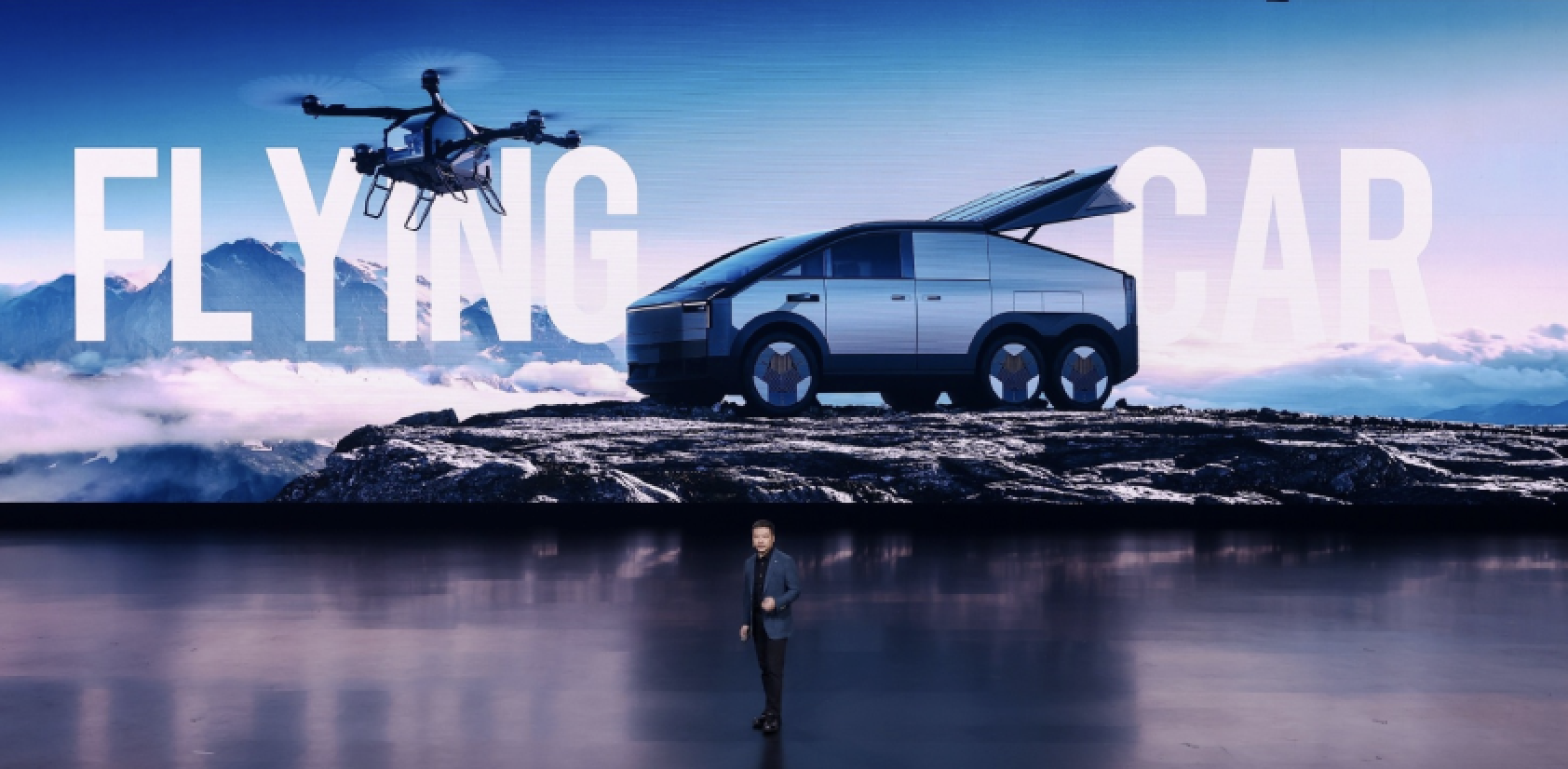
What Exactly Is a Flying Car — and What It Is Not
The term "flying car" gets used loosely, but the distinction matters enormously for understanding the industry's real challenges.
A flying car, in its most precise definition, is a crewed aerial vehicle that takes off from the ground and transports passengers through the air. Whether it looks more like a car or more like an aircraft is secondary. What defines it is the human payload and the direct transition from ground to sky.
This makes flying cars categorically different from two things they are frequently confused with:
- Consumer and commercial drones, which are unmanned devices — tools or toys, not transportation
- eVTOL (electric vertical takeoff and landing) aircraft, which overlap in some technology but occupy a different regulatory, engineering, and commercial space
The gap between building a capable drone and building a certified crewed flying vehicle is not incremental. It is a different engineering discipline, a different regulatory regime, and a fundamentally different risk profile. Companies that excel at one cannot simply pivot to the other.
Two Schools of Thought: Aviation DNA vs. Automotive DNA
Today's flying car developers come from two distinct lineages, and their starting points shape everything from their engineering assumptions to their safety cultures.
The aviation school is built by engineers who came up from aerospace — people who think in terms of system-level failure rates, airworthiness certification, and redundancy architecture baked in from day one.
The automotive school consists of traditional automakers and EV companies that want to extend their platforms into three-dimensional space. They bring decades of manufacturing scale, supply chain depth, and electrification know-how — but they are learning a new safety language.
The asymmetry is stark: the electric vehicle industry has accumulated 30 to 40 years of component development, supplier ecosystems, and reliability data. The flying car sector's serious technical foundation is perhaps five years old.
This gap is not a reason for pessimism. It is simply the baseline from which any honest assessment must begin.
The Three-Stage Development Arc
Understanding where the industry stands today requires placing it within a longer arc:
Stage 1 — Technology buildup and policy scaffolding. This is where China largely sits in 2026. Low-altitude economy was formally designated a strategic emerging industry in 2025. Regulators are working through type certification frameworks. The engineering groundwork is being laid.
Stage 2 — Specific use-case deployment. Niche, high-value applications come first: inter-city corridors, medical transport, tourism, logistics in geography where ground infrastructure is inadequate. These are not mass-market scenarios, but they generate real operational data and revenue.
Stage 3 — Everyday commuter transportation. The vision of a flying car as a routine urban mobility option. This stage requires not just mature technology, but certified vehicles at scale, public acceptance, and air traffic infrastructure that does not yet exist.
The industry in 2026 is firmly in Stage 1, with early Stage 2 use cases beginning to emerge. Stage 3 remains a decade-scale proposition.
The Safety Problem Nobody Talks About Enough: Chips That Die in the Sky
Safety in flying cars is not simply a combination of automotive safety and aviation safety. It is a distinct challenge — and one of its most underappreciated dimensions is radiation.
At cruising altitudes of 1,000 to 3,000 meters, electronic systems are exposed to alpha particles, beta particles, and neutron radiation that simply do not exist at ground level. These particles can cause single-event effects in microcontrollers — random, untraceable failures that cause a chip to lock up without warning and without leaving a recoverable error log.
A chip that is perfectly reliable in a car may not be reliable in the sky. This is not a theoretical concern. It is a known failure mode in aerospace electronics, and it means the automotive industry's hard-won reliability data cannot be directly transferred to flying vehicles.
The safety standards themselves reflect different philosophies:
|
Domain |
Primary
Standard |
Approach |
|
Automotive |
ISO 26262
/ ASIL-D |
Component-level
failure isolation |
|
Aviation |
DO-178C /
DO-254 / DAL-A |
System-level
failure prevention |
|
Flying
Cars |
No
unified standard yet |
Hybrid
framework, still being defined |
The automotive industry's advantage here is quantitative: roughly 80–90 million new vehicles produced annually generate an enormous reliability dataset. Industrial-grade drone components typically achieve system failure rates around 10⁻⁵ to 10⁻⁶. Automotive-grade microcontrollers — such as Infineon's AURIX family — operate at device-level failure rates near 10⁻⁸, enabling system-level safety targets of 10⁻⁹ or better. That depth of validated data is something the nascent flying car sector does not yet have on its own. The practical implication: automotive-grade silicon is currently the most credible safety foundation available for flying car electronics, precisely because it carries the most verified failure-rate data. As the industry matures, a purpose-built flying car chip — designed to handle both automotive-grade reliability requirements and aerospace radiation environments — will likely become a technical necessity.
Weight: Why the Automotive Mindset Needs to Be Unlearned
Modern electric vehicles have been getting larger. Flagships stretching beyond five meters solve a different problem: maximizing interior space, turning the cabin into a mobile living environment. Weight is a cost to be managed, but not an obsession.
Flying cars invert this logic entirely.
In aviation engineering, a commonly cited rule of thumb holds that every kilogram saved is worth approximately 10,000 RMB in lifecycle value — because weight translates directly into energy consumption, which translates into range, payload capacity, and ultimately operating economics.
This creates a different technology hierarchy:
- Battery energy density matters more than almost anything else. Doubling power density cuts battery weight in half — a far greater impact than shaving grams off individual motors. This is why high-density battery chemistries, including condensed-state batteries, are more strategically critical for flying cars than for ground vehicles.
- Power electronics efficiency becomes worth paying for. Silicon carbide (SiC) transistors and optimized gate drivers can push electric drive efficiency above 99.6%. Three-level inverter topologies can add another two percentage points. In automotive applications, these gains are often constrained by cost. In flying cars, the weight and efficiency premium is justified.
- The demand for power density has no ceiling. Where an EV might accept a cost-performance tradeoff on drivetrain components, a flying car will pay the premium — and this pull-through effect is likely to accelerate the broader development of high-efficiency electric propulsion technology.
The counterintuitive insight: flying cars may end up being a more powerful driver of electric powertrain innovation than the automotive industry itself.
Where the Industry Goes From Here
The hype cycle around China's low-altitude economy peaked in 2025 and has since been partially displaced by the robotics and AI narratives of 2026. But the underlying development trajectory has not slowed — it has entered a more consequential phase.
The near-term catalyst to watch is type certification. If Chinese regulators issue a cluster of airworthiness approvals in late 2026 or early 2027, it will mark the transition from prototype demonstrations to commercial operations. That regulatory unlock is the steepest part of the adoption curve.
By 2030, industry projections suggest global flying car fleet size could reach tens of thousands of units, with some estimates approaching 100,000 aircraft. China, with its combination of state policy support, manufacturing infrastructure, and an EV industry that has already built relevant component ecosystems, is positioned to be a dominant supplier in that market.
The structural logic is straightforward: flying cars are not a science fiction concept. They are the automotive industry's four decades of electrification, safety engineering, and manufacturing discipline, extended into three-dimensional space. The technology is not ready for mass deployment today. But the foundation — in chips, in batteries, in power electronics, in safety methodology — is being assembled right now.
The question is not whether flying cars will become a real industry. It is which technical standards will govern them, which companies will survive long enough to achieve certification, and whether the gap between aviation safety culture and automotive manufacturing culture can be bridged before the market opens.
Related Coverage:
XPeng AeroHT and the Long Road to Commercializing the Flying Car