
China's Gaming Giants Pivot Overseas as ‘Mini-Games’ Boom and Romances Cool
China's video game exporters are reshaping their global strategy, finding massive success with simpler, genre-blending "mini-games" while high-production romance titles face headwinds, signaling a major shift in a market now worth over $18 billion annually.
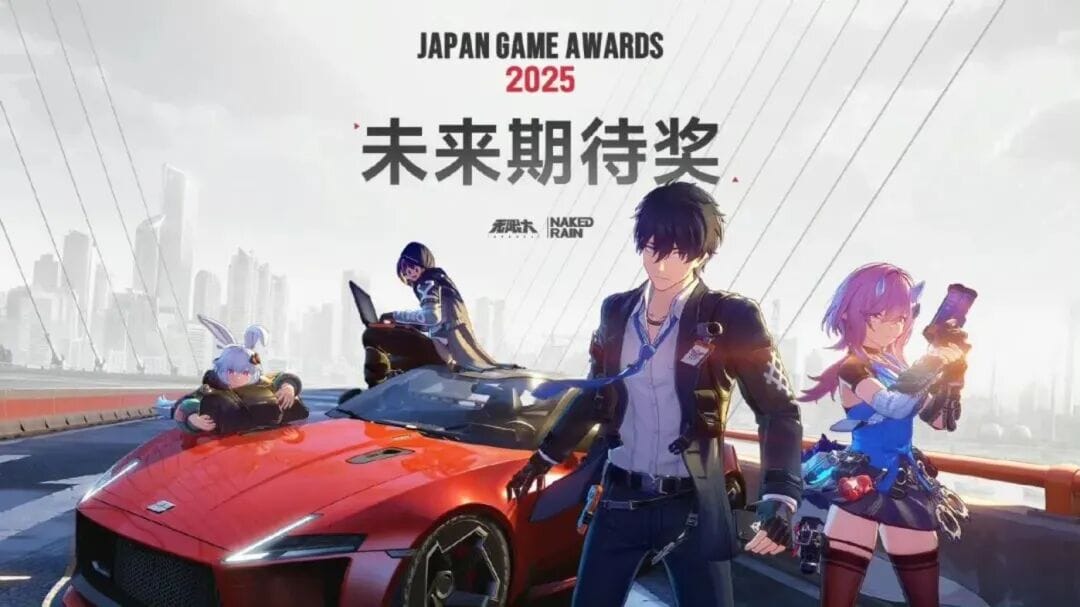
The trend was on full display at the Tokyo Game Show 2025 this month, where Chinese titles like Project Mugen from NetEase, Inc. drew massive crowds, rivaling homegrown Japanese blockbusters and underscoring their growing influence in key international markets. The enthusiasm for Chinese games at recent international expos affirms their rising status in the global industry.
Driving this growth are strategy games like Whiteout Survival, which has grossed over $3.3 billion by blending casual mechanics with complex strategy. This formula is upending the traditional "hardcore-only" approach to the genre and attracting a wider player base. The success has sent shares of its parent company, Century Huatong, soaring six-fold over the past year.
In contrast, once-dominant female-oriented games like the blockbuster Love and Deepspace are experiencing a sharp revenue decline amid content droughts and rising competition from other media. The cooling of this previously hot segment is forcing publishers to reconsider a formula that just a year ago seemed unstoppable.
The ‘Mini-Game’ Gold Rush
A new formula blending light-core casual gameplay with hardcore strategy is rewriting the rulebook for Chinese games abroad. The most prominent example is Whiteout Survival, a title from Century Huatong’s subsidiary Dotjoy that has become a global phenomenon. The game’s strategy involves an "X+SLG" model, where players initially engage in simple simulation and survival tasks before being gradually introduced to more complex strategy game (SLG) elements in later stages.
This approach has yielded remarkable player retention, with a day-two retention rate of 42% and a monthly retention rate of 8%—well above the SLG genre averages of 30% and 3.2%, respectively, according to data from Sensor Tower and Google Play. The success is not a one-off; another Dotjoy title, Kingshot, surpassed $75 million in revenue within four months of its launch. This model has also broadened the demographic appeal of a traditionally male-dominated genre, with female players accounting for over 20% of Whiteout Survival's user base.
While this success is partially built on aggressive and sometimes controversial advertising campaigns, these firms are now diversifying their marketing with influencer collaborations and culturally tailored in-game events, such as incorporating Japan’s Hokkaido Snow Festival to appeal to local players.
'Virtual Boyfriends' Lose Their Charm
While simpler games are thriving, the once-booming "otome," or female-oriented romance game genre, is showing signs of fatigue. Love and Deepspace, which grossed nearly RMB 6 billion yuan (US$822 million) in the past year, has seen its momentum stall. The game, which won Best Mobile Game at Germany’s Gamescom 2025, had notably defied expectations by earning more revenue from the U.S. and Europe (17.89% share) than from the traditional otome stronghold of Japan.
However, since July 2025, the game has entered a "cool-down period." Sensor Tower data showed its revenue plummeted 73% week-over-week in late August, with monthly revenue for August down 32% year-over-year. Players cite a severe lack of new content—the main story has not been updated in nearly eight months—and a recent controversy over alleged false advertising for an in-game item that triggered a player spending strike.
The game's dominance is also being challenged as players' attention is diverted by other entertainment phenomena, including the globally popular K-pop animated film K-POP: Demon Hunters and a hit Chinese drama series. A new event launched on September 25 is seen by players as a critical test of whether Love and Deepspace can reignite its former popularity.
A Widening Field for Global Players
The shifting trends are occurring as China's overall games export market continues its rapid expansion. In 2024, overseas sales of China's self-developed games reached $18.56 billion, accounting for nearly 40% of the domestic market's total sales revenue and marking a six-fold increase over the past decade.
Industry leaders are doubling down on their global ambitions. Tencent Holdings has pursued an "industrialization" strategy through major overseas investments, including increasing its stake in Ubisoft and becoming the second-largest shareholder in Elden Ring developer FromSoftware. NetEase is expanding its global studio presence in the U.S. and Europe and is preparing a new wave of high-quality titles like Where Winds Meet and Project Mugen for international launch.
Meanwhile, Century Huatong has emerged as a breakout star, with its H1 2025 revenue reaching 17.2 billion yuan (US$2.36 billion), an 85.5% year-over-year increase, and its market capitalization approaching 150 billion yuan. According to data from Securities Times, 20 A-share listed gaming companies reported combined H1 2025 overseas revenue of 21.82 billion yuan, with Century Huatong (8.96 billion yuan), Kunlun Tech Co Ltd (3.44 billion yuan), and 37 Interactive Entertainment (2.72 billion yuan) leading the pack.
Overall, Chinese firms now represent a formidable force in the global gaming market. In August, 32 Chinese companies ranked among the top 100 mobile game publishers by revenue worldwide, collectively earning $2.04 billion and capturing 35.1% of the total, proving that both smaller, niche titles and high-end productions from China are carving out significant space on the world stage.