
China's Hotel Robots Now Cost Just $1,800 as Brutal Price War Squeezes Industry
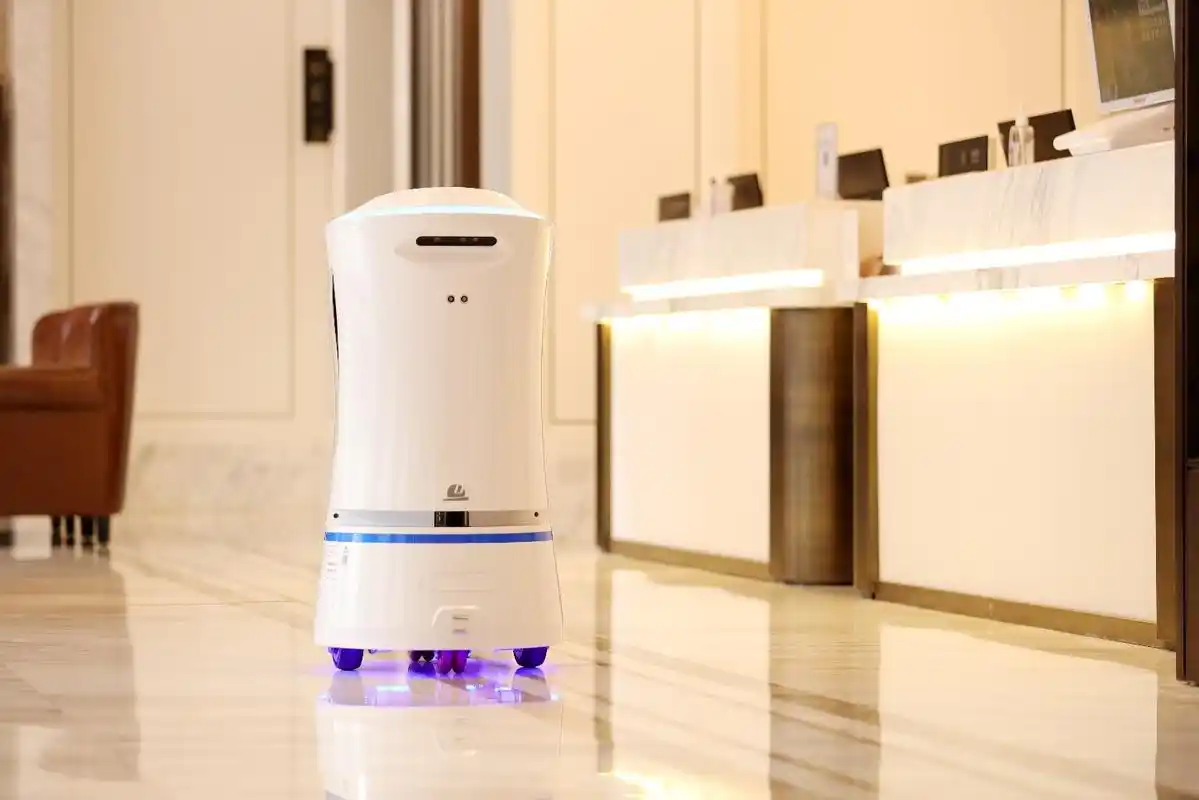
The hotel service robot sector in China, once a darling of investors, is facing a harsh reality as intense competition drives prices down by over 90% and leaves even market leaders bleeding cash.
Yunji Technology, the country's largest hotel robot provider, completed 500 million robotic services in 2024 with up to 36,000 units operating simultaneously across 34,000 hotels in over 300 cities. Despite this scale, the company has accumulated losses of nearly 1 billion yuan ($138 million) over the past three years.
The company's flagship products have seen dramatic price erosion. Its "Run" series robots now sell for 13,100 yuan ($1,800) per unit, down from 23,200 yuan in 2022—a 43.8% decline. The "UP" series has dropped over 60%, from 54,200 yuan to 22,300 yuan. Industry-wide, average prices have plummeted from 136,000 yuan in 2016 to just 13,100 yuan in 2024, according to distributors.
The price war has intensified as numerous players crowd into a relatively small market. China's hotel service robot market was valued at just 1.1 billion yuan in 2023, with projections reaching only 3.6 billion yuan by 2028, according to Orient Securities.
Market Leader Struggles Despite Dominance
Yunji Technology held a 13.9% market share in 2024, larger than the combined share of the second through fifth-ranked competitors, according to Frost & Sullivan data. The company's revenue grew from 161 million yuan in 2022 to 244 million yuan in 2024, with 2024 growth accelerating to 68.6%. Gross margins improved from 24.3% to 39.5% during the same period.
However, profitability remains elusive. The company posted losses of 365 million yuan, 274 million yuan, and 184 million yuan in 2022, 2023, and 2024 respectively. In the first five months of 2025, losses widened 40.48% year-over-year to 118 million yuan, despite an 18.9% revenue increase.
Competitors including Youdi Technology, Keenon Robotics, Segway Robotics, and Pudu Technology are all pursuing market share in the same space. Keenon alone shipped over 30,000 units in 2023. Youdi's robots operate in over 10,000 commercial locations across 600 cities, with daily service volume exceeding 300,000 interactions.
Single-Sector Dependence Creates Vulnerability
Yunji's business is heavily concentrated in hotels, which accounted for 93.2% of revenue in the first five months of 2025. This dependency creates significant exposure to the hotel industry's cyclical nature.
The COVID-19 pandemic initially boosted demand for contactless services, but 2023 saw major hotel chains reduce robot purchases, causing Yunji's annual revenue to decline 10%. The hotel sector's purchasing patterns have proven volatile, with the share of hotel-related revenue fluctuating between 70.1% and 95.1% from 2022 through early 2025.
The market remains highly fragmented, with the top five players capturing less than 30% combined market share. This fragmentation has intensified price competition as companies pursue volume growth strategies. Products have become increasingly commoditized, leaving price as the primary competitive lever.
The economics highlight the industry's difficulties. Companies face a "sell one, lose on one" situation as profit margins collapse under pricing pressure, even as their robots deliver substantial cost savings for hotel operators.
Diversification Efforts Show Mixed Results
Yunji is attempting to reduce hotel dependence by expanding into office buildings, hospitals, and manufacturing facilities. Frost & Sullivan projects the medical institution segment will grow at a 46.6% compound annual rate from 2024 to 2029.
However, these new verticals contributed less than 3 million yuan in 2024, representing a minimal revenue share. The company also faces established competitors in these segments, along with technical challenges as non-hotel environments demand more sophisticated navigation and intelligence capabilities.
The company is pivoting toward software with its HDOS intelligent service system, which provides concierge services, order management, and other functions. AI digitalization systems accounted for 22.4% of 2024 revenue with a 61.8% gross margin, significantly exceeding hardware margins. In the first five months of 2025, software revenue reached 9.19 million yuan, up over 10% year-over-year, with margins improving to 67.2%.
International expansion represents another growth avenue. Following its October 16 Hong Kong IPO, which made it the "first hotel robot stock," Yunji joined a Hong Kong government delegation to Saudi Arabia later that month. The kingdom's expanding tourism sector, high labor costs, and technology openness present attractive opportunities.
Yet in the intensely competitive service robotics sector, strategic moves are quickly replicated by rivals. Success ultimately depends on differentiation through R&D and products capable of handling complex scenarios. Concerning for Yunji, its R&D team shrank to 66 people by end-2024, while R&D expense ratio nearly halved from 42% in 2022 to 23.4% in 2024.