
China’s Humanoid Robot Boom Meets Reality: Unitree’s $5.8B Valuation Test
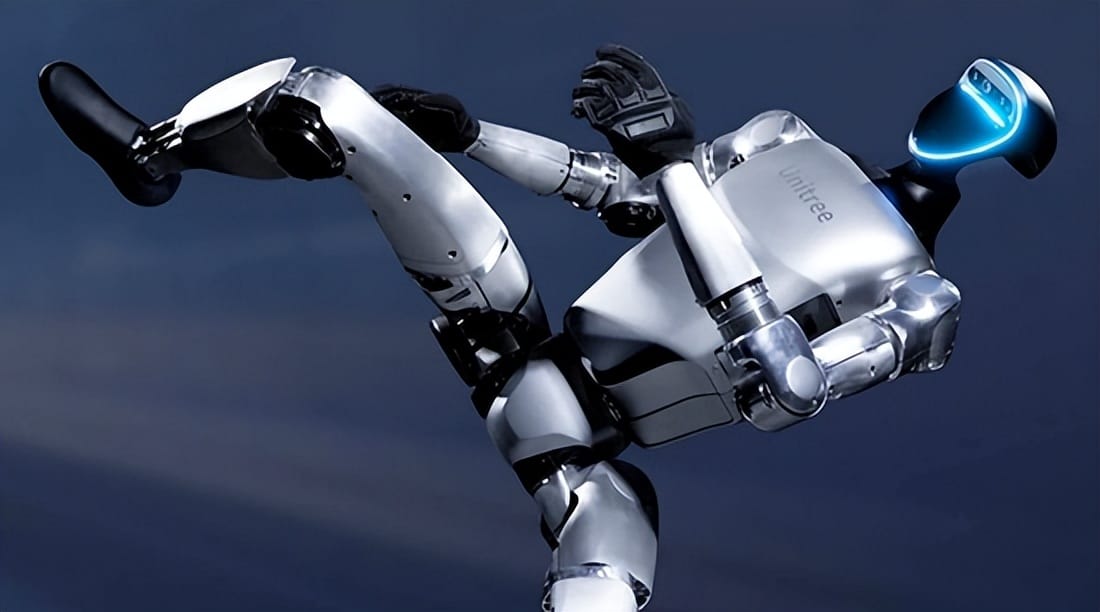
China's first A-share humanoid robot pure-play is racing toward a RMB 42 billion (US$5.83 billion) listing, but three cautionary precedents and a sharp Q1 revenue slowdown are forcing investors to separate national-strategy narrative from commercial reality.
Unitree Robotics, the Hangzhou-based robotics manufacturer that completed China's fastest-ever STAR Market approval in 104 days, begins price discovery on August 5, 2026, with subscription opening August 10. The IPO, priced at an implied valuation of approximately RMB 42 billion (US$5.83 billion), will crown Unitree as the first humanoid robot company to list on the A-share market — a designation that carries both enormous symbolic weight and the shadow of a well-documented post-listing collapse pattern among China's hard-tech cohort.
The timing is deliberate and the sentiment is near-euphoric. Unitree's G1 and H2 robots performed at the 2026 Spring Festival Gala before hundreds of millions of viewers, and the company's 104-day regulatory sprint — the shortest on record since the STAR Market's pre-review mechanism was introduced — signals unmistakable policy tailwinds. Yet within hours of the IPO announcement circulating, analysts began drawing uncomfortable parallels to UBTech Robotics, Cambricon Technologies, and Moore Threads, three hard-tech listings whose combined market capitalization losses since peak now exceed RMB 500 billion.
Three Precedents Reveal a Structural Pattern in China's Hard-Tech Cycle
The hard-tech "list-at-peak, collapse-after" pattern is not random volatility — it is the predictable output of a specific valuation architecture. Analyzing the three most relevant comparables exposes the precise fault lines Unitree must navigate.
UBTech Robotics listed on the Hong Kong Stock Exchange on December 29, 2023, briefly touching HK$328 per share and a market capitalization exceeding HK$140 billion (US$17.9 billion) on debut. Positioned as "China's Boston Dynamics," it carried the humanoid robot "first stock" premium. By July 2026, the share price had retreated to approximately HK$80, erasing more than 70% of peak value — a direct consequence of consecutive quarters in which commercial revenue failed to scale beyond education and demonstration deployments.
Cambricon Technologies offers the most extreme case study. Listed on the STAR Market in July 2020 at RMB 64.39 per share, it surged nearly 300% on debut. The company then sustained negative price-to-earnings ratios of -46x, -17x, -65x, and -87x from 2021 through 2024 as losses mounted. In 2025, Cambricon posted its first-ever net profit of RMB 2.059 billion (US$286 million), triggering a re-rating that briefly pushed its price-to-earnings multiple to 4,463x — more than 100 times the P/E of Nvidia at its peak valuation of US$4.7 trillion. By June 2026, Cambricon's market capitalization briefly exceeded RMB 1 trillion before retreating to approximately RMB 720 billion in July, with a P/E ratio still at 283x. The trajectory illustrates how "national-mission" framing can sustain irrational multiples for extended periods before mean reversion asserts itself.
Moore Threads, the most recent data point, priced at RMB 114 per share in late 2025 at a valuation of approximately RMB 53.7 billion (US$7.46 billion). Driven by "domestic GPU scarcity" sentiment, the stock hit RMB 688 on debut and peaked at RMB 941 within one week. Within three months, it had surrendered approximately 47% from peak to trade near RMB 500, trapping retail and institutional investors who chased the opening surge.
The common denominator across all three: scarcity premium compression once additional competitors enter the public market, a market "patience window" of no more than two years for commercial-scale revenue validation, and immediate valuation discounts when supply-chain autonomy claims are challenged.
Unitree's Four-Dimensional Scorecard Reveals Asymmetric Strengths and a Critical Weakness
Applying the framework articulated by Bai Wenxi, Vice Chairman of the China Enterprise Capital Alliance and Chief Economist for China, who describes the current valuation paradigm as having evolved from "China Special Valuation" into "Sci-Tech Special Valuation" — a five-dimensional framework incorporating national strategy, security premium, long-term premium, and new-technology premium — Unitree scores unevenly across four key axes.
National Security Dimension — Strong. Unitree reports a core-component self-development rate exceeding 95% and a domestic-sourcing rate above 85%, spanning motors, reducers, and full-system integration. This directly contrasts with Cambricon's fabless dependency on TSMC and Moore Threads' IP licensing exposure — both of which triggered immediate valuation discounts when scrutinized. In the "sci-tech autonomy" scoring framework, Unitree's vertical integration represents a near-maximum score.
Industrial Strategy Dimension — Strong. China's 15th Five-Year Plan explicitly designates embodied intelligence as a future industry. Unitree shipped more than 5,500 humanoid robots in 2025, capturing a 32.4% global market share — the largest of any single manufacturer. Its quadruped robot business commands more than 60% global share. Crucially, humanoid robot revenue surpassed quadruped revenue for the first time in 2025, validating the product-line transition narrative.
Market Sentiment Dimension — Maxed Out, and Therefore a Risk. The Spring Gala performance, the record-breaking approval timeline, and the "A-share humanoid robot first stock" label have collectively pushed sentiment to a ceiling. AI expert Guo Tao stated directly that Unitree's RMB 42 billion issuance valuation is not anchored to current revenue or profit but rather front-loads three to five years of sector growth expectations. When sentiment is already at maximum, the asymmetry of subsequent price movement is predominantly downward.
Business Model Dimension — Profitable but Structurally Concentrated. This is the dimension that separates Unitree from all three precedents — and also the dimension that contains its most significant vulnerability. Full-year 2025 revenue reached RMB 1.699 billion (US$236 million), with adjusted net profit of RMB 591 million (US$82 million) and a gross margin of 60.13%. Unitree is, by a significant margin, the most commercially advanced humanoid robot company globally at IPO stage. However, Q1 2026 revenue growth decelerated sharply from 332% year-on-year to 68%, and adjusted net profit declined on a year-on-year basis. More critically, 73.6% of revenue derives from science and education customers, with industrial clients representing only 9%. The company has not yet passed the commercial-scale test that matters most to long-term valuation.
Three Structural Moats Provide a Floor That Predecessors Lacked
Unitree's differentiation from UBTech, Cambricon, and Moore Threads is not merely rhetorical. Three concrete structural advantages create a valuation floor that none of its predecessors possessed at IPO.
The quadruped cash-flow base functions as a safety net. Quadruped robot revenue reached RMB 698 million (US$96.9 million) in 2025. With more than 30,000 units shipped cumulatively and entrenched deployment in power-grid inspection, security patrol, and research applications, this business generates real cash flow independent of humanoid robot hype. Even in a scenario where humanoid robot commercialization stalls, Unitree remains a globally dominant robotics company — a floor that UBTech never built and Cambricon structurally cannot replicate.
Proprietary "cerebellum" technology creates non-replicable competitive depth. While most humanoid robot startups compete on large-language-model integration and perception-decision architectures — the "brain" layer — Unitree has spent a decade accumulating expertise in motion control, gait planning, and joint actuator design — the "cerebellum" layer. The H1-2 humanoid navigates unstructured terrain including rubble and staircases under full load. The G1, equipped with dexterous hands and 3D LiDAR, achieved the world's first coordinated high-speed cluster repositioning at 4 meters per second during the 2026 Spring Gala. This capability cannot be acquired through talent poaching or model fine-tuning; it requires years of hardware iteration.
Cost engineering redefines the addressable market. Unitree's Go2 quadruped starts at RMB 9,000 (US$1,250), versus Boston Dynamics' Spot at approximately US$75,000. The R1 dual-arm humanoid, launched in April 2026, starts at RMB 26,900 (US$3,736). This cost compression — made possible by full-stack self-development and deep supply-chain integration — shifts Unitree's valuation narrative from "technology concept stock" toward "high-end manufacturing champion," a category that historically commands more durable valuation multiples in the A-share market.
IPO Scenario Analysis Points to a RMB 500–800 Billion Valuation Range With Significant Tail Risk
Three scenarios frame the post-listing trajectory.
In the bull case, all four valuation dimensions resonate simultaneously: national strategy, industrial policy, market sentiment, and commercial momentum. Referencing Cambricon's peak price-to-sales multiple of 40–50x and applying it to Unitree's revenue trajectory, first-day market capitalization could approach RMB 80–100 billion (US$11.1–13.9 billion). However, analysts note that UBTech's HK$140 billion peak suggests the humanoid robot sector's valuation ceiling without sustained profit delivery is approximately RMB 100 billion — breaching that level requires genuine industrial-scale revenue.
In the base case, the market applies lessons from UBTech's de-rating. Using UBTech's 2025 price-to-sales multiple of approximately 8x as a floor and applying an A-share liquidity premium of 15–20x to Unitree's RMB 1.7 billion revenue base, a rational valuation range of RMB 25.5–34 billion emerges — below the RMB 42 billion issuance price. Accounting for quadruped scarcity premium and humanoid optionality, institutional consensus clusters around RMB 50–60 billion as a stable post-listing equilibrium, implying modest upside from issuance with a subsequent consolidation phase rather than a UBTech-style unidirectional decline.
In the bear case, macro headwinds — including capital market tightening following the recent Chang Xin Technology listing absorbing significant liquidity — combine with humanoid robot sector setbacks or Unitree-specific commercial disappointment. Given that Unitree's last private-market valuation round was approximately RMB 12 billion (US$1.67 billion), an issuance price representing 3.5x that level leaves limited downside buffer. Severe break-below-issuance risk exists if Q2–Q3 2026 results confirm the Q1 deceleration trend.
The Brain Gap Defines the Decade-Long Strategic Question
Investment banker Wang Jiyue frames the core strategic tension precisely: Unitree currently leads in hardware and "cerebellum" — the physical platform on which others build. Its weakness is "brain" capability, meaning autonomous decision-making, task generalization, and industrial-scenario intelligence. If Unitree closes that gap, its leadership becomes self-reinforcing. If it does not, faster-moving competitors in the large-model layer could commoditize the hardware advantage.
The IPO prospectus allocates RMB 2.022 billion (US$281 million), representing 48% of total proceeds, to intelligent robot model research and development. Unitree's proprietary UnifoLM-VLA-0 model scored 98.7 on the LIBERO benchmark, placing it alongside Nvidia and Stanford University research benchmarks. The company has also contributed to China's first national-level embodied intelligence open-source dataset community and released full real-machine datasets publicly — a potential platform play that, if its data standards become industry defaults, would give Unitree structural control over the embodied intelligence development stack.
The parallel to Huawei in 5G polar code standardization and BYD in blade battery architecture is instructive but not yet validated. Unitree has completed the "follower to definer" transition in quadrupeds. In humanoids, it remains in the follower phase — but its capital allocation, open-source strategy, and model investment suggest a deliberate attempt to replicate that transition at a larger scale.
The RMB 42 billion crown is being placed on Unitree's head this week. Whether the company's neck proves strong enough to bear it will be determined not in August 2026 but in the commercial delivery windows of 2027 and 2028.
Related Coverage:
Unitree Robotics Sets August Subscription for $609 Million STAR Market IPO