
China's Humanoid Robot Makers Report Order Surge as Commercialization Gains Steam
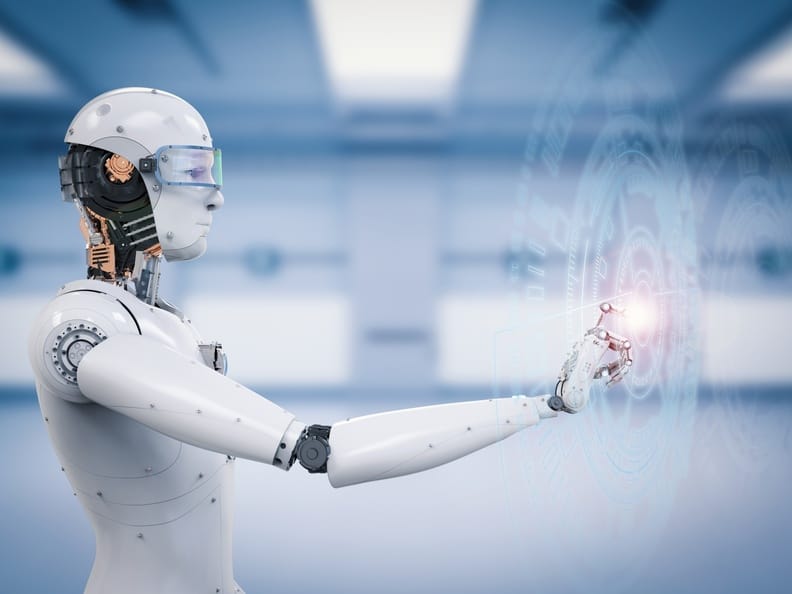
Chinese humanoid robot manufacturers are reporting a significant acceleration in orders, production, and deliveries, signaling that the industry is rapidly transitioning from research and development to commercial-scale deployment.
The shift is marked by a flurry of recent deals and growing order books. Agibot announced it secured a multi-million-dollar contract to supply nearly 100 of its advanced humanoid robots to an industrial manufacturer, one of several such agreements disclosed by companies in the sector. The deal is for "tens of millions of yuan," the company said.
Meanwhile, major players like UBTECH Robotics have won substantial contracts, including a recent procurement deal with an automaker valued at nearly 100 million yuan ($13.8 million). The increasing volume of orders indicates growing confidence from industrial and commercial clients, prompting manufacturers to aggressively scale up production capacity.
This wave of commercial activity suggests the humanoid robot industry is entering an accelerated adoption phase. Industry executives forecast that annual shipment volumes could double in the coming years, though they caution that significant hurdles related to cost reduction and artificial intelligence capabilities remain before mass-market penetration is achieved.
Production and Sales Targets Ramp Up
Across the industry, companies are projecting a steep rise in output. UBTECH plans to build its capacity to 1,000 humanoid robot units in 2025, with several hundred deliveries expected. The company optimistically forecasts that deliveries could climb to several thousand units in 2026 and reach the 10,000-unit level by 2027, assuming successful deployments across various scenarios.
Other companies are already reporting concrete progress. RobotEra has delivered over 300 robots as of July 2025 and has more than 500 units in its current order book, with business split evenly between domestic and overseas clients. It counts nine of the world's top 10 technology companies by market capitalization among its customers.
Similarly, Qingbao Engine Robotics revealed it has secured over 50 million yuan in orders this year, with more than 20 million yuan in deliveries completed in the first half. The company anticipates total intended orders for the year could reach between 50 million and 100 million yuan.
This momentum is also reflected in future commitments. TLIBot has received letters of intent for approximately 1,000 humanoid robots.
Industry Leaders Forecast Exponential Growth
Executives are bullish on the sector's long-term trajectory. Wang Xingxing, CEO of Unitree Robotics, observed that robot manufacturers and component suppliers alike are seeing average growth of 50% to 100%. He believes the industry can maintain a pace of doubling humanoid robot shipments annually for the next few years.
"If there are major technological breakthroughs, it's possible that we could see annual shipments of hundreds of thousands, or even a million, units within the next two to three years," Wang said. While Unitree’s four-legged robots still account for the bulk of its sales, Wang noted that demand for its humanoid models has grown rapidly over the past year.
The growing demand is also fostering new business models. According to Unitree, customers are purchasing its humanoid robots to establish new ecosystems, including a nascent leasing market. Separately, Galbot revealed that its humanoid robot solution for smart retail, developed with partners, is set to be deployed in 100 stores this year.
Persistent Hurdles on Price and AI
Despite the commercial acceleration, the industry still faces significant barriers to widespread adoption, primarily related to cost and the maturity of AI technology.
According to Wang Qian, founder of X2Robot, the price point for mass adoption lies between 10,000 and 20,000 per unit—a target that remains difficult to achieve. Reaching this level will require further cost reductions across the entire supply chain.
On the technology front, the consensus is that hardware is largely sufficient for current needs, but software and AI lag behind. Unitree’s CEO Wang Xingxing pointed out that embodied AI has not yet had its "GPT moment." He identified insufficient generalization and autonomous decision-making as the biggest challenges. "Unlike language models, data collection for robotics has a significant gap with the real physical world, making it difficult to align training with deployment," he explained. "We hope to train models with strong generalization from small datasets in the future, then use data to drive optimization, rather than starting by piling up massive amounts of data."