
Vivo to Unveil 'Vision' MR Headset, Rumored to Challenge Apple at Sub-$2,750
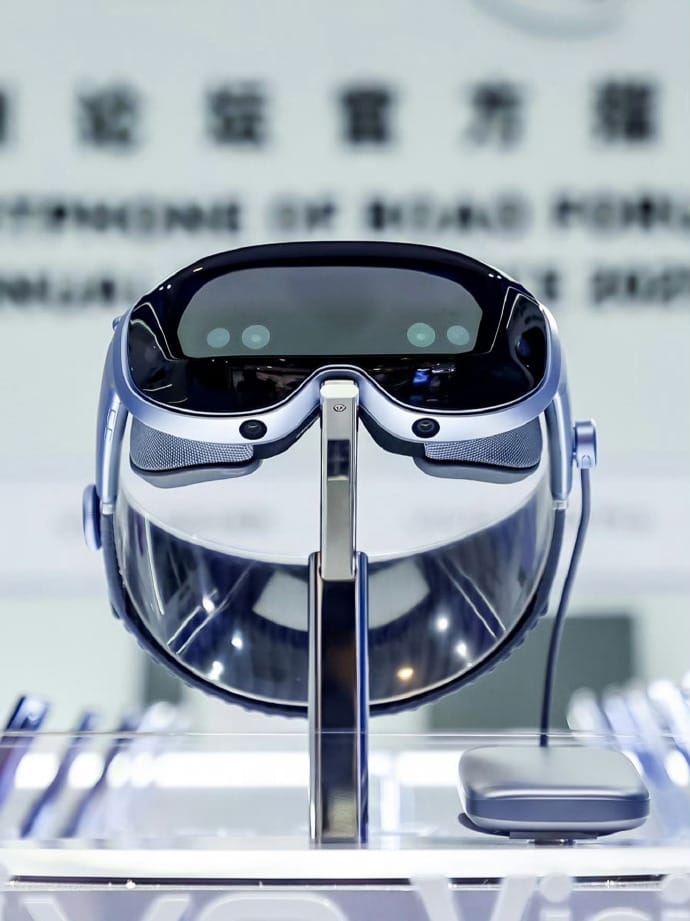
KEY POINTS
- Official Launch: Vivo confirms Aug. 21 event for its "Vision" mixed-reality headset.
- Apple in Sights: Executive claims hand-and-eye tracking interaction rivals Apple Vision Pro.
- Price Rumors: Leaks suggest a price under 20,000 yuan (approx. $2,750) with a Qualcomm chip.
- Strategic Rollout: The initial "Explorer Edition" will not be for public sale, focusing on user feedback.
Vivo is set to enter the high-end mixed reality market with its new "Vision" headset, a move that positions the Chinese smartphone giant to compete directly with Apple Inc.'s Vision Pro. The device, which the company claims features a groundbreaking user interface, will be officially unveiled on Aug. 21, though its initial release will be a limited "Explorer Edition" aimed at gathering user feedback rather than mass-market sales.
The company announced the "vivo Vision Launch Event" via its official social media channels, scheduling it for 2:30 p.m. Beijing time on Aug. 21. The announcement confirms Vivo’s entry into a nascent but highly competitive market for spatial computing, where it will contend with established players and fellow newcomers.
In a detailed post on the social media platform Weibo, Hong Yi, General Manager of Vivo's Smart Terminals, stated the device’s interaction model, which combines eye-tracking with gesture controls, achieves an experience that only the Apple Vision Pro has matched so far. This aggressive positioning underscores Vivo's ambition to be a top contender in next-generation human-computer interaction.
While signaling high-end aspirations, the device may be priced significantly below its main rival. According to industry rumors, the vivo Vision will be priced under 20,000 yuan (approximately $2,750) and will be powered by a high-end Qualcomm 4nm chipset. This strategy could make advanced MR technology accessible to a broader audience, potentially disrupting the premium-focused market.
A Challenge to Apple’s Dominance
Vivo is building its challenge around a new interaction paradigm that moves beyond the two-dimensional touchscreens of smartphones. Hong described the headset as a "subversive attempt" to redefine smart devices, allowing users to "walk into an information scene" through intuitive, three-dimensional controls.
“Where the eyes see, the hand gestures can precisely control, just as naturally as reaching for an object in reality,” Hong wrote. He explicitly stated that, other than Apple Vision Pro, "only we have achieved such an experience." This capability aims to let users manipulate virtual objects, such as dragging floating documents or grabbing in-game items, with natural hand movements. The company highlighted that this seamless integration of virtual information with the real world is the core value of mixed reality, distinguishing it from more isolating virtual reality (VR) experiences.
Rumored Specs and Pricing
Speculation about the device’s hardware and cost has been fueled by a widely-followed tech blogger known as "Digital Chat Station." The blogger claimed the vivo Vision will feature a "top-tier" display and a Qualcomm Snapdragon 4nm platform, suggesting performance will be a key selling point.
The most significant leak concerns its price. In a social media comment, the blogger indicated the headset "should not exceed 20,000 yuan." If accurate, this would place the vivo Vision at less than the U.S. price of the Apple Vision Pro, which starts at $3,499. The blogger also noted that the device's light weight and comfortable design were key development priorities. Further hardware details from other sources suggest the headset is equipped with at least six front-facing cameras and sensors to enable high-quality video passthrough, a critical feature for blending the virtual and real worlds.
A Strategic 'Explorer' Launch
Instead of a full commercial launch, Vivo is taking a more cautious approach. Hong Yi confirmed the initial "vivo Vision Mixed Reality Headset Explorer Edition" is not planned for public sales this year. This strategy mirrors the rollout of other first-generation technology products, prioritizing refinement over immediate revenue.
Following the launch event, Vivo will open appointments for in-person demonstrations at its retail stores. “We will absorb users’ real experiences and valuable suggestions to continuously optimize our product experience and ecosystem,” Hong stated. This feedback-driven model, supported by what another Vivo product manager described as four years of research and development, indicates a long-term commitment to establishing a mature and user-friendly MR platform.