
Morgan Stanley: The AI Glasses Arms Race Is On, And China Is Coming For Meta
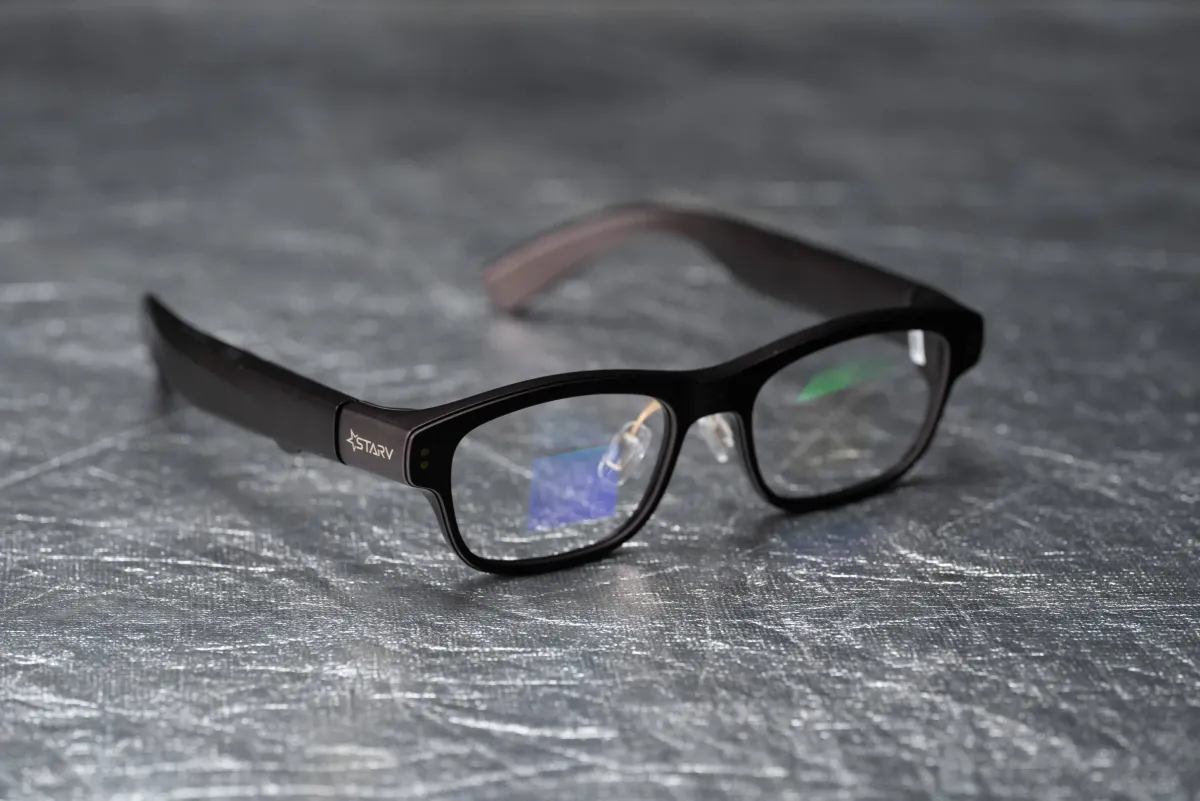
In a detailed research note , Morgan Stanley’s Asia tech team has lifted the hood on what it sees as the next major battleground for consumer hardware: AI-powered smart glasses with integrated augmented reality displays. The report is a must-read for anyone tracking the silicon, display, and manufacturing supply chains, as it lays bare the diverging strategies of Western and Chinese tech giants as they race to define this fledgling market. The key takeaway? While Meta prepares its big move, Chinese players like Alibaba are moving fast, creating a fascinating and complex technology arms race.
At the recent World Artificial Intelligence Conference (WAIC) in Shanghai, the competition was on full display. Morgan Stanley's analysts observed that Chinese firms are no longer just iterating; they're aggressively integrating AR functions into their AI glasses, with Alibaba leading the pack.
"Alibaba unveiled WOW Quark AI+AR glasses. On the semi side, WOW adopts mainstream SoC, but adding a Bestech BES2800 to improve power efficiency. For AR, Alibaba chose a binocular MicroLED+waveguide system. Our checks at WAIC show that WOW employs JBD's monochrome (green) MicroLED chip."
This choice of a monochrome MicroLED display is a critical detail. It suggests a focus on getting a viable product to market quickly, prioritizing core functionality—like notifications and simple overlays—over the full-color immersive experience Meta is aiming for. Other Chinese brands are exploring different technological trade-offs. Rokid is following a similar MicroLED path, while Xreal is taking a different route entirely.
"Xreal takes a different path, whose AR module pairs MicroOLED with a birdbath optical stack. Although the birdbath design could make the product heavier, it delivers full-color imagery."
This highlights a key engineering schism: the lighter, more efficient but currently limited-color MicroLED/waveguide systems versus the heavier but full-color MicroOLED/birdbath approach. The market has yet to decide which compromise consumers will accept.
Meta's Looming Counter-Offensive
All eyes in the West are on Meta, whose much-anticipated "Celeste" AI+AR glasses are expected to launch at its Connect Conference in September. Morgan Stanley’s supply chain intelligence provides a granular look at what to expect, confirming Meta is betting on a different display technology to achieve its full-color ambitions.
"According to our supply chain checks, Celeste will use an LCOS (Liquid Crystal on Silicon) + Waveguide display module. The LCOS panel, specifically Omnivision's OP03011, features 648x648 resolution at 120Hz. The waveguide technology, licensed from Lumus... will be manufactured by Schott."
However, the report immediately flags the single biggest obstacle for all contenders: a useful battery life. The shadow of past failures looms large. As the bank notes, "The earlier Orion prototype struggled with a limited 45-minute runtime, while Celeste's ability to achieve significant improvements in battery life could be a critical factor for user adoption."
The Billion-Dollar Question: Cost vs. Potential
Beyond battery life, cost remains a formidable barrier to mass-market adoption, particularly for the most advanced components. While novel materials promise better performance, their price is prohibitive for now.
"We view near-term adoption of SiC waveguides for AR displays as unlikely as the cost is high (one 8-inch substrate with ~US$1500 selling price can only support 3-4 pairs of glasses)."
Despite these significant technical and financial hurdles, Morgan Stanley’s long-term view is decidedly bullish. The firm believes the integration of AR displays will unlock "more and multimodal interactions with AI LLM," a sentiment echoed by Meta itself on its recent earnings call where it declared that "AI glasses are going to be the main way that we integrate superintelligence into day-to-day lives."
This strategic imperative is why the investment bank is forecasting explosive growth in the underlying semiconductor market for the devices. They project an 80% compound annual growth rate (CAGR) in the total addressable market (TAM) for AI glasses' System-on-Chips (SoCs) between 2024 and 2028, with the LCOS display market for AR devices alone expected to reach $153 million by 2028.
The battle lines are drawn. On one side, Chinese firms are shipping products now, making pragmatic trade-offs between features and feasibility. On the other, Meta is preparing a more technologically ambitious, high-stakes entry. The race is not just about building a better gadget; it's about defining the a primary interface for the coming age of ambient AI.