
DJI's Robotic Vacuum Entry to Shake Up High-End Market, Boost Category Growth, China Securities Co Says
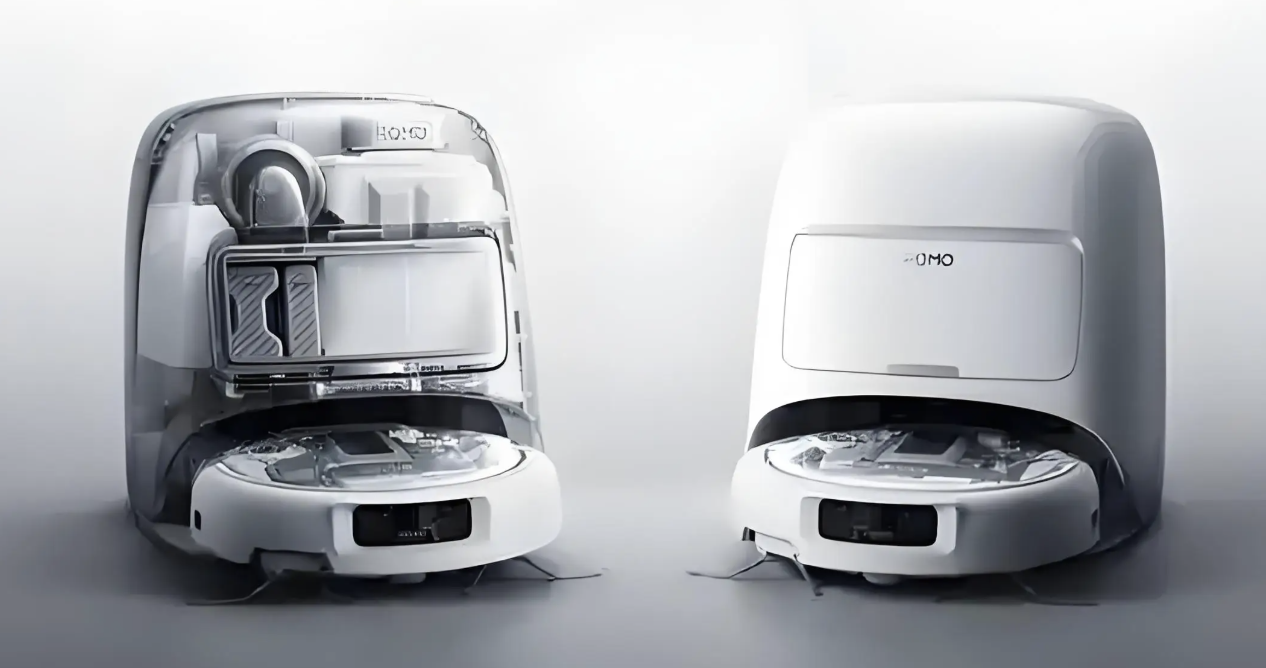
A new research note from China Securities Co analyzes the potential market impact of drone giant DJI's official entry into the robotic vacuum cleaner industry. The report, authored by analysts Ma Wangjie and Zhai Yanjie, follows the August 6th launch of DJI's ROMO series, examining its product positioning against established competitors, its likely supply chain structure, and the broader implications for the cleaning appliance sector.
The analysis is significant given DJI's formidable brand power and reputation for technological innovation. China Securities Co posits that while the new ROMO series, particularly its premium model, is set to disrupt the high-end market with its unique design and top-tier hardware, its broader impact may be even more crucial. The firm argues that DJI's entry serves as a powerful technological endorsement for the entire category, which will accelerate consumer education and market expansion, ultimately benefiting incumbent leaders like Roborock and Ecovacs by solidifying the industry's growth prospects.
How to View the Impact of DJI's Entry on the Robotic Vacuum Market?
DJI has officially entered the robotic vacuum cleaner industry with the launch of its ROMO series. In terms of the market landscape, the P series, with its top-tier components and transparent chassis, is expected to hold strong appeal for high-end consumers. However, competition in the mid-range price segment is fierce, where DJI's S and A models offer limited differentiation. Consequently, traditional manufacturers are projected to maintain a larger market share based on overall value. DJI currently has no plans for overseas expansion, resulting in a neutral impact on the global market. DJI's entry serves as a technological endorsement for the robotic vacuum category, significantly driving consumer education and market growth. This reinforces the industry's valuation floor, and we remain optimistic about the rising penetration rate of cleaning appliances and the growth of industry leaders.
01. DJI Launches First Robotic Vacuum, Transparent Design Garners High Attention
On August 6, the DJI ROMO series of robotic vacuum cleaners made its official debut. DJI introduced three models: S, A, and P. The Romo P is the flagship, top-tier model (priced at 6,799 RMB in China, approximately 5,779 RMB after national subsidies), with its transparent body and docking station being the biggest highlights, fully showcasing DJI's technological aesthetic and design philosophy. It is differentiated from the S/A series by its appearance and sterilization functions. As DJI's first robot vacuum and mop, the Romo series largely matches the hardware configurations and functions of current top-tier brands. Leveraging its unique transparent design and DJI's strong brand appeal, it is expected to make significant inroads in the high-end market.
Below, we will discuss the impact of DJI's entry on the robotic vacuum industry's competitive landscape from both product and market perspectives.
02. Product Benchmarking: Top-Tier Hardware at a Price Above Industry Flagship Average
Among the new products, the DJI ROMO P model has received the most market attention. We selected high-end robotic vacuums from current leading brands to conduct a performance comparison with the DJI model, including the Roborock G30, Ecovacs DEEBOT X9 Pro, and Dreame Technology X50 Pro Enhanced Edition.
The conclusion is that the ROMO P's standout features are its eye-catching design and premium components, while its software has room for improvement.
1.
Suction and Cleaning Power: The Romo P's 25,000Pa suction power is top-of-the-class (matched by the Dreame X50 Pro Enhanced Edition). Additionally, the Romo P, G30, and X50 Pro all feature a dual main brush system, whereas the Ecovacs X9 Pro still uses a single roller brush design. In terms of side brushes, the Romo P is the only model equipped with dual side brushes for more comprehensive cleaning coverage, while the other three use a traditional single side brush. Furthermore, only Ecovacs uses a roller mop design, which provides higher mopping pressure and stronger stain removal, and is easier to clean and dry quickly, though its dirt capacity is comparatively average. Wet mopping capability is a relative weakness for the ROMO P. Its mopping method is still the traditional "static mop + wet friction," without the support of high-frequency vibration or active pressurization structures. It also exhibits user experience flaws in complex situations, such as dealing with long hair or liquid stains on the floor, where it may spread the liquid before returning to clean the mop.
2.
Well-Equipped on the Hardware Level: The Romo P's combination of "binocular vision + triple LiDAR sensors" is a high-end configuration, offering millimeter-level obstacle avoidance precision. Overall, obstacle avoidance is a key selling point for DJI, but its obstacle traversal capability is slightly inferior. The Roborock G30 features a distinctive liftable chassis that can clean in narrow spaces and automatically raises the chassis and mop when encountering carpets. The Dreame X50 Pro Enhanced Edition uses bionic mechanical legs to traverse obstacles up to 8cm. The Romo, however, has some flaws in traversal, with a maximum crossing height of 2.5cm, struggling with kitchen door tracks and thick carpets.
3.
Room for Software Improvement: The binocular vision solution adopted by the company requires more intensive depth information processing compared to structured light or ToF (Time-of-Flight), making it the most demanding technical route in terms of algorithms and chip performance. As this is DJI's first-generation product, it lacks accumulated household data and algorithm iteration. Consequently, many users have reported bugs in its obstacle avoidance. However, given DJI's background, its algorithm capabilities are highly likely to improve to a high level in the future.
4.
Eye-Catching and Distinctive Design: The Romo P's appearance is a unique breakthrough. It features a transparent body and docking station, an industry-first style. Currently, the Romo P has the only transparent docking station in the industry, making it highly recognizable. The entire robot and station shell are made of transparent or semi-transparent materials, with the internal structure clearly visible, which is a major attraction for younger consumer groups. From another perspective, DJI has reinforced its brand image as a tech pioneer through industrial design innovation, adding a premium to the product.
In summary, DJI has focused its first robotic vacuum's main selling points on design and obstacle avoidance. In comparison, no single product excels in all aspects, but the ROMO P also lacks any standout disruptive innovations. Unlike its previous drone and pocket camera products, market reviews for DJI's robotic vacuum are mixed, and its true value and usability will need to be judged by the market.
03. DJI Robotic Vacuum Supply Chain Deconstructed: Primarily Outsourced, Leveraging Drone Industry Chain
The ROMO robotic vacuum cleaner has built a supply chain system with technological barriers through the effective integration of upstream industry resources. Based on this, we have mapped out the potential supply chain behind the DJI ROMO, leveraging DJI's existing drone industry chain.
1. Chips and Main Control System: AI computing power drives ROMO's intelligent decision-making, providing core processing and control for path planning, image recognition, motor control, and wireless communication.
2. Battery Module: Two established companies empower the endurance system, providing the entire machine with high energy density, long battery life, and support for high-power output.
3. Optical Components: Several industry leaders collaborate to create the visual hub, responsible for tasks such as 3D mapping, obstacle avoidance, and LiDAR perception.
4. Other Key Components: A "horizontal transfer" of technology from the drone supply chain, covering drive motors, precision resistors, antennas, and structural parts, enhancing the machine's drive, communication, and structural performance.
Evidently, the DJI ROMO's supply chain is a concentrated manifestation of its platform-based technological capabilities. On one hand, DJI firmly controls the evolution of ROMO's intelligence by developing its core algorithms and control architecture in-house. On the other hand, it has established a high-standard, mass-producible component system around its original drone industry chain, enabling many traditional component manufacturers to extend their business from aerial to ground-based applications.
04. Market Analysis: DJI Expected to Secure a Share in the High-End Market
DJI enjoys extremely high brand recognition in the consumer technology sector, with its drone products commanding approximately 70% of the global consumer market and over 80% in major markets like North America and Europe. This brand momentum provides a powerful market endorsement for the company's expansion into new fields. We analyze the market prospects of DJI's robotic vacuum cleaner by segmenting the market into domestic vs. export and high-end vs. mid-to-low-end:
Domestic High-End Market (approx. 20% of domestic sales in Q2 2025): We expect DJI to make a breakthrough in the 5,000+ RMB price segment. In terms of product, the DJI ROMO P series is on par with mainstream flagship models in hardware comparisons, while its design is a significant innovation over existing models, highlighting its technological attributes. This is expected to hold strong appeal for high-end consumer groups. Factoring in the conversion of loyal users of DJI's drones and portable cameras, we anticipate DJI will become a significant player in the high-end robotic vacuum market.
Domestic Mid-to-Low-End Market (80% of domestic sales): Traditional leaders are expected to maintain their advantage. From a model perspective, the buzz around DJI's new products is concentrated on the high-end P series. The S/A series have less distinct features yet are still priced a tier above current best-selling models. After nearly a decade of development in SLAM algorithms for robotic vacuums, consumers have established strong brand recognition for mainstream brands like Roborock and Ecovacs. On the other hand, the primary purchasing demographic for robotic vacuums has a certain disconnect from the audience for DJI's drones and panoramic cameras. Considering the functionality of this first-generation product, we believe DJI's ascent to a top position will require further product iteration and sustained marketing investment.
Overseas Market (major source of profit): Traditional leaders are expected to retain their dominance. Europe and the Asia-Pacific are crucial profit-generating markets for robotic vacuums, mainly because distribution is primarily through agents, requiring less resource investment, and the competitive environment is relatively moderate, allowing for significantly higher product pricing than in China. From an international perspective, DJI has no immediate plans for an overseas launch. Furthermore, considering the geopolitical landscape, DJI's overseas expansion faces inherent constraints. Overall, we believe DJI's entry has a relatively neutral impact on the industry. Additionally, overseas channels require a long time to build, giving incumbent robotic vacuum leaders with a first-mover advantage a continued edge.
05. Emphasizing the Role of DJI's Entry in Boosting Category Penetration
We believe DJI's entry has a more profound and positive significance—endorsing the product category, thereby driving consumer education and market expansion, and allowing more consumers to become aware of listed companies like Ecovacs and Roborock through the robotic vacuum product. The DJI brand naturally attracts traffic, and the launch of the ROMO series has drawn the attention of a wide range of tech enthusiasts and media. Some potential users who had never considered buying a robotic vacuum are now paying attention to the category because of DJI's involvement.
A core reason for the difficulty in raising the valuation of robotic vacuums to the level of new consumer goods in recent years is the slow penetration from early adopters to mass-market users. Negative reviews amplified by social media and the difficulty of in-store trials have deterred many potential consumers. In our previous report, "Small Appliances: Robotic Vacuum Special Report III: Crossing the Chasm, Growth Ahead," we mentioned that the penetration logic of the robotic vacuum industry follows a "concentric circle model" of crossing the price chasm. The industry is currently at a critical stage of transitioning from the early market to the mass market. The usability of products has been greatly improved, and DJI's entry is poised to accelerate the progress of category penetration.
06. Investment Recommendation
We believe DJI's entry into the robotic vacuum industry represents a significant boost to the category's visibility and consumer education. The debut product's outstanding aesthetic appeal is expected to have a major impact on the existing high-end market. Considering the stability and value proposition of this first-generation product, we expect traditional leaders to maintain their advantage in mainstream price segments. The cleaning appliance sector continues to lead in terms of business climate, and we are optimistic about the segment's growth in the post-national-subsidy era. With the competitive landscape now significantly optimized, we recommend paying attention to the profitability recovery of listed companies and recommend the leading players in cleaning appliances.