
China's Humanoid Robot Sector Takes Shape: 60 Companies Reveal Three Defining Characteristics
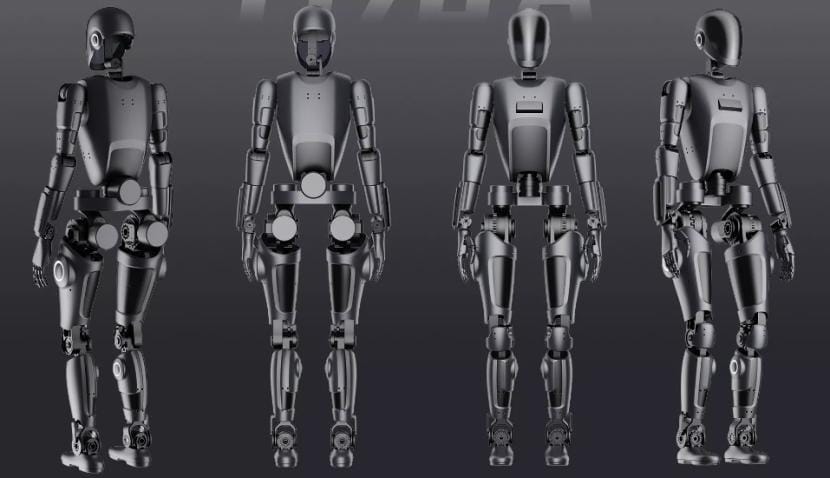
China's humanoid robot industry has rapidly expanded since 2023, with over 150 companies now operating in the sector according to National Development and Reform Commission data. An analysis of 60 representative firms reveals a landscape marked by recent establishment, geographic concentration, and converging product strategies amid uncertain commercial pathways.
More than half of these companies were founded between 2023 and 2025, driven by two catalysts: the global emergence of ChatGPT and Tesla's Optimus demonstration effect. Earlier entrants typically possessed mechanical, control, or sensor backgrounds, while recent startups emphasize artificial intelligence capabilities and embody intelligence narratives, signaling a generational shift in technological approach.
The companies cluster predominantly in Beijing, Shanghai, Suzhou, Hangzhou, and Shenzhen—regions offering mature automotive supply chains for critical components and stronger talent pools in AI and automation engineering. This geographic pattern suggests innovation centers will continue consolidating in these areas.
Despite differentiated technical approaches in motion architecture and control systems, companies target identical downstream applications: factories, research and education, hazardous environments, and household tasks. This overlap points to limited near-term scalable scenarios and intensifying competition over technological capabilities, supply chains, customer resources, and pilot deployment speed.
The following is the specific list of these 60 humanoid robot companies:
| No. | Company Name | Founded | Founder/Key Person | City | Example Product Models |
|---|---|---|---|---|---|
| 1 | Unitree | 2016 | Xingxing Wang | Hangzhou, Zhejiang | H1, G1, R1, Go/A/B Series Quadruped |
| 2 | UBTECH | 2012 | Jian Zhou | Shenzhen | Walker Series (S2, X, etc.), Panda Robot Youyou |
| 3 | AgiBot | 2023 | Zhihui Peng (Zihui Jun) | Shanghai | Expedition A2-W, Genie, Lingxi |
| 4 | NOETIX | 2023 | Zheyuan Jiang | Beijing | N2, Hobbs, Dora, Xiaomi |
| 5 | Booster Robotics | 2023 | Hao Cheng | Beijing | BOOSTER T1, BOOSTER K1 |
| 6 | GALAXEA | 2023 | Jiyang Gao | Beijing | R1 Series (Lite, Pro), A1 Robotic Arm Series |
| 7 | GALBOT | 2023 | He Wang | Beijing | GALBOT G1 |
| 8 | Fourier Intelligence | 2015 | Jie Gu | Shanghai | GRx Series, Fourier N1, Rehabilitation Robot |
| 9 | DEEPRobotics | 2017 | Qiuguo Zhu | Hangzhou, Zhejiang | DR01, DR02 |
| 10 | ROBOTERA | 2023 | Jianyu Chen | Beijing | ROBOTERA L7, ROBOTERA Q5 |
| 11 | LimX Dynamics | 2022 | Wei Zhang, Li Zhang | Shenzhen | CL Series, TRON1 |
| 12 | Leju Robotics | 2016 | Xiaokun Leng | Shenzhen | KUAVO-MY, ROBAN, AELOS Series |
| 13 | Tianlian Robotics | 2012 | Tianlian Hu | Mianyang, Sichuan | "Xiaotian", T1 Pro |
| 14 | EngineAI | 2023 | Tongyang Zhao | Shenzhen | T800, SA01, SE01 |
| 15 | Pudu Robotics | 2016 | Tao Zhang | Shenzhen | PUDU D9, Lightning Arm, F, PUDU D7 |
| 16 | Ti5Robot | 2020 | Gang Yi | Shanghai | T170A, "Yaoguang"/"Mo Di" |
| 17 | MagicLab | 2024 | Dreame Incubation | Wuxi, Jiangsu | "Xiaomai", Z1, MagicDog Series |
| 18 | Weilan Intelligence | 2019 | Weichao Liu | Nanjing, Jiangsu | BabyAlpha Robot Dog Series |
| 19 | SoftStone Tianqing | 2024 | SoftStone Incubation | Hangzhou, Zhejiang | Tianhe C1, Tianqing T1 |
| 20 | Keepler | 2023 | Debo Hu | Shanghai | K1, K2 "Bumblebee" |
| 21 | Digit | 2024 | Jian Shen | Shenzhen | Xiaolan S02, Xiaqi X02, Xingxingxia P01 |
| 22 | UniX AI | 2024 | Fengyu Yang | Shanghai | Martian, Wanda 2.0 |
| 23 | Embodied Tech | 2024 | UESTC Team | Chengdu, Sichuan | Skywalker 1, Skywalker 2 |
| 24 | Spirit AI | 2024 | Fengtao Han | Hangzhou, Zhejiang | Moz1 |
| 25 | Estun CoolDrive | 2022 | Estun Incubation | Nanjing, Jiangsu | CODROID 01, CODROID 02 |
| 26 | Zeroth Robotics | 2025 | Tsinghua Lab Team | Hefei, Anhui | Z1, F1, H1 |
| 27 | Zhejiang Humanoid Innovation Center | 2023 | Rong Xiong | Ningbo, Zhejiang | Navigator 1, Navigator 2 |
| 28 | Lumos Robotics | 2024 | Chao Yu | Shenzhen | Lus, MOS, NIX |
| 29 | Lingyu Intelligence | 2025 | Ge Jin | Beijing | TA Lite (TeleAvatar Lite) |
| 30 | AtomRobot | 2013 | Songtao Liu | Tianjin | "Tianbing No.1" |
| 31 | CASBOT | 2023 | Zhengtao Zhang | Beijing | CASBOT01, CASBOT02 "Linger" |
| 32 | Rock Robotics | 2015 | Hua Du | Jining, Shandong | Human.X, Collaborative Robot Series |
| 33 | Dongyi Tech | 2024 | Xiaoyu Ren | Beijing | PHYBOT M1, PHYBOT C1 |
| 34 | LG Huahui | 2015 | Qiang Huang | Beijing | Huitong Series (6,7,8), "Chubao" Series |
| 35 | Glanovo Robotics | 2025 | Qiaoqi Dou | Wuhan, Hubei | "Laborer" Series ("Strong Man") |
| 36 | GVD Intelligence | 2025 | Dongyangguang, AgiBot | Wuhan, Hubei | Xiaozhi Robot, Photon Robot |
| 37 | Vizum | 2016 | Xiaojian Dong | Beijing | "Xiaowei" Series |
| 38 | AI2 Robotics | 2023 | Yandong Guo | Shenzhen | AlphaBot 2 (Aibao 2) |
| 39 | CrossDimension AI | 2021 | Kui Jia | Shenzhen | DexForce W1 Pro |
| 40 | Yuanyuan Tech | 2023 | Wen Zhao Lian, Zheng Xie | Beijing | Monte 02 |
| 41 | Beijing Humanoid Innovation Center | — | Backed by Xiaomi, UBTECH, etc. | Beijing | — |
| 42 | Matrix Dynamics | 2024 | Haixing Zhang | Shanghai | MATRIX-1, Star Dynamics Interstellar 1 |
| 43 | WhaleBot | 2018 | Peizhang Lü | Shanghai | H1, H7, H9, PaX |
| 44 | Droidup | 2021 | Qingdu Li | Shanghai | Walker 2, Walker 3 |
| 45 | Lingbo Tech | 2025 | Ant Group Subsidiary | Shanghai | Robbyant-R1 |
| 46 | Dobot | 2015 | Peichao Liu | Shenzhen | Dobot Atom Series, Rover X1 |
| 47 | Stardust Intelligence | 2022 | Jie Lai | Shenzhen | Astribot S1 |
| 48 | Cyborg | 2024 | Dianbiao Dong | Shenzhen | Cyborg-R01 |
| 49 | Zhi Cheng AI | 2024 | Luhui Hu | Hangzhou, Zhejiang | TR1–TR5 Series |
| 50 | BlueCore Robot | 2016 | Yong Gao | Hangzhou, Zhejiang | VB Series (VB1, VB2) |
| 51 | PNDBotics | 2023 | Xunge Yan, Haotian Cui | Ningbo, Zhejiang | Adam |
| 52 | Super Robot | 2016 | NUDT Incubation | Changsha, Hunan | "Super Xiaokang", "Xiangjiang No.1" |
| 53 | Yunmu Intelligence | 2021 | Liang He | Suzhou, Jiangsu | Type A, D, E, F, C/H |
| 54 | Zhishen Tech | 2023 | Yulong Liu | Beijing | Steel L1, Copper M1 |
| 55 | YouBaite Robotics | 2014 | Yong Fan | Jinan, Shandong | Walker Taishan (E1 Series) |
| 56 | Xiaomi Robotics | 2019 | Xiaomi Group | Beijing | CyberOne "Tieda", CyberDog "Tiedan" |
| 57 | XPeng Robotics | 2019 | Xiaopeng He | Shenzhen | IRON |
| 58 | Daimeng Robot | 2023 | Yu Wang, Jianghua Duan | Shenzhen | Sparky 1 |
| 59 | Qingxin Chuang | 2023 | Tengjie Niu | Shanghai | Orca I |
| 60 | Paxini Perception | 2021 | Jincheng Xu | Shenzhen | TORA-ONE |
Established Players and New Entrants
Unitree Robotics, founded in Hangzhou in August 2016, has emerged as the sector's most watched company with valuation exceeding RMB 10 billion yuan (US$1.4 billion) and completed IPO counseling. The company produces both quadruped robots for industrial inspection and consumer applications, alongside humanoid models including the H1, H1-2, G1, R1, and recently unveiled H2 bionic humanoid.
UBTECH, established in March 2012, became the world's first listed humanoid robot company when it debuted on the Hong Kong Stock Exchange in December 2023. The company possesses full-stack capabilities and has achieved the only announced collaborations with multiple automakers globally, deploying industrial humanoids Walker S2 and S1 in manufacturing settings.
AgiBot, founded in February 2023 by popular tech figure "Zhi Hui Jun," operates three humanoid families covering commercial service, flexible manufacturing, and special operations. In July 2025, the company announced acquisition of control of listed company Swancor through a dual-track transfer and tender offer mechanism, completing the transaction in November.
Technology-Focused Startups
Galaxea, established in September 2023, exemplifies the "academic faction" with backing approaching RMB 1.5 billion yuan (US$207 million) from investors including Meituan, Matrix Partners China, Ant Group, and Hillhouse Capital. Founded by CEO Gao Jiyang, who holds a USC computer vision PhD and worked at Waymo and Momenta, the company focuses on embodied intelligence foundation models.
Galbot, founded in May 2023 by Tsinghua and Stanford alumnus Wang He, has gained recognition for embodied intelligence research. The company's navigation foundation model NavFoM represents the world's first cross-embodiment omnidirectional navigation base model, enabling robots to master fundamental mobility knowledge across scenarios, tasks, and physical forms.
Robotera, established in August 2023 and incubated by Tsinghua University's Institute for Interdisciplinary Information Sciences, is directly held by the university. Led by Professor Chen Jianyu, the company's Xingdong L7 full-size bipedal humanoid features 55 degrees of freedom with maximum joint torque reaching 400 N·m, an industry-leading specification.
Commercial Pathway Challenges
Despite technical diversity, the sector faces concentrated application scenarios. LimX Dynamics, founded in January 2022, positions itself as a platform provider pursuing hardware cost reduction and user-friendly software tools. Its CL-series full-size humanoids and TRON1 multi-modal bipedal robots target intelligent manufacturing, industrial inspection, logistics, and home services.
Kepler Robotics, established in August 2023, focuses explicitly on industrial scenarios. Its K2 "Bumblebee" model stands 175 cm tall, weighs 75 kg, with 52 degrees of freedom and self-developed planetary roller screw actuators. The company emphasizes becoming a leading blue-collar humanoid robot provider with strategic partnerships across industrial giants.
The sector's rapid expansion includes established industrial robot manufacturers. Estun Automation's subsidiary Estun Coolzhuo, founded in July 2022, launched its second-generation humanoid CODROID 02 in June 2025 with 31 degrees of freedom excluding dexterous hands. Dobot, which listed in December 2024 as "China's first collaborative robot stock," released the Dobot Atom in March 2025, positioning it as the world's first "dexterous manipulation + straight-knee walking" embodied intelligence humanoid for industrial markets.
Regional Distribution and Supply Chain
The geographic concentration reflects both supply chain and talent considerations. Companies in Beijing, the Yangtze River Delta, and Shenzhen benefit from proximity to automotive industry chains providing sensors, actuators, reducers, and electronic controls. These regions also offer superior talent attraction in AI, automation engineering, and manufacturing processes, creating sustained innovation momentum.
Sichuan Embodied Humanoid Robotics, established in September 2024 by a core team from the University of Electronic Science and Technology of China's Robotics Research Center, represents provincial expansion. Its Skywalker series demonstrates technical capabilities outside traditional innovation hubs, though remains the exception rather than norm.
The sector's structure indicates China's humanoid robotics industry has moved beyond early conceptual stages into differentiated technical development while confronting the reality of limited immediate commercial applications. How companies navigate the gap between technical capability and market demand will determine which survive the sector's inevitable consolidation phase.