
Pop Mart Shares Slide as Toymaker Crushes Resale Market to Prioritize Long-Term Growth
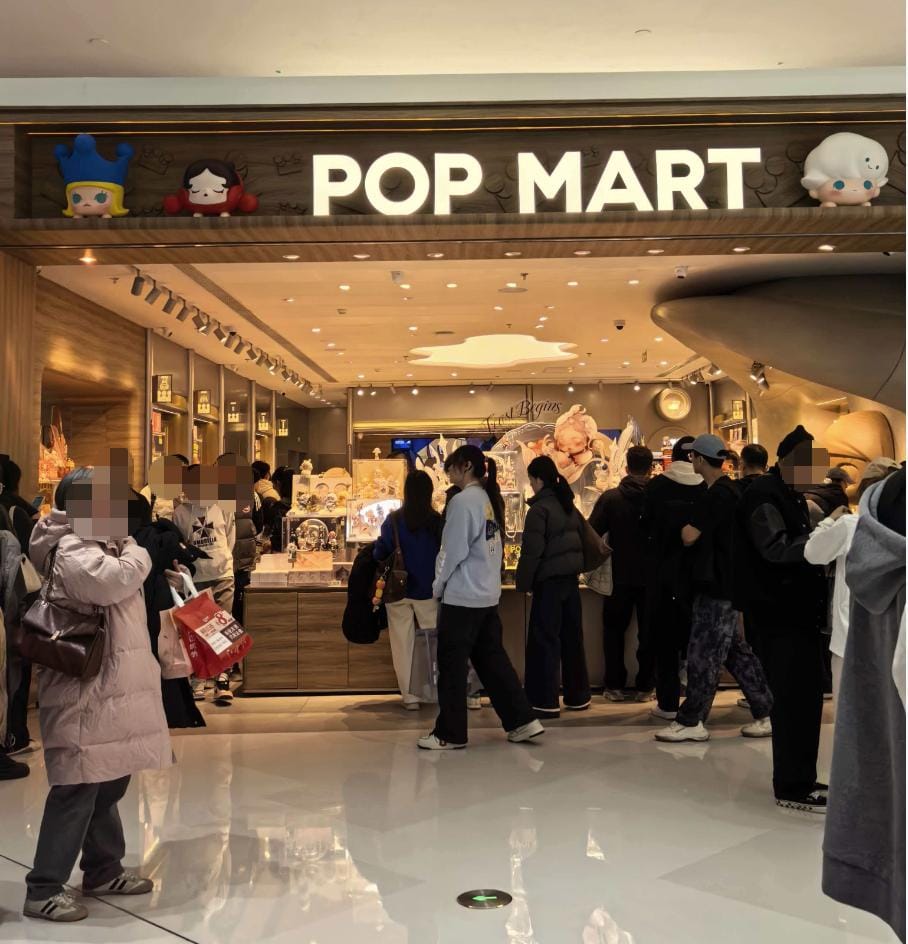
Pop Mart is undergoing a significant market valuation reset, with its stock plunging more than a third from its 2025 peak as the company executes a deliberate strategy to flood the market with inventory, dismantling the speculative resale ecosystem that previously fueled much of its hype.
Shares of the Hong Kong-listed toy giant dipped below HK$200 on Dec.8, a sharp contraction from the year−to−date high of HK$340. The sell-off coincides with a dramatic increase in supply chain output, specifically targeting the popular "Labubu" character line, which has successfully depressed secondary market prices but simultaneously alarmed investors accustomed to the brand’s scarcity-driven growth model.
The strategic shift has triggered an exodus of "scalpers"—resellers who profit from supply shortages—causing the street value of rare "hidden" collectibles to crash. Whlie management has explicitly stated a desire to sell "good products" rather than "financial products," the move has drawn caution from analysts. A report by Bernstein warned of potential risks regarding slowing growth, high IP concentration, and the diminishing engagement of core collectors as the resale premiums evaporate.
Despite the equity market volatility, the company maintains strong operational momentum in international markets, particularly the U.S., where revenue continues to surge. The current downturn reflects a friction point between the company's pivot toward sustainable, mass-market consumption and a capital market wary of the loss of "unicorn" scarcity premiums.
The War on Scalpers and Inventory Floods
The primary catalyst for the cooling secondary market is Pop Mart’s aggressive expansion of production capacity. Addressing the rampant speculation surrounding its products, company executives revealed during interim results that production capacity for plush toys, including vinyl plush lines, has increased tenfold compared to the same period last year. By August 2025, monthly production capacity for the plush category exceeded 30 million units.
This "saturation supply" strategy has decimated the profit margins of resellers. In the secondary market, the price of the "hidden" model from the Labubu 3.0 series has plummeted from over RMB 1,000 (US$137) to approximately RMB 560 (US$77). Similarly, the "Moon Shadow Mask" model from the popular Why So Serious series dropped from a peak of over RMB 1,200 (US$165) to RMB 683 (US$94) in less than a month. Resellers report heavily discounting stock to exit the market as premiums vanish.
Pop Mart is simultaneously employing dynamic inventory controls. While flooding the market with established hits like Labubu 3.0 and 4.0 to deter speculation, the company continues to utilize limited releases and reservation systems for newer IPs, such as the "Stars" series, to maintain excitement among genuine collectors. Furthermore, the company’s decision to cancel the policy of exchanging loyalty points for cash starting in December has removed a key arbitrage mechanism used by scalpers to mitigate losses.
Diversifying the IP Portfolio
Investors remain concerned about Pop Mart’s heavy reliance on the Labubu IP, which currently accounts for over 30% of revenue. Bernstein has forecasted that Labubu sales could peak between 2026 and 2027, earlier than market consensus. To mitigate this concentration risk, the company is accelerating the incubation of new characters.
The "Crybaby" and "Stars" IPs are emerging as potential successors. Market research indicates that the "Stars" series already generates an estimated annual sales volume between one-third and one-half that of Labubu. The company is facilitating this transition through an "IP cluster" strategy, bundling new characters with established stars in mixed blind box series to drive cross-pollination of its fan base.
However, the rapid expansion of supply has exposed vulnerabilities in quality control. The release of the Labubu 4.0 series faced widespread consumer complaints regarding product defects, leading to some items trading below their retail issue price on the secondary market. Reports indicate that while Pop Mart is expanding its manufacturing footprint into Vietnam and inland China (Jiangxi and Hunan), many contract manufacturers have yet to fully digitize their operations, leading to consistency issues during production spikes.
Overseas Expansion and Content Strategy
With domestic scarcity premiums fading, Pop Mart is looking to international markets and content depth as its next growth engines. Third-quarter financial data shows overseas revenue skyrocketed 365% year-on-year. The Americas region is the fastest-growing segment, with revenue surging 1,142.3% to RMB 2.26 billion yuan (US$311 million) in the first half of 2025. The brand recently made its debut at the Macy’s Thanksgiving Day Parade in New York, signaling its ambition to embed itself in Western pop culture.
To deepen emotional engagement beyond the "blind box" thrill, the company is mirroring the Disney model by investing in narrative content. Plans are underway for a Labubu and Friends animated series and a film adaptation licensed to Sony Pictures. This shift aims to transform its characters from trendy collectibles into long-lifecycle cultural icons, reducing reliance on the volatile dynamics of hype and scarcity.