
China’s Mobile Gaming Surges as MiHoYo Jumps 71% and Publishers Capture 42.6% of Revenue
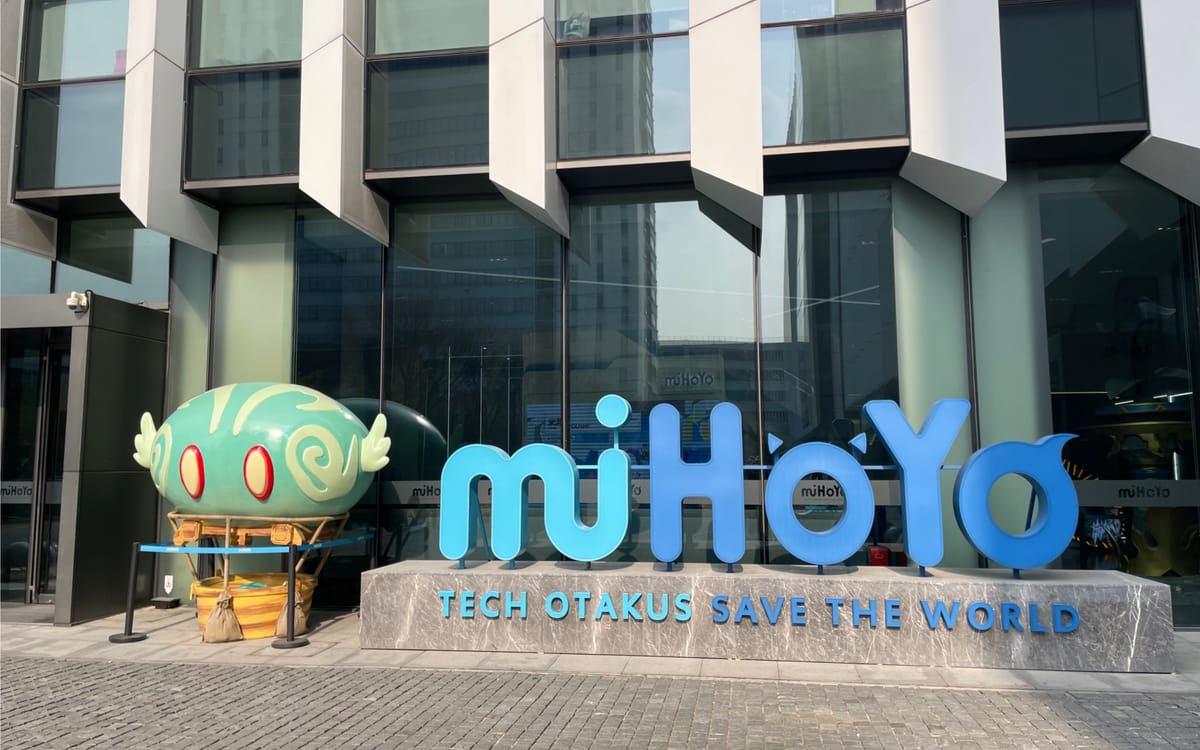
China's mobile gaming industry recorded a broad-based summer rally in July 2026, with 38 Chinese publishers collectively generating US$2.3 billion in global revenue — equivalent to 42.6% of the worldwide top-100 mobile publishers' combined earnings — as synchronized anniversary events and IP collaborations converted student holiday traffic into record monetization.
The data, compiled by market intelligence firm Sensor Tower (excluding third-party Android channels in mainland China), signals a structural shift in how Chinese publishers engineer revenue cycles: rather than relying on isolated blockbuster launches, the industry is now engineering coordinated content calendars that turn the summer school-holiday window into a sector-wide earnings event. All top-five publishers crossed the US$100 million monthly revenue threshold simultaneously — a milestone that underscores the maturation of China's mobile gaming monetization playbook.
For investors tracking Chinese gaming equities, the July print offers a meaningful data point ahead of second-half earnings season. MiHoYo, the privately held developer behind the Genshin Impact franchise, posted the sharpest month-on-month revenue acceleration among top-tier publishers, while mid-tier names including TinkerBell Network and Moonton Technology staged ranking breakouts that suggest the competitive gap between the top tier and the second tier is narrowing.
MiHoYo's Three-Game Relay Drives 71% Revenue Surge
MiHoYo's 71% month-on-month revenue jump — the largest percentage gain among the Sensor Tower top-30 — was not the product of a single title breakout but rather a deliberately staggered content release strategy across its three flagship games that spread peak spending across the entire calendar month.
Genshin Impact led the opening phase, launching version "Moonlit Eight" on July 1 with a new ice-element five-star character and two fresh exploration regions, propelling the title to the No. 2 position on China's iOS paid game chart and No. 3 on the overall revenue chart. Honkai: Star Rail took the baton mid-month on July 15 with version 4.4, featuring a new five-star character and a second-phase crossover with the Fate/stay night: Unlimited Blade Works anime franchise — a collaboration that included a free limited five-star character for all logged-in players, a mechanic designed to maximize re-engagement rather than direct monetization. Zenless Zone Zero closed the month with its second-anniversary update on July 29, recording its highest single-day revenue of 2026 to date.
The relay structure is analytically significant: by distributing major content drops across early, mid, and late July, MiHoYo effectively eliminated the revenue troughs that typically follow a single large launch, sustaining top-chart placements — and therefore App Store algorithmic visibility — for the full 31-day period.
NetEase's Eggy Party Crosses US$770 Million Lifetime Revenue, Reclaims Internal Crown
NetEase held its No. 4 ranking among Chinese publishers, but the more consequential data point was the performance of Eggy Party. The party battle game's fourth-anniversary celebrations — combining a new season launch, an "IP Flying DongDong" collaboration, and gameplay updates — drove daily revenue to US$2.6 million on July 10, the second-highest single-day figure for the title in 2026. The game ranked No. 3 on China's iOS mobile game revenue chart on both July 10 and 11.
By July 31, Eggy Party's cumulative global lifetime revenue had surpassed US$770 million (approximately RMB 5.5 billion), crossing what the source material characterizes as the "51 亿" RMB milestone. The title reclaimed its position as NetEase's top-grossing mobile game — a ranking it had ceded to Fantasy Westward Journey since February 2026 — demonstrating that anniversary-driven content cycles can restore a maturing title's commercial momentum without requiring a full sequel or platform migration.
The broader implication for NetEase's portfolio strategy: Eggy Party's trajectory validates the party genre as a sustainable high-margin category in China, where the title competes directly against Tencent's broader casual gaming ecosystem.
Tencent Maintains Dominance as Honor of Kings Earns ~US$200 Million Globally
Tencent retained the top spot on the global Chinese publisher revenue chart for the month. Honor of Kings generated approximately US$200 million in global revenue in July, a 35% month-on-month increase fueled by the second batch of "Journey to the West" themed skins, a crossover with Ultraman Tiga, and the return of limited anniversary wish events. The Ultraman collaboration is emblematic of a broader industry trend: IP partnerships are increasingly selected for thematic alignment with a game's existing aesthetic rather than pure brand scale.
Peacekeeper Elite sustained top-3 placement on China's iOS revenue chart from July 3 onward following the launch of its "Summer Expedition" seasonal update, peaking in daily revenue on July 10 before extending engagement through a late-month crossover with the Swallowing the Stars IP. Internationally, PUBG MOBILE recorded simultaneous revenue and download growth in the United States, Saudi Arabia, and Japan — markets that collectively represent the highest average revenue per user outside of East Asia.
Tencent products occupied 10 of the 20 slots on Sensor Tower's China App Store mobile game revenue ranking for July, a concentration ratio that illustrates the structural challenge facing any publisher attempting to displace the company from top-of-chart positions.
Mid-Tier Publishers Stage Ranking Breakouts, Narrowing the Competitive Gap
The July data reveals meaningful upward mobility among second-tier publishers, a dynamic that could attract investor attention to names outside the traditional Tencent-NetEase duopoly.
Moonton Technology, the developer of Mobile Legends: Bang Bang (MLBB), climbed seven positions to No. 14 on the global publisher revenue chart after the game posted 50% month-on-month revenue growth. The catalyst: a Street Fighter 6 crossover launched in late June featuring four limited skins, followed in July by EWC 2026 esports event hype and a new StarLight monthly membership tier. The Philippines, the United States, Indonesia, Malaysia, and Japan collectively accounted for more than 50% of MLBB's July revenue — a geographic diversification that reduces Moonton's dependence on any single Southeast Asian market and strengthens the case for its long-term global positioning.
TinkerBell Network posted 43% month-on-month revenue growth and rose to No. 15, driven by the second anniversary of TinkerTown — which included a Sanrio IP collaboration and a new "Whale-Seeking Season" content update that doubled the game's China iOS monthly revenue — alongside the launch of Season 13 "Nightwatch" in Torchlight: Infinite.
Modo Global's My Garden World set an all-time monthly revenue record of US$16 million in July, lifting the publisher to No. 21. The growth was bifurcated: domestically, new flower-spirit collection content and anniversary gacha pools drove repeat spending; internationally, the game expanded into Germany, the United Kingdom, France, and Austria in late July, opening a new European revenue stream that could sustain growth momentum into Q3.
Giant Network returned to the top-30 chart at No. 27 after its action RPG Supernatural Squad executed a high-conversion crossover with Ghost Blows Out the Light — one of China's most recognized adventure-mystery IP franchises — generating a single-day revenue peak on July 10 and lifting the publisher's overall monthly revenue by approximately 35%.
Anniversary Economics Emerge as the Industry's Most Efficient Monetization Lever
Across the July dataset, the single most reliable predictor of a revenue spike was a game's anniversary milestone. Eggy Party (fourth anniversary), Zenless Zone Zero (second anniversary), and TinkerTown (second anniversary) all recorded either all-time or year-to-date revenue highs during their respective celebration windows. The pattern suggests that the anniversary event has effectively replaced the "new game launch" as the primary unit of revenue planning for mature live-service titles.
The mechanism is straightforward: anniversary events concentrate limited-time content, free character giveaways, and discounted gacha rates within a compressed window, creating artificial scarcity that accelerates spending decisions among both active and lapsed players. From a unit economics perspective, the customer acquisition cost for a re-engaged lapsed player is substantially lower than for a new user — making anniversary monetization structurally more margin-accretive than launch-period spending.
The data also validates a shift toward precision IP collaboration. The pairings that generated the strongest commercial outcomes in July — Honor of Kings × Ultraman Tiga, Honkai: Star Rail × Fate/UBW, Supernatural Squad × Ghost Blows Out the Light, MLBB × Street Fighter 6 — share a common characteristic: the IP's thematic register closely mirrors the game's existing genre and audience demographic. Broad-reach celebrity or fashion collaborations, by contrast, are conspicuously absent from the top-performing July events.
Market Context: China's Publishers Capture 42.6% of Global Mobile Revenue
The aggregate figure — 38 Chinese publishers generating US$2.3 billion from the global top-100 mobile publisher ranking in a single month — places July 2026 among the strongest months on record for Chinese mobile gaming's share of global revenue. The 42.6% global share, while not directly comparable to prior periods given Sensor Tower's methodology exclusions, indicates that Chinese publishers have sustained and potentially extended their global market position despite ongoing regulatory scrutiny of in-app purchase mechanics domestically and geopolitical headwinds in certain Western markets.
The summer holiday concentration effect is real but should not obscure the structural drivers: Chinese publishers have developed live-service monetization infrastructure — gacha systems, seasonal battle passes, IP collaboration pipelines, and esports event calendars — that generates more predictable recurring revenue than the traditional premium or advertising-based models dominant in Western markets. As that infrastructure matures, the variance between peak summer months and off-peak periods is likely to compress, making Chinese gaming revenue streams incrementally more attractive to institutional investors seeking stable cash-flow profiles.
Related Coverage:
Tencent, Century Games Lead Global Mobile Gaming Growth as Export Strategies Deepen