
China's Motorcycle Industry Rides Back as a Global Challenger
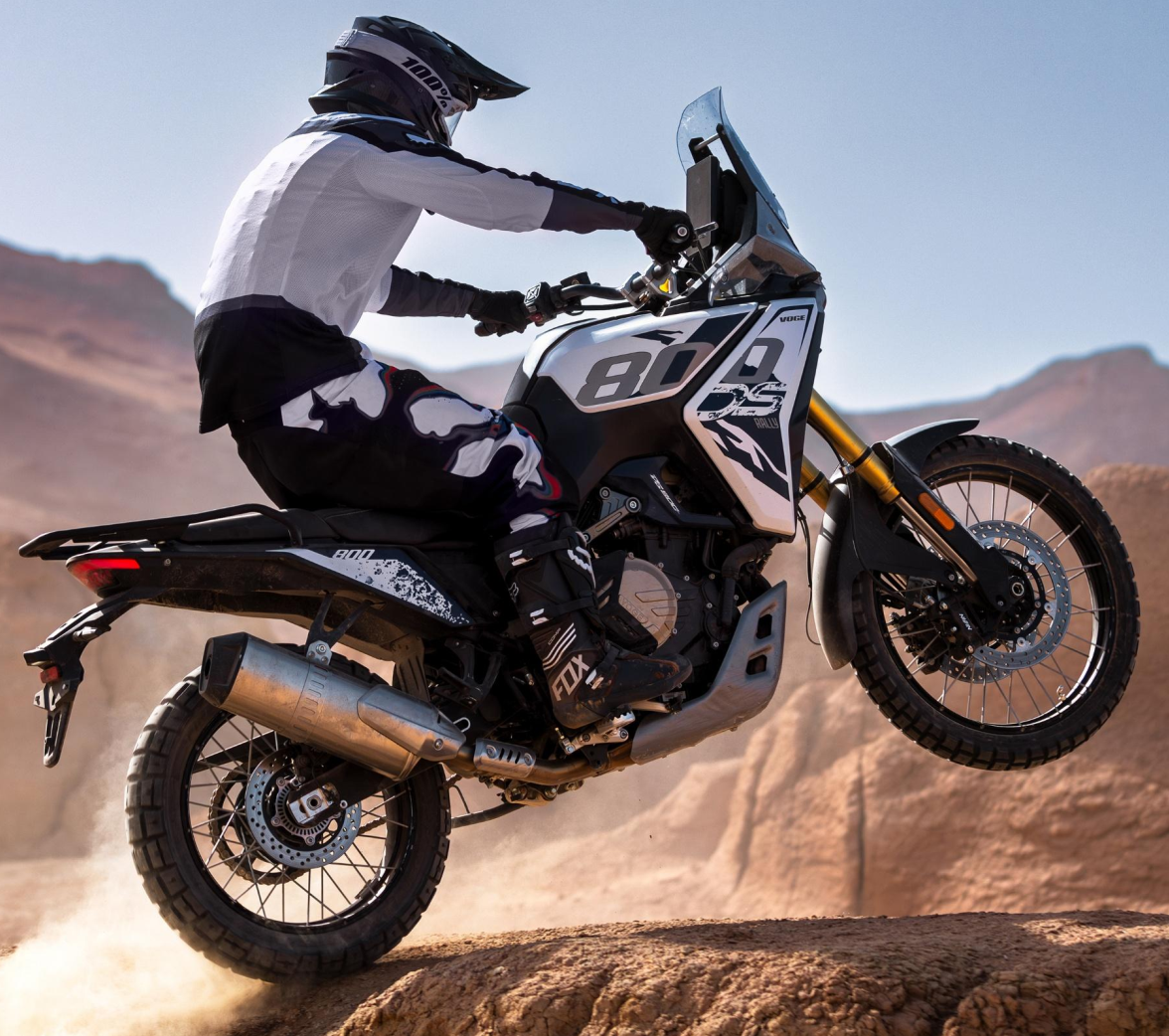
A structural revival two decades in the making is now reshaping the USD 153 billion global motorcycle market, as Chinese manufacturers leverage racing dominance, export momentum, and large-displacement engineering to challenge Honda, Yamaha, and Ducati on their home turf.
China's gasoline-powered motorcycle industry—long written off as a casualty of urban ban policies and the electric vehicle boom—is staging its most consequential comeback in nearly 20 years, with first-half 2026 total industry sales, including exports, surging 12.44% year-on-year to 10.17 million units, and a single Chinese upstart brand clinching the World Superbike Championship's opening double-podium of the season.
The inflection point arrived on March 28, 2026, at the Portimão circuit in Portugal. Rider Valentin Debise, mounted on a Zhang Xue Motorcycle 820RR-RS, crossed the finish line nearly four seconds ahead of his nearest rival in Race 1 of the WorldSBK (World Superbike Championship) Portuguese round—the first outright WorldSBK race victory ever recorded by a Chinese motorcycle brand, ending decades of lock-hold by Yamaha, Ducati, BMW, and Kawasaki. Debise returned in Race 2, recovering from a Turn 13 crash in the final three laps to overtake two Yamaha R9s on the straight and seal a station double. By the season finale in Spain on October 18, Zhang Xue Motorcycle had claimed six race victories through Debise's hands, finishing third in the manufacturer standings—behind only Yamaha and Ducati, and ahead of Triumph, Honda, and Kawasaki on debut.
Racing Victories Accelerate a Strategic Pivot Toward Premium Markets
Zhang Xue Motorcycle, founded in 2024 by Zhang Xue—formerly a co-founder of Kaiyue Motorcycle and a grassroots racer by origin—became an overnight industrial icon. But the brand represents the leading edge of a far broader structural shift, not an isolated phenomenon.
Cfmoto, the Hangzhou-listed manufacturer, began competing in MotoGP's Moto3 class in 2022, becoming the first Chinese brand to enter the world's premier motorcycle racing series. In 2024, Cfmoto swept Moto3's rider, team, and manufacturer triple crown. In 2025, the company added six titles across Moto3 and Moto2, recording 20 podium appearances and claiming "Rookie of the Year" honors in both classes—a record for any Chinese manufacturer in MotoGP history. Through the first half of 2026, Cfmoto has accumulated eight wins and 17 podiums across both classes and leads both the Moto3 rider and team standings.
The competitive distinction between the two programs matters commercially: WorldSBK machines must be derived from production motorcycles, making race wins a direct sales catalyst analogous to road racing in the automotive world. MotoGP machinery is purpose-built from scratch, functioning more like Formula 1—a pure engineering benchmark. Cfmoto's dominance in the latter carries arguably greater long-term technological signaling value, even if Zhang Xue's narrative has captured the domestic IP moment.
Cfmoto's H1 2026 revenues reached RMB 4 billion (approximately USD 556 million), up 19.55% year-on-year, on total unit sales of 196,400—a 30.62% volume increase. In its gasoline motorcycle segment alone, the company recorded RMB 6.471 billion (USD 898 million) in 2025 full-year revenue, up 7.18%.
Industry Data Reveals a Value-Cycle Shift, Not Just a Volume Recovery
The sales rebound is real but incomplete in isolation. Domestic Chinese gasoline motorcycle sales in H1 2026 reached 2.6496 million units, a modest 2.09% year-on-year gain, reflecting the persistent drag from urban restriction policies—at their peak affecting 185 cities—and competition from electric two-wheelers. The headline 12.44% growth rate is overwhelmingly export-driven. By end-2025, exports accounted for 72% of total gasoline motorcycle shipments; through H1 2026, that ratio climbed further to 74%.
The more consequential shift is compositional. In the years surrounding 2008—when China's motorcycle industry hit its prior sales peak of 27.5 million units annually—125cc displacement dominated output. By 2025, motorcycles above 250cc were approaching one million units in annual sales, a segment that commands dramatically higher average selling prices and margins. This displacement-mix upgrade is redefining industry economics.
Full-year 2025 industry revenues for Chinese motorcycle manufacturers reached RMB 159.03 billion (USD 22.09 billion), up 10.73% year-on-year. Aggregate profit rose 34.11% to RMB 12.297 billion (USD 1.71 billion)—profit growth outpacing revenue growth by more than three to one, a classic signal of operating leverage materializing from scale and product mix improvement.
For context, the global motorcycle market reached 65.2 million units in 2025, up 4.7% to a record USD 153.4 billion. Industry forecasts project a compound annual revenue growth rate of 2.84% through 2030, implying a market approaching USD 180 billion by the end of the decade.
Supply-Chain Depth Challenges the "Technology Gap" Narrative
Skeptics of the China motorcycle upgrade thesis often point to brand recognition deficits and distribution gaps in Western markets. Those critiques remain partially valid. However, the manufacturing competency gap that once justified them has been largely closed.
Cfmoto has maintained a long-running technical and channel partnership with Austrian manufacturer KTM, one of the most respected European performance brands. Loncin, another major Chinese manufacturer, has produced BMW Motorrad engines under contract for more than 20 years—a supply arrangement that underscores the depth of Chinese manufacturing capability at the highest tier of the industry.
In 2026, Cfmoto acquired Kalex, the dominant Moto2 chassis constructor and a core MotoGP supply-chain entity, with the explicit intent of transferring prototype-grade engineering into production motorcycles. The move is a direct play for the European premium segment—a market where brand heritage and technical provenance carry disproportionate weight with consumers.
Other domestic competitors are pursuing parallel strategies. Loncin's RR series and Qianjiang Motorcycle's racing-derived lineup represent additional vectors of large-displacement product development. The competitive architecture increasingly mirrors China's electric vehicle playbook: technology parity first, then brand-building through motorsport and direct consumer engagement, followed by aggressive pricing to capture share.
The 50-Year Arc: From Jialing CJ50 to Global Contender
The industrial context spans half a century. In 1979, Jialing Machinery Factory in Chongqing produced the Jialing CJ50, China's first mass-market civilian motorcycle—establishing Chongqing as the industry's geographic and cultural center. By 1993, China had surpassed Japan to become the world's largest motorcycle producer. The 2008 peak of 27.5 million annual units was accompanied by fierce competition among Da Changjiang Haojue, Loncin, Lifan, Jianshe Motorcycle, Jialing, and Zongshen.
The collapse that followed was structural. Urban ban policies, rising electric scooter adoption, and a wave of middle-class consumers migrating to automobiles pushed annual sales to 15.58 million units by 2018—a 43% contraction from peak. The decade of attrition cleared the market of weaker players, but the survivors—those who pivoted to exports, all-terrain vehicles, large-displacement segments, and overseas manufacturing—preserved the industrial base that is now scaling again.
The recovery began structurally in 2019. By 2025, total gasoline motorcycle sales had recovered to 18.46 million units, still well below the 2008 peak in volume terms, but significantly above it in revenue and margin quality.
Targeting Honda: The Next Phase of Global Ambition
The competitive ambition is now explicit. In the framing of industry participants, Zhang Xue Motorcycle's competitive target is Yamaha and Ducati—the WorldSBK incumbents it directly displaced on the podium. Cfmoto's stated trajectory points toward Honda—the world's largest motorcycle manufacturer, with a dominant position across both premium and value segments globally.
Closing that gap requires execution on multiple fronts simultaneously: product localization for European and North American consumers, dealer network build-out in markets where Chinese brands have minimal presence, and sustained on-track performance that converts racing equity into showroom traffic. None of these is assured.
What has changed is that the precondition—manufacturing and engineering credibility—is no longer in serious question. The structural shift from a volume-driven, low-margin export model to a brand-driven, performance-anchored premium strategy is now underway. The first half of 2026's data, the Portimão podium, and Cfmoto's Moto3 standings leadership all point in the same direction.
China's motorcycle industry spent 20 years being overlooked. It is now making that difficult to do.
Related Coverage:
As European Manufacturers Crumble, Chinese Motorcycle Giants Are Seizing The Continent