
Tencent's 8-Year Stock Cycle Exposes China's Internet Growth Trap
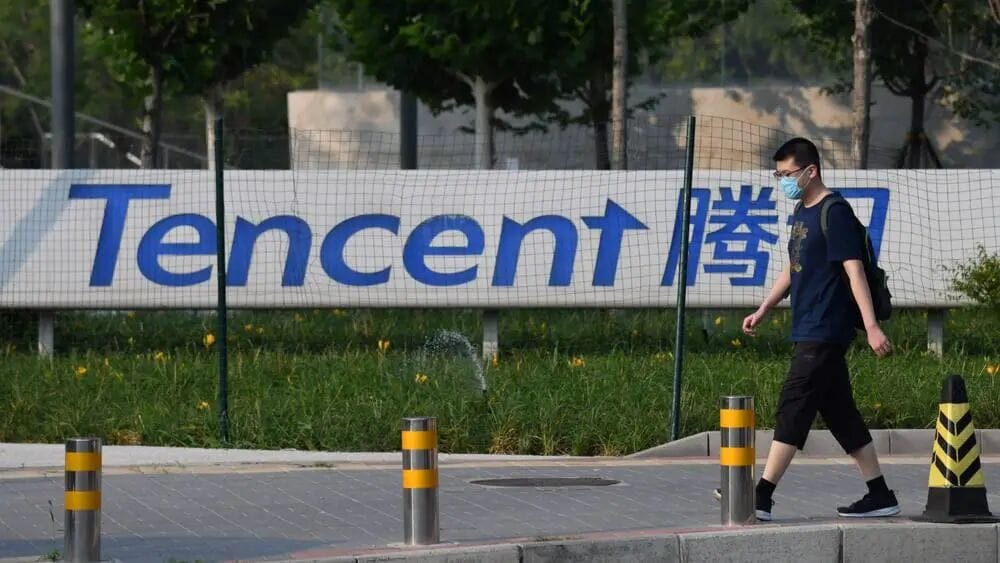
As Tencent Holdings slides back to 2018 price levels despite nearly tripling its profits, a fundamental re-rating of China's tech sector is underway — one that no amount of moat-building can easily reverse.
Shares of Tencent Holdings breached the HK$400 threshold on thursday, extending year-to-date losses to more than 33% and erasing eight years of price appreciation in a market that has systematically downgraded its growth assumptions for China's internet industry. The move crystallizes a paradox that is testing the patience of value investors globally: a company can more than double its revenue and nearly triple its profits over eight years and still leave shareholders with nothing to show for it.
The stock's return to early-2018 levels — when ByteDance's TikTok was barely a household name, Pinduoduo had yet to list, and generative AI was a laboratory concept — is not merely a sentiment story. It reflects a structural reassessment of what China's most profitable consumer-technology franchises are actually worth in a world where their growth trajectories have converged toward single digits.
Profits Soar, Shareholders Stall: Mapping the Disconnect
The numbers demand context. In fiscal year 2018, Tencent posted revenue of RMB 312.7 billion (US$43.4 billion) and net profit of RMB 78.7 billion (US$10.9 billion). By fiscal year 2025, revenue had climbed to RMB 751.8 billion (US$104.4 billion) and net profit to RMB 224.8 billion (US$31.2 billion) — representing 2.4x and 2.9x growth, respectively, over the period. Excluding dividends, shareholders who held through the cycle have received no capital appreciation whatsoever.
This is not a story of business failure. It is a story of valuation compression — and understanding why that compression occurred is essential to forecasting when, or whether, it reverses.
ByteDance Encroaches While AI Spending Erodes Margins
Short-term headwinds are real and measurable. ByteDance's app ecosystem now commands 40.1% of total user-time share among China's top 50 apps, according to market data, while Tencent's share has declined to 29.7%. Because advertising revenue correlates directly with time-on-platform, the gap has direct implications for one of Tencent's highest-margin business lines.
Gaming, Tencent's other revenue pillar, faces a high base effect from a strong 2025 performance. Meanwhile, video-account advertising monetization — a key growth narrative over the past two years — is approaching saturation in ad-load rates, limiting the runway for incremental revenue.
The most acute concern for near-term earnings is capital expenditure. In Q2 2026, Tencent reported revenue growth of 11% year-on-year, but net profit attributable to shareholders grew just 0.7%. New AI product launches weighed on earnings by an estimated RMB 10.5 billion (US$1.46 billion) in the quarter, while capital expenditures surged 176% year-on-year. The message is unambiguous: Tencent is paying an accelerating price to remain competitive in the AI race, and profit margins will remain under pressure for at least several quarters.
A Sector-Wide Re-Rating Signals a Growth-Regime Shift
What makes Tencent's predicament analytically significant is that it is not an outlier. Alibaba Group, which has delivered genuine AI-driven revenue, is similarly range-bound. Pinduoduo, which disrupted domestic e-commerce with triple-digit growth just eight years ago, has seen its multiple compress sharply. Meituan, which survived a brutal delivery-platform war to emerge with improved fundamentals, trades at a fraction of its peak valuation. The uniformity of shareholder disappointment across companies with vastly different business models points to a macro-level explanation, not company-specific failures.
That explanation resides in growth-rate convergence. Between 2018 and 2019, China's four dominant internet platforms reported the following two-year compound annual revenue growth rates: Tencent at 26%, Alibaba at 54%, Meituan at 70%, and Pinduoduo — admittedly from a small base — at 316%. Those figures justified price-to-earnings multiples of 20x to 30x for Tencent and comparable premiums elsewhere. Markets were, in effect, pre-purchasing a decade of hyper-growth.
Consensus forecasts for 2026 through 2028 now project revenue growth of approximately 10% per annum across the same cohort. These companies remain highly profitable — more so than ever in absolute terms — but a 10% growth profile is analytically incompatible with the valuation framework that defined the sector's peak.
The U.S. Comparison That Stings
The contrast with U.S. counterparts sharpens the case. Between 2018 and 2019, Alphabet (Google), Meta Platforms, and Amazon posted two-year compound revenue growth of 20% to 30% — slower, at the time, than most of their Chinese peers. Eight years later, those companies have scaled to hundreds of billions of dollars in annual revenue and are still expanding at close to 20% annually, buoyed by cloud infrastructure, AI monetization, and global market expansion.
Chinese internet platforms, by contrast, are largely confined to a domestic market where mobile-internet user penetration is effectively complete, consumer spending growth is constrained by macroeconomic conditions, and regulatory frameworks have historically limited overseas expansion. The result is a structural growth ceiling that U.S. peers have not encountered to the same degree — and that ceiling is now priced into multiples.
Valuation Floor in Sight, but Catalyst Remains Elusive
At a trailing price-to-earnings multiple of just above 10x, Tencent appears to have limited downside on a pure valuation basis. Few analysts are projecting further significant de-rating from current levels. But a floor is not a catalyst.
For multiples to re-expand, the market will require evidence of one or more of the following: a re-acceleration in either revenue or profit growth above the current 10% consensus trajectory; a material increase in shareholder returns through buybacks or dividends that offsets the growth discount; or a credible AI monetization pathway that shifts the platform's long-term growth profile.
None of these outcomes is imminent. AI investment is currently a drag on profitability rather than a revenue driver, and the timeline for meaningful AI monetization across Tencent's consumer and enterprise products remains uncertain. Capital return programs, while ongoing, have not been sufficient to move the needle on total shareholder return.
The harder truth for long-term holders of Chinese internet equities is this: quality and value are necessary conditions for investment returns, but they are not sufficient. Sustained re-rating requires growth. Until the sector demonstrates a credible path back to double-digit-plus expansion — whether through AI commercialization, new business lines, or an improvement in the domestic consumption environment — low valuations may persist longer than the underlying business quality would suggest they should.
Related Coverage:
Tencent Levers Up With 30-Year Bonds to Fund Unprecedented AI Cap-Ex Boom