
China's "Old-Man Cars" Find Unexpected Success in US Market
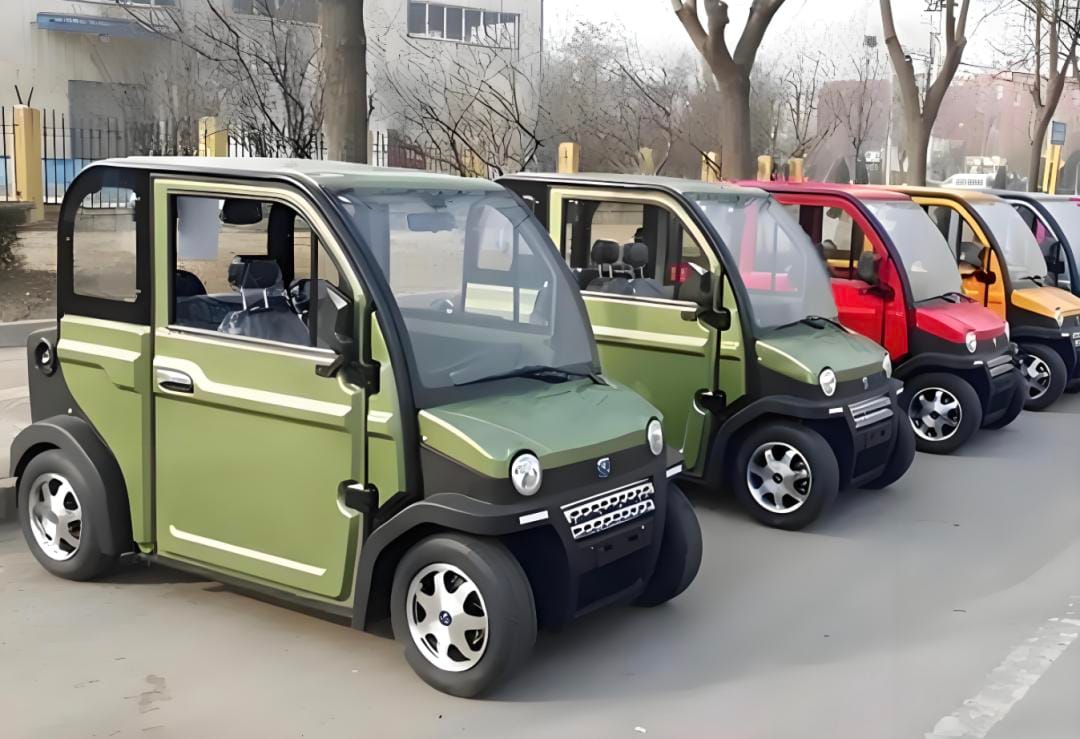
A Chinese manufacturer of low-speed electric vehicles, products often disparaged domestically as "old-man cars," is capitalizing on US market conditions that have turned these modest vehicles into profitable golf cart alternatives. Taotao Vehicle, a Zhejiang-based company, recently filed for an H-share listing on the Hong Kong Stock Exchange, revealing robust financial performance driven entirely by American sales.
The company reported net profit attributable to shareholders of RMB 342 million ($47 million) in the first half of 2025, outperforming eight out of 17 listed passenger vehicle manufacturers in China's A-share and Hong Kong markets. Its 88.04% year-on-year net profit growth rate trailed only Li Auto, underscoring the commercial potential of a product category that remains stigmatized in its home market.
While Chinese automakers struggle to penetrate the US market amid trade barriers, these low-speed electric vehicles have quietly established a foothold by positioning themselves within the golf cart category, sidestepping regulatory hurdles that conventional automobiles face.
The success highlights how Chinese manufacturers are finding alternative pathways into restricted markets through precise product positioning and adaptation to local demand patterns.
Market Repositioning Transforms Product Perception
In China, low-speed electric vehicles carry negative connotations, frequently associated with traffic violations and safety hazards. These vehicles, which require no driver's license to operate, are commonly driven by elderly users with limited traffic safety training. Social media commentary reflects public frustration, with users noting these vehicles often disregard traffic rules without facing proportional enforcement.
However, the same products have been rebranded in the United States as electric golf carts, a category enjoying growing acceptance for community transportation and short-distance travel. This strategic repositioning has enabled manufacturers to tap into established product classifications with clearer regulatory frameworks.
Taotao Vehicle's growth trajectory demonstrates the strategy's effectiveness. After earning less than RMB 100 million in first-quarter 2025 profits, the company generated over RMB 200 million in both second and third quarters. Nine-month cumulative net profit reached RMB 606 million ($84 million), already exceeding total 2024 annual figures.
Rising Vehicle Costs Create Market Opportunity
Escalating automobile prices in the United States have created structural demand for lower-cost transportation alternatives. Average new vehicle transaction prices surpassed $50,000 in September 2025 for the first time, following over a year of consecutive increases.
The used car market has experienced parallel price pressures. Between February and April 2025, average used vehicle prices climbed from 26,900 to 26,900 to 27,600. The availability of affordable used cars has contracted sharply—vehicles priced below $20,000 represented nearly half of three-year-old used car inventory in 2019 but account for just 11.5% currently. Over six years, used passenger vehicle prices have risen 48.7%.
Electric golf carts, priced significantly below conventional automobiles, offer compelling value in this environment. In most US states, these vehicles can legally operate within communities, parks and designated areas, with some models requiring no registration. This regulatory treatment substantially lowers barriers to ownership while meeting short-distance transportation needs.
Trade Barriers Inadvertently Favor Niche Products
Chinese automotive brands continue expanding globally but face significant obstacles in the US market through high tariffs and stringent entry requirements. Additional tariffs imposed on Chinese vehicles in early 2025 have intensified pressure on conventional automobile exports. Industry analysts projected in April that tariffs could increase average new vehicle prices by approximately $10,000, a forecast that appears conservative given subsequent price movements.
Low-speed electric vehicles have circumvented these restrictions by operating outside traditional automotive classifications. By marketing products as golf carts rather than passenger vehicles, Chinese manufacturers have accessed US distribution channels while avoiding the regulatory scrutiny and trade barriers confronting standard automobiles.
Global Market Index analysis values the worldwide golf cart market at 2.6 billion in 2024, projecting 82.6 billion in 2024, projecting 83.6 billion by 2034.
This development illustrates adaptive capabilities within Chinese manufacturing, achieving market entry through precise positioning rather than technological superiority. While major automotive brands remain blocked by tariff barriers, these low-speed vehicles have established commercial viability through targeted segmentation and alignment with existing regulatory categories.