
China’s Optical Offensive: CES 2026 Reveals a Fragmented, Maturing AI Eyewear Ecosystem
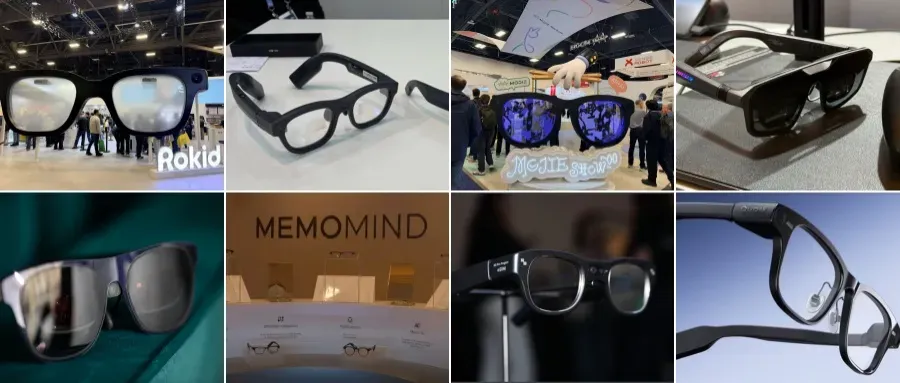
The "War of a Hundred Glasses" has spilled over from the manufacturing hubs of Shenzhen to the exhibition halls of Las Vegas, with a delegation of at least 27 Chinese firms dominating the CES 2026 XR sector. This aggressive expansion—underpinned by a 62.3% domestic shipment surge in late 2025—signals a pivotal shift in the industry from experimental hardware to vertical-specific commercialization, forcing global competitors to reckon with a supply chain that has successfully miniaturized spatial computing into mass-market form factors.
Hardware Miniaturization Meets Software Giants
The defining narrative of the Chinese delegation is the conquest of weight and wearability, a direct response to consumer fatigue with bulky headsets. Rokid exemplified this trend by unveiling the Rokid Style, a bezel-less AI unit weighing a mere 38.5 grams. By pricing the device at $299 and integrating diverse Large Language Models (LLMs) like ChatGPT, DeepSeek, and Qwen, Rokid is attempting to commoditize the "always-on" assistant, moving the battleground from optical fidelity to comfort and model agnosticism.
However, the entry of software titans into the hardware space marks a more significant structural shift. Alibaba debuted the Quark AI Glasses S1, powered by dual flagship chips from Qualcomm (AR1) and BES. Unlike hardware-first startups, Alibaba is leveraging its "Qwen" AI infrastructure to create a voice-first interface that bypasses the smartphone screen entirely. This move suggests that Chinese tech giants now view smart eyewear not as a peripheral, but as a primary distribution channel for their AI ecosystem services.
Decoupling the Smartphone: The Rise of Independent Connectivity
A critical technical threshold observed at CES 2026 is the severance of the tether between glasses and smartphones. RayNeo (incubated by TCL) introduced the RayNeo X3 Pro, an eSIM-enabled device weighing 78g that functions as a standalone communication terminal. By enabling direct cloud connectivity for 3D gaming and calls without a host device, RayNeo is positioning smart glasses as a potential smartphone replacement rather than an accessory, a strategy that could disrupt carrier subsidy models if adoption scales.
Simultaneously, XREAL is cementing its dominance in the entertainment vertical through high-performance partnerships. The launch of the ROG Xreal R1, developed in collaboration with ASUS, introduces the industry’s first 240Hz Micro OLED display. This specification targets the lucrative e-sports demographic, moving beyond passive media consumption to high-fidelity interactive gaming. Furthermore, XREAL’s unveiling of the proprietary X1 spatial computing chip in the flagship XREAL 1S indicates a move toward vertical integration, reducing reliance on third-party silicon to optimize power consumption and 3D rendering.
The Long Tail: Specialized Peripherals and Modular Designs
Beyond the headline acts, the Chinese delegation showcased a high degree of specialization among smaller players, indicating a maturing "long tail" market. Gyges Labs diverged from the ocular focus entirely with the VOCCI RING, an AI-powered note-taking wearable. By focusing on productivity rather than health metrics—and offering waterproof utility—Gyges is carving out a niche for "invisible" AI hardware.
Sustainability and repairability also emerged as unexpected themes. MLVision (Xuanjing) introduced the M6 series, the world’s first modular AR glasses allowing for independent upgrades of the magnetic waveguide display and the compute unit. This modular architecture addresses a primary consumer pain point: the rapid obsolescence of expensive hardware. Meanwhile, Xgimi, traditionally a projector manufacturer, successfully transitioned its optical expertise to eyewear with the MemoMind brand, validating the cross-industry transferability of display technologies.
Domestic Validation Fuels Global Expansion
The confidence displayed by these 27 companies is rooted in robust domestic validation. IDC data reveals that in Q3 2025 alone, China’s smart glasses shipments hit 623,000 units, a 62.3% year-over-year increase, with audio/video recording glasses jumping nearly 80%. This explosive growth provides the cash flow and user data necessary to refine products before international export. The commercial viability is further evidenced by INMO, whose AIR3 glasses—a wireless 1080P AR unit—previously topped sales charts on JD.com, proving that Chinese consumers are already paying for utility-focused AR experiences.
As 2026 progresses, the convergence of major smartphone vendors (Xiaomi, NIO) and specialized optics firms suggests the market is entering a consolidation phase. For global investors and competitors, the takeaway from CES 2026 is clear: the Chinese supply chain has solved the fundamental hardware constraints of weight and display quality, shifting the competitive focus entirely to AI integration and ecosystem lock-in.
By ChinaBiz Insider Analysis Desk