
China's Passenger Car Sales Decline 13.9% in January Amid Policy Transition
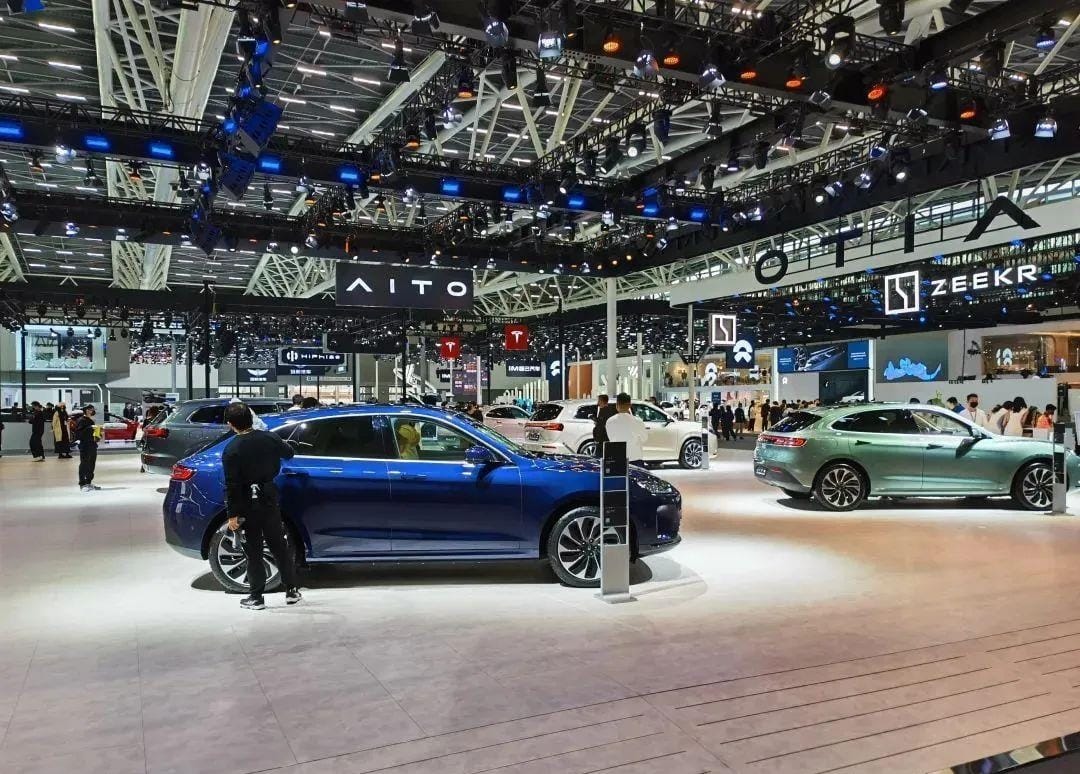
China's passenger vehicle market recorded 1.544 million retail units in January 2026, down 13.9% year-on-year, as the expiration of a decade-old new energy vehicle (NEV) purchase tax exemption triggered a short-term market adjustment, according to Cui Dongshu, secretary-general of the China Passenger Car Association (CPCA).
The decline reflects a temporary pullback following a rush to purchase NEVs in December 2025 before the tax exemption ended. Cui characterized the drop as a "predictable short-term fluctuation" within the normal range of January volatility, which has seen swings from negative 38% to positive 58% since 2020. Despite the retail softness, exports reached a record high for January, with 576,000 units shipped overseas, up 52% year-on-year, demonstrating the continued global competitiveness of Chinese automakers.
The market dynamics signal a structural shift toward premium NEVs and sustained export momentum, even as domestic demand adjusts to the new policy environment. NEV retail penetration stood at 38.6% in January, down 3 percentage points from the prior year, while NEV exports surged 103.6% to 286,000 units, accounting for 49.6% of total passenger vehicle exports. The divergence between domestic and overseas performance underscores the dual-track trajectory of China's automotive industry as it navigates policy transitions at home while expanding its global footprint.
Domestic Market Reflects Policy Transition Effects
January's 13.9% retail decline was driven primarily by NEVs, which fell 20% year-on-year to 596,000 units, while conventional fuel vehicles dropped 10% to 948,000 units. Pure electric vehicle sales decreased 17%, while plug-in hybrids plunged 31.2% and extended-range electric vehicles edged up just 0.8%. The weakness reflects a consumption pattern where buyers accelerated purchases in December to capture the expiring tax benefit.
Wholesale volumes showed more resilience, declining just 6.2% to 1.973 million units, as manufacturers maintained production levels. Production totaled 2.003 million units, down 4.4%, resulting in passive inventory reduction of 110,000 units as wholesale fell short of retail by 150,000 units. This contrasts with January 2025, when retail demand actively pulled down inventories.
Domestic brand retail fell 18% to 890,000 units, with market share declining 3.5 percentage points to 57.5%. Mainstream joint venture brands dropped 4% to 470,000 units, while luxury brands decreased 15% to 180,000 units. The data reveals intensified competition as traditional automakers navigate the NEV transition.
Export Surge Demonstrates Global Competitiveness
Chinese passenger vehicle exports climbed to a January record of 576,000 units, up 52% year-on-year, with NEVs contributing 286,000 units—a 103.6% increase. NEVs accounted for 49.6% of total exports, up 13 percentage points from the prior year, marking a structural shift in China's automotive export profile.
Domestic brands led the export surge with 476,000 units, up 49%, while joint venture and luxury brands exported 100,000 units, up 65%. Among NEV exports, pure electric vehicles represented 65% and plug-in hybrids 33%, with A00 and A0 segment pure electric vehicles comprising 50% of pure electric exports.
BYD topped NEV exports with 96,859 units, followed by Tesla China (50,644 units), Geely (32,117 units), and Chery (27,033 units). The export performance across emerging and developed markets reflects China's expanding overseas infrastructure, with CKD (completely knocked down) exports supporting localized production approaching 500,000 units of fuel vehicles alone.
Premium NEV Segment Shows Resilience
Within the NEV market, premium segments demonstrated relative strength despite overall weakness. B-segment electric vehicles reached 199,000 wholesale units, up 15% year-on-year, capturing 39% of pure electric sales—a 5.9 percentage point increase. This contrasts sharply with the economic A00 segment, which plummeted 62% to 46,000 units, falling to just 9% of pure electric sales from 23% a year earlier.
The wholesale NEV penetration rate reached 43.8%, up 1.3 percentage points year-on-year. Domestic brands achieved 57.9% NEV penetration, luxury brands 39.8%, while mainstream joint ventures lagged at just 3.6%. Among the 17 models exceeding 20,000 wholesale units in January, 13 were NEVs, including BYD Song (42,227 units), Geely Xingyuan (41,676 units), and Tesla Model Y (38,916 units).
Promotional intensity remained stable at 10.1% for NEVs, marking the fifth consecutive month around 10%, suggesting that industry efforts to curb price wars are gaining traction. This stability supports healthier profit margins as manufacturers balance volume and profitability amid rising commodity costs, particularly copper prices driven by global AI-related electricity storage demand.
February Outlook Points to Seasonal Low
February 2026 is expected to mark the year's lowest sales point, with only 16 working days compared to 19 in 2025, compounded by the longest-ever nine-day Spring Festival holiday. The extended holiday and traditional post-festival plant shutdowns will compress effective production and sales time, potentially alleviating retail inventory pressure.
First-time buyers, who now account for less than 40% of purchases based on vehicle registration data, show diminished enthusiasm for pre-Spring Festival purchases. Entry-level NEV costs have risen meaningfully following the tax exemption expiration, dampening immediate demand. However, several factors may support recovery: multiple flagship model launches scheduled post-holiday, traditional post-Spring Festival purchasing activity before school resumption, and faster return-to-work patterns among migrant workers.
Cost pressures are mounting as copper and other commodity prices surge, while lithium carbonate prices remain elevated after two years of NEV sales growth. This may constrain automakers' pricing flexibility in the near term. However, Cui noted that efforts to curb excessive price competition should yield long-term benefits by stabilizing consumer expectations and supporting sustainable industry development. Progress in China-EU and China-Canada tariff negotiations also signals potential for continued export growth, albeit with emphasis shifting from volume expansion to value-chain upgrading.