
Memory Chip Price Surge Pushes Budget Smartphones Toward Extinction
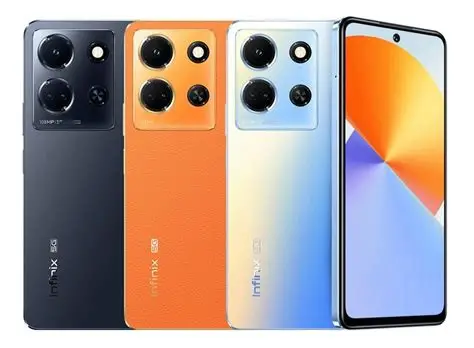
A historic surge in memory chip prices is reshaping the global smartphone market, forcing manufacturers to abandon budget-friendly handsets as artificial intelligence infrastructure demand drains supply from consumer electronics. The crisis has exposed fundamental vulnerabilities in low-end smartphone economics, where razor-thin margins leave manufacturers with little room to absorb cost increases that high-end devices can weather more easily.
Transsion, known for its value-oriented devices, exemplifies the damage. Despite a 22.6% revenue increase in the third quarter of last year, net profit plummeted 11% as gross margins contracted by two percentage points. For the full year 2025, Transsion's guidance indicated both revenue and profit declines, with net income cut in half, as the company slipped from fourth place globally to "others" category in market rankings.
Major manufacturers including Xiaomi, OPPO, Vivo, and Transsion have reportedly reduced 2026 handset orders by 10%-20%, with mid-to-low-end models bearing the brunt of cuts. Meizu cancelled the launch of its Meizu 22 Air entirely, citing storage price pressures as the direct cause.
The crisis stems from capacity constraints at Samsung, Micron Technology, and SK Hynix, whose production lines have been commandeered by AI infrastructure demand. SK Hynix announced in October that its 2026 capacity for DRAM, NAND Flash, and high-bandwidth memory (HBM) had been completely reserved, while Samsung and Micron's HBM capacity sold out entirely.
AI Demand Monopolizes Production Capacity
The memory chip shortage represents a fundamental shift in supply chain priorities, with high-margin HBM products for AI accelerators taking precedence over consumer-grade components. This reallocation has triggered unprecedented price increases—consumer memory modules surged more than sixfold since the second half of last year, according to market data.
SK Hynix and Samsung warned customers last month to prepare for continued difficulties securing memory components, stating they were being "directly or indirectly affected by the strong demand for server-related products." Even Apple acknowledged supply pressures during recent earnings calls, having secured only first-quarter NAND Flash agreements and first-half DRAM contracts, with the remainder of 2026 supply still under negotiation.
Samsung's internal divisions exposed the severity of the crisis when its mobile division requested preferential long-term contracts from the semiconductor unit, only to be rejected. LPDDR5X memory chip prices for the new Galaxy series increased over 100% during the year, forcing the mobile division to compete for supply on equal footing with external customers.
Structural Disadvantages Hit Budget Devices Hardest
Memory chips occupy a unique position in smartphone economics: a mandatory cost component with limited differentiation value. While devices ranging from mid-tier Redmi Turbo 4 to flagship Xiaomi 17 Ultra offer identical 12GB+512GB configurations, their prices differ by 4,700 yuan—demonstrating that processors, displays, and cameras determine market positioning, not storage capacity.
This dynamic creates asymmetric cost pressures. According to TrendForce, memory components represent approximately 10% of total bill-of-materials costs for a 12GB+256GB iPhone Pro Max. Based on research estimates placing BOM costs between 2,910 yuan (US$402) and 3,829 yuan (US$529), memory components cost roughly 300 yuan (US$41). A 50% price increase adds 150 yuan (US$21) to production costs.
For the 9,999 yuan (US$1,382) iPhone Pro Max, absorbing or passing through this increase barely registers with target consumers. For a 1,500 yuan (US$207) budget device, the same 150 yuan increase represents a 10% price jump that could eliminate the entire profit margin or price the product out of its market segment entirely.
Budget smartphones already operate with higher proportions of inflexible costs. Premium devices achieve their positioning through additive component selection with substantial markup capacity, while budget devices reach price points through aggressive cost reduction, leaving minimal cushion for input price volatility.
Market Shift Accelerates Premium Migration
The supply crisis has accelerated smartphone market premiumization trends. Global average selling prices breached US$400 for the first time in fourth-quarter 2025, according to Counterpoint Research, while sub-US$300 device sales in the United States declined 7% year-over-year during the same period.
Xiaomi's Redmi K90 series, launched in October, priced its standard version 300 yuan higher than the previous generation, with the gap between 12GB+256GB and 12GB+512GB configurations widening to 600 yuan from 400 yuan for the April-released Turbo 4 Pro. Company founder Lei Jun acknowledged on social media that "memory prices increased too much," announcing a 300 yuan promotional discount for the first month.
TrendForce has revised its first-quarter 2026 DRAM price projections upward repeatedly—from an initial 8%-13% quarter-over-quarter increase to 18%-23%, then 55%-60%, with the latest forecast reaching 90%-95%. This unpredictability compounds planning challenges for manufacturers operating on thin margins.
The crisis may permanently reshape market structure. Brands with stronger high-end portfolios possess strategic flexibility to either raise prices and improve margins or reduce prices to capture market share from weakened competitors. Those dependent on volume sales of budget devices face existential pressure as the "thousand-yuan phone era" potentially draws to a close.
With technology companies including Google and Meta announcing capital expenditure plans exceeding analyst expectations, AI infrastructure investment shows no signs of moderating. Until that demand stabilizes, consumer electronics manufacturers will continue competing for residual production capacity, with budget smartphone makers bearing disproportionate consequences of a supply chain realignment that prioritizes artificial intelligence over affordability.