
China’s Power Play: How Decades of Tech Transfer Built the World’s Top Generator
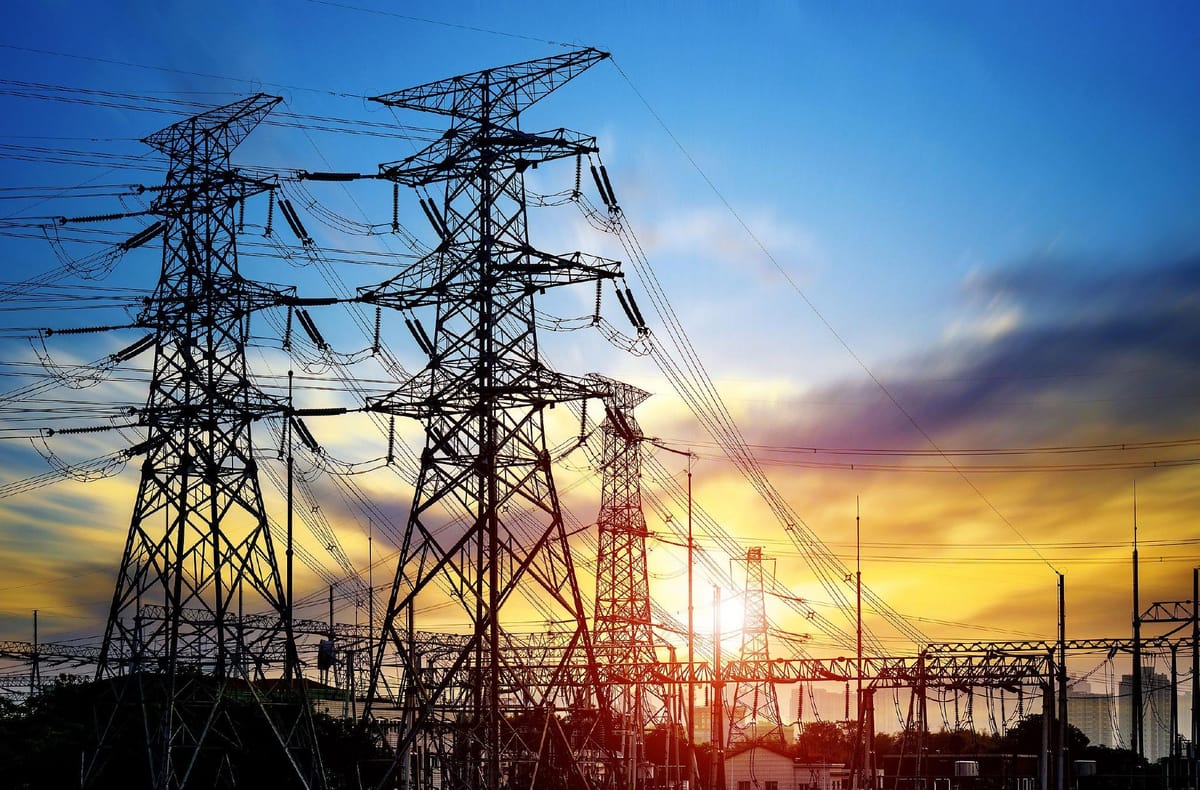
China has cemented its position as the world's undisputed leader in electricity generation, producing more than double the output of the United States in a culmination of a multi-decade strategy focused on technology acquisition and massive industrial-scale deployment.
The country's power output surpassed 9 trillion kilowatt-hours in 2023, a stark contrast to the modest growth in developed nations. This relentless expansion, particularly since the early 2000s, has fundamentally reshaped the global energy landscape and now underpins the nation’s vast industrial economy.
The scale of this growth is staggering; China's annual increase in power generation in recent years has often exceeded the total yearly output of major European economies. For investors and global competitors, this highlights a massive, self-sufficient industrial base capable of sustaining long-term growth and insulating its manufacturing sector from energy constraints seen elsewhere.
This dominance was not accidental but the result of a deliberate, long-term industrial policy. By systematically importing, digesting, and eventually mastering foreign power generation technology, China transformed itself from a technological follower into a global leader in both power equipment manufacturing and installed capacity.
An Unparalleled Expansion
China’s ascent in power generation has been unique in its speed and scale. After surpassing the U.S. for the first time in 2011 with 4.7 trillion kilowatt-hours, China’s output reached 8.8 trillion kWh by 2022, nearly double the 4.5 trillion kWh produced by the U.S.
The divergence accelerated dramatically after the turn of the century. Between 1985 and 2021, China added 8.1 trillion kWh to its annual generation—more than four times the 1.75 trillion kWh increase seen in the U.S. during the same period. From 2006 to 2010 alone, China’s generation capacity grew by 1.73 trillion kWh, an expansion equivalent to adding more than the entire U.K. grid’s output each year.
This sustained, high-speed growth was driven by a state-led push to build out the country’s infrastructure, with thermal power, primarily coal, consistently accounting for about 70% of the total electricity mix.
From Imports to Independence
China’s modern power industry began in the 1950s with technology transfers from the Soviet Union and Czechoslovakia. This period saw the establishment of the country’s foundational power equipment manufacturers, including what are now Harbin Electric Corporation and Shanghai Electric Group.
Through the 1960s and 1970s, China pursued self-reliance, developing larger domestic generating units of up to 300 megawatts. However, these domestically designed units suffered from poor reliability and low efficiency compared to international standards, creating a bottleneck for industrial development. By 1980, China's total generation was just 300.6 billion kWh, and its domestic manufacturing base was unable to mass-produce the large-scale, dependable equipment needed to power its economic ambitions.
The 1980s Inflection Point
Facing critical power shortages, Beijing shifted its strategy in the 1980s from self-reliance to aggressive technology importation. In 1980, contracts were signed with U.S. firms Westinghouse and Combustion Engineering to transfer technology for 300 MW and 600 MW subcritical thermal power units.
This marked a pivotal moment. State-owned firms Harbin Electric, Shanghai Electric, and China Dongfang Electric Group were tasked with absorbing the technology. The process was lengthy, taking nearly two decades to fully localize manufacturing and build a robust supply chain. The successful operation of the first domestically produced 600 MW unit at the Anhui Pingwei power plant in 1989 was a landmark achievement, signaling that China was building the capacity to mass-produce modern power equipment.
Mastering a High-Tech Grid
The foundation laid in the 1980s and 1990s enabled a dramatic acceleration after 2000. China moved rapidly to acquire more advanced supercritical and ultra-supercritical technologies, which offer higher efficiency and lower emissions.
Leading Chinese firms partnered with global giants including Japan's Mitsubishi and Hitachi, France's Alstom, and Germany's Siemens to import designs for 1,000 MW ultra-supercritical units. The process was remarkably fast; the country's first 1,000 MW unit, built for China Huaneng Group at its Zhejiang Yuhuan Power Plant, came online in November 2006, just a few years after the initial decision to import the technology. This rapid adoption, compared to the 20-year cycle for subcritical technology, was possible because China’s industrial base was now capable of quickly integrating and scaling advanced engineering.
By mastering the world's most advanced thermal power technologies, China effectively solved its generation challenge. The problem was simplified to a formula: increasing total output by multiplying the number of high-capacity units it could manufacture. This ability to combine advanced technology with immense production capacity is what fueled the post-2000 electricity boom and remains a core component of China’s industrial strategy.