
China’s Robot Makers Ignite Price War as AI Capabilities Lag Behind Hardware
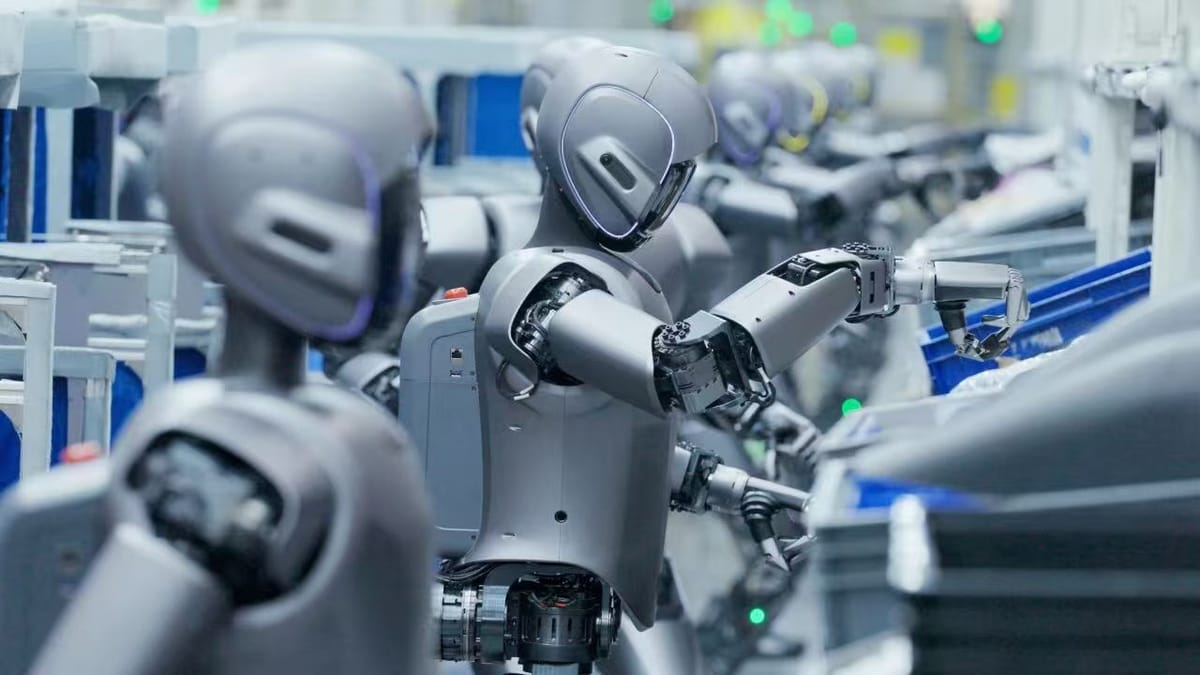
Competition in China’s robotics sector has intensified into an aggressive price war in 2026, driven by a flood of capital and a race to commercialize humanoid models despite lingering technological bottlenecks in artificial intelligence.
Following the high-profile inclusion of robots in the 2026 Spring Festival Gala—reprising the viral success of the previous year—domestic manufacturers are vying for market dominance through deep discounting and novel rental schemes. Major players including Agibot and Unitree Robotics are leading a push to lower barriers to entry for both industrial and consumer markets.
Plunging Costs and Rental Models
The sector is witnessing a rapid decline in hardware costs. Unitree Robotics launched its humanoid model, the Unitree R1, with a starting price of RMB 39,900 (US5,510) in mid−2025. By late last year, competitors like LimX Dynamics had pushed pricing even lower, releasing as mall−scale humanoid robot for under RMB10,000(US1,380).
Cost reductions in core components are fueling this trend. Fourier announced a proprietary six-dimensional force sensor priced below RMB 5,000 (US$690), significantly undercutting previous market rates. Similarly, Shangwei Advanced Materials, recently acquired by Agibot Robotics, released the "Qiyuan Q1," a small-scale humanoid featuring optimized joints reduced to the size of eggs without compromising performance.
To further stimulate demand, companies are pivoting to leasing models. Qingtian Zu, a robot rental platform covering 50 cities, recently launched a "1 Yuan Flash Rent" campaign to attract individual users, though the primary market remains industrial.
Industrial Adoption Leads
While consumer adoption faces hurdles, industrial application is accelerating, particularly in the automotive sector, which is already highly automated. Automakers are integrating humanoids from UBTECH, Agibot, and Unitree into production lines.
Midea, which owns KUKA, released its third-generation humanoid robot, the MIRO U, in late 2025. The six-armed, wheel-legged robot is projected to improve line changeover efficiency by 30% in washing machine factories. UBTECH Robotics reported orders exceeding RMB 1.4 billion (US$193 million), signaling strong B2B demand.
The "Brain" vs. "Cerebellum" Gap
Despite hardware advancements—often referred to as the "cerebellum" or motor control—the industry faces a critical lag in "brain" development, or cognitive AI. At CES 2026, while Chinese manufacturers showcased impressive mobility, most units remain at the "tool" stage, often requiring remote operation for complex tasks.
The sector lacks a mature, vertical foundation model or "Embodied AI OS." Manufacturers currently rely on Visual-Language-Action (VLA) models designed for autonomous vehicles, which do not perfectly translate to robotics. Furthermore, there is a scarcity of high-quality, real-world training data. Addressing this, Hubei Humanoid Robot recently completed a transaction delivering thousands of hours of training data to Agibot Robotics, marking China’s first specialized data trade between enterprises.
Market Outlook
Investors remain cautious about the timeline for mass adoption. UBS Securities maintains a conservative outlook, projecting global humanoid robot shipments to reach approximately 30,000 units in 2026, up from nearly 13,000 in 2025. The firm estimates shipments could hit 150,000 by 2030 and 1 million by 2035.
Li Zhengxiang, Chairman of Hubei Humanoid, noted that while development is rapid, true household integration requires another five to eight years of technical accumulation. In the interim, non-humanoid functional robots—such as cleaning and cooking bots—continue to dominate practical commercialization and revenue growth.