
China's Battery Market Shows Shifting Power Dynamics as Second-Tier Players Gain Ground
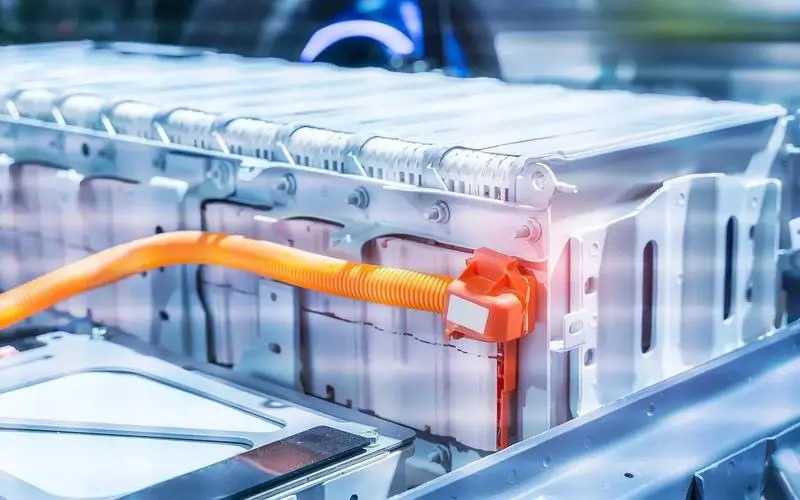
China's power battery industry concluded 2025 with signs of market rebalancing, as the combined dominance of CATL and BYD slipped while second-tier manufacturers and automaker-backed ventures captured larger shares. The year also saw material suppliers emerging as battery producers and export markets providing critical growth momentum amid intensifying domestic competition.
The market share of Contemporary Amperex Technology and BYD declined to 65% in 2025 from 69.82% in 2024, with CATL's share falling to 43.42% from 45.08% and BYD's dropping to 21.58% from 24.74%. This erosion reflects technological advances by mid-tier competitors and strategic battery production by automakers seeking supply chain control.
Second-tier battery manufacturers including CALB, Gotion High-Tech, and EVE Energy expanded their market positions, capturing 6.98%, 5.65%, and 4.11% respectively. Meanwhile, Geely's battery subsidiary Jiyao Tonghang surged into the top ten rankings, while material suppliers including Ganfeng Lithium and Yuanhang Jinli entered the top 15, demonstrating successful vertical integration strategies.
LFP Dominance Continues as Ternary Shows Recovery
Lithium iron phosphate batteries maintained their commanding position in 2025, with installed capacity reaching 625.3 GWh, representing 81.2% of total installations and marking a 52.9% year-on-year increase. Ternary batteries installed 144.1 GWh, accounting for 18.7% of the market with a modest 3.7% annual growth.
However, monthly data revealed a ternary battery resurgence in late 2025. December installations grew 40.5% year-on-year and 0.2% month-on-month, significantly outpacing the annual growth rate and exceeding LFP battery growth. This upturn signals structural demand from premium vehicle segments, long-range applications, and overseas markets where ternary chemistry remains preferred.
Automaker Battery Ventures Reshape Supply Chain
Automaker-backed battery ventures delivered notable performance in 2025, with Geely completing a strategic consolidation. Early in the year, Geely merged Jiangsu Yaoning and Vremt to form Jiyao Tonghang, with founder Li Shufu holding a combined 91.0332% stake through direct and indirect ownership.
Jiyao Tonghang achieved 15.08 GWh in total installations for 2025, ranking tenth overall and eighth in LFP battery installations. The company has initiated procurement negotiations with foreign automakers, signaling ambitions beyond captive supply. Jiangsu Yaoning's Shendun short-blade batteries equip the Galaxy E5 model, while Vremt's Jinzhuan battery technology, developed during the Zeekr era, contributed to the integrated "Shendun Jinzhuan Battery" brand.
GAC Group's battery strategy also yielded results through complementary positioning of Inbat and Giant Bay. Inbat focuses on volume production, increasing its installation share by 0.41 percentage points in 2025, while Giant Bay specializes in ultra-fast charging technology for GAC Aion series vehicles.
Beyond direct manufacturing, joint ventures between automakers and battery companies continue reshaping the industry. Partnerships such as Li Auto with Sunwoda and Leapmotor with CALB represent ongoing automaker penetration into battery production that will persistently influence supply dynamics.
Material Suppliers Advance to Battery Manufacturing
Key supply chain participants accelerated their transformation from material suppliers to battery manufacturers in 2025, achieving measurable scale.
Ganfeng Lithium, pursuing vertical integration across lithium resources, compounds, batteries, and recycling, entered the top 15 rankings for domestic LFP power battery installations in 2025 after absence from 2024's list. The company found its breakthrough in the commercial vehicle segment, leveraging its solid-state battery development expertise while expanding liquid battery production.
Yuanhang Jinli exemplified rapid market entry, rising from unranked status to the top 15 within three years of its 2022 establishment. The company benefits from strategic alignment with Dynanonic, whose chairman and founder Jixue Wen also serves as Yuanhang Jinli's chairman. Dynanonic's position as a global leader in LFP cathode materials provided Yuanhang Jinli with critical competitive advantages in the LFP segment.
Do-Fluoride Chemicals, leveraging core electrolyte technology, maintained its ranking despite growth trailing competitors, demonstrating the challenges of scaling battery manufacturing even with material expertise.
These developments indicate that material suppliers with domain advantages can successfully establish market presence, though sustained growth requires product-level competitiveness beyond material integration benefits.
Korean Firms Expand in Ternary Segment Amid Niche Positioning
Korean battery manufacturers achieved counter-cyclical growth in China's competitive landscape. LG Energy Solution reached 13.75 GWh in 2025 installations, capturing 9.59% of the ternary battery market, up 3.97 percentage points from 2024. SK On also increased its share to 0.14 GWh through partnerships with Xpeng and Geely, rising 0.06 percentage points year-on-year.
Despite these gains, Korean manufacturers maintain minimal overall market presence in China. Combined with their declining international market performance, Korean battery companies face limited prospects for significant market share expansion in the Chinese market.
Domestic players Beijing Pride Power and Microvast Power remained active in the ternary segment as veteran participants, though their scale and market share remain constrained.
Energy Storage and Exports Drive Growth Acceleration
Energy storage batteries and exports exceeded expectations in 2025, providing critical growth engines beyond automotive applications.
Energy storage battery sales reached 499.6 GWh in 2025, surging 101.3% year-on-year, nearly double the growth rate of power batteries. LFP chemistry dominated with 99.9% market share, driven by its safety, cycle life, and cost advantages that align with stationary storage requirements. The segment witnessed rapid technological iteration from 280Ah to 314Ah large-capacity cells with corresponding production capacity expansion.
China's battery exports advanced significantly in 2025, with combined power and energy storage battery exports totaling 305.0 GWh, up 50.7% year-on-year and representing 17.9% of annual sales. Power battery exports reached 189.7 GWh, growing 41.9%, while energy storage battery exports hit 115.3 GWh, surging 67.9%.
CATL, BYD, CALB, Gotion High-Tech, and SVOLT Energy Technology demonstrated strong export performance. SVOLT secured over seven new overseas customers and 25 new projects in 2025, including Hyundai Motor, VinFast, Smart, Impack, Radar Auto, Foton Motor, and Lion Smart in Europe, with overseas shipments exceeding 30% of total volume.
The export surge validates China's battery industry advantages in cost structure, technological capability, and production scale, positioning Chinese manufacturers as critical suppliers in global energy transition.
Raw Material Prices Reverse Course in Second Half
Battery raw material markets in 2025 contrasted sharply with 2024, shifting from low-level volatility to strong recovery.
Throughout 2024, lithium battery materials extended their downward cycle, with core products including spodumene concentrate and lithium carbonate prices oscillating at depressed levels despite brief November increases. LFP cathode materials exhibited volume growth with price declines, with energy storage tender prices reaching record lows. Mainstream producers faced compressed margins while small and medium enterprises encountered cost inversion. Lithium hexafluorophosphate and other electrolyte materials remained subdued, pressuring the entire value chain from upstream mining to downstream battery production.
The second half of 2025 witnessed a dramatic reversal. Lithium carbonate prices, after touching lows below 70,000 yuan per ton (US$9,700) in April, began recovering in July and accelerated from October, reaching 150,000 yuan (US$20,800) per ton for battery-grade material by year-end.
Looking ahead to 2026, automaker influence on the battery industry and raw material price trajectories will constitute new variables affecting competitive dynamics domestically, while energy storage market expansion and export growth offer promising opportunities for continued industry development.