
Stellantis Weighs Leapmotor Range-Extender Tech
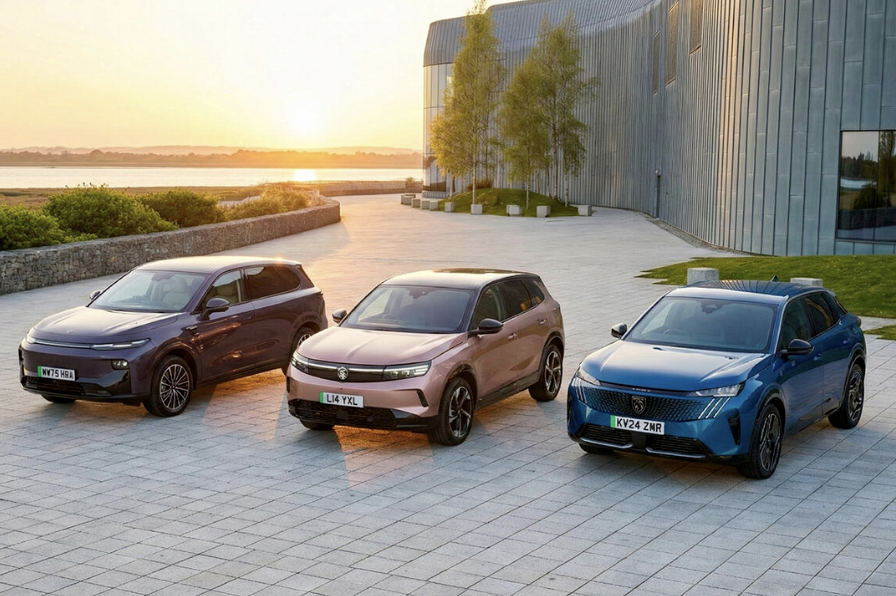
Stellantis NV is planning to bring in extended-range electric vehicle technology from China’s Leapmotor for use across brands including Peugeot and Citroën, according to recent reports, highlighting a shift in how established European carmakers are approaching electrification amid tighter emissions rules and uneven charging infrastructure.
The reported move would extend an existing partnership rather than create a new one. Stellantis already owns 51% of Leapmotor,making any technology-sharing arrangement a logical next step in a relationship that blends capital ties with operational cooperation.
At the center of the discussion is Leapmotor’s range-extender system, which aims to deliver an EV-like daily driving experience while reducing dependence on public charging. The range-extender variant of Leapmotor’s C10 is positioned as competitive on practical metrics that matter in Europe’s regulatory and real-world driving environment. The model is cited as offering up to 950 kilometers of range with a full tank and a full charge, while its pure-electric mode can cover routine urban commuting. That combination directly targets “range anxiety,” an issue that remains relevant in markets where charging networks are still not fully built out.
Regulatory alignment is another key attraction. Under the WLTP testing cycle, the C10 extended-range version is said to emit 10 grams of carbon dioxide per kilometer, a level described as better than many locally developed hybrid models. For Stellantis, access to a system already engineered to perform under WLTP conditions could help shorten the path to meeting increasingly strict EU environmental requirements, without waiting for a full in-house development program to mature.
The rationale is also financial. European manufacturers are not seen as lacking the ability to develop range-extender technology on their own, but doing so would require long lead times and substantial spending. Leapmotor’s vertically integrated approach—based on self-developing about 65% of core components—offers a way to compress development cycles and keep costs in check, according to the reports. For investors, the implication is less about a single model and more about how quickly established groups can deploy compliant powertrain solutions while managing development risk.
Manufacturing cooperation is also broadening. Leapmotor’s B10 model is expected to be produced in Spain on the same production line as the Peugeot 208. Platform commonality and shared production capacity could further reduce manufacturing costs for both sides, reinforcing the economics of deeper technical integration rather than a one-off technology purchase.
While extended-range systems are often framed as a transitional solution between internal combustion and full battery-electric vehicles, the reported technical specifications underscore why the approach remains commercially relevant. Leapmotor’s fourth-generation range-extender system is described as reaching 40% thermal efficiency, with an oil-cooled electric drive system exceeding 95% efficiency. The company also claims more precise energy-consumption control than traditional hybrid systems, supporting the view that the technology is not merely a stopgap but a mature engineering package that can be deployed at scale.
For European consumers, the appeal is straightforward: near-EV driving characteristics without full reliance on charging rollout, alongside the potential to qualify for environmental incentives tied to lower emissions. For Stellantis, adopting a proven system could provide a faster route to products that balance compliance, usability and cost—especially in segments where charging convenience can be uneven.
More broadly, the discussions reflect a change in the global automotive playbook. Instead of Chinese manufacturers competing only through exported vehicles, the reported arrangement signals a move toward exporting technology and embedding it inside established international brands. If Stellantis and Leapmotor deepen their technical coordination, the combination of European manufacturing experience and Chinese new-energy drivetrain development could reshape competitive dynamics in overseas markets, while offering a template for how legacy automakers and emerging Chinese players share the burden of electrification.