
China's Robot Vacuum Makers Battle for Global Dominance in Fierce Price War
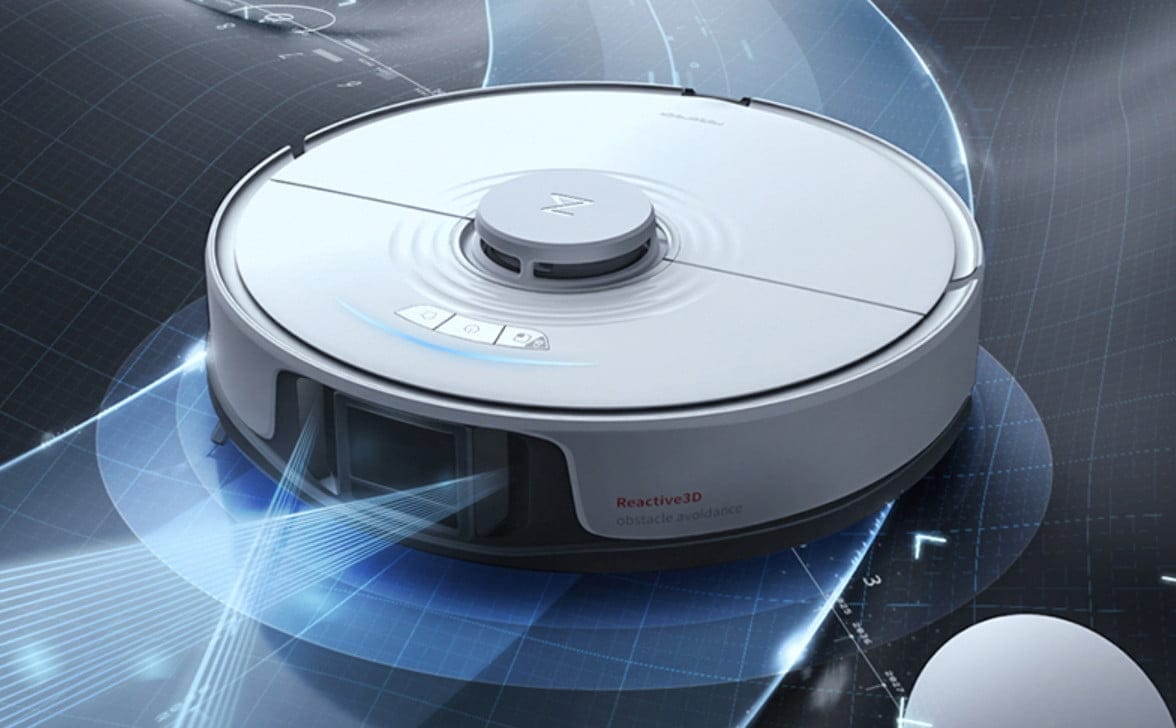
China’s robotic vacuum cleaner industry is grappling with a paradox of profitless growth, as intense domestic competition and a brutal price war force top players to sacrifice margins for market share. This fierce battle is pushing leading brands to accelerate their overseas expansion, turning markets in Europe and North America into a new, critical battleground for survival and dominance.
The fight for volume has led to a significant erosion of prices and profitability. During this year’s "618" shopping festival, a major online sales event in China, the average selling price of robotic vacuums fell 6% year-on-year to RMB 3,432 yuan, according to data from All View Cloud (AVC). This price compression is trapping industry leaders, including Roborock, Ecovacs, and Dreame, in a cycle of rising revenues but stagnant or falling profits.
This domestic struggle is compelling manufacturers to escalate their global ambitions, but expansion comes at a steep cost. Marketing and sales expenses are soaring as companies fight for brand recognition abroad. In 2024, Ecovacs Robotics Co., Ltd.’s sales expenses exceeded 30% of its revenue, while Roborock Technology Co., Ltd.’s spending in the same category surged by 73.23%.
With core technologies like navigation and AI algorithms now largely commoditized across the industry, the competitive landscape has shifted. The battle is no longer won on foundational tech but on incremental feature innovation, strategic channel management, and brand positioning, forcing each company to adopt a distinct playbook to outmaneuver rivals in an increasingly crowded field.
A Saturated Home Market
While China's household penetration rate for robotic vacuums remains low at just 6%, significantly below the 10%-plus levels in Europe and the U.S., the market's growth has decelerated from its peak. Chinese market shipments in 2024 totaled only 5.39 million units, a notable drop from the more than 6.1 million units sold annually between 2018 and 2020, according to IDC data.
This slowdown has intensified competition, squeezing smaller brands out and forcing top players into a price war. Technical differentiation has become increasingly difficult as innovations are rapidly copied. Features once considered high-end, such as advanced laser navigation (LDS) or self-cleaning docking stations, are now standard in mid-range models priced around 3,000-4,000 yuan. Meanwhile, product development cycles have shrunk from one to two years to just a few months, as brands race to match each other's latest offerings.
Roborock's Global Gambit
Roborock Technology Co., Ltd, a company with roots in the Xiaomi ecosystem and a distinct "internet DNA," has successfully leveraged overseas markets to become a global sales leader. Its early European expansion was driven by a cost-effective strategy, using local distributors to build a strong presence in markets like Germany and Russia, often pricing its high-end models at 60% of its competitors.
However, Roborock is now shifting its European strategy from distributors to direct sales, a move aimed at capturing higher profits in the short term. This pivot carries long-term risks, as it may cede market share to aggressive rivals. The company faces particularly intense pressure from Dreame Technology, which is challenging Roborock's position in the high-end segment across several European countries. Despite reaching the top spot globally in sales volume, Roborock's leadership remains tenuous.
Ecovacs' Traditionalist Dilemma
Ecovacs Robotics Co., Ltd., the industry pioneer that evolved from an OEM manufacturer, is struggling to keep pace. The company, which revolutionized the market in 2021 with its all-in-one docking station, has been slow to adopt innovations from competitors, such as lifting mops and bionic robotic arms. Its reliance on a traditional, capital-intensive offline retail network has also resulted in higher costs and slower inventory turnover compared to digitally native rivals.
In the first quarter of 2025, when China’s domestic robotic vacuum market grew 64.7% year-on-year to RMB 32.25 billion yuan (approximately US$4.5 billion), Ecovacs saw its retail sales increase by only 58.2%, lagging behind the market and its main competitors. The return of founder Qian Dongqi to the helm and a renewed focus on overseas marketing have helped improve margins, but the company's conservative product strategy and channel structure continue to pose significant challenges.
Dreame's Aggressive Ascent
Dreame Technology has emerged as a formidable challenger with its aggressive, market-driven strategy. Backed by strong financing, Dreame has systematically gained market share by launching competitive products, aggressively pricing them to undercut rivals, and then moving upmarket. The company leverages its agility to quickly replicate and improve upon competitors' features.
In Europe, Dreame has made significant inroads, particularly in Southern Europe where it has become a market leader in Italy. It is now challenging Roborock and Ecovacs head-on by expanding its high-end product lines and building a vast offline retail network of nearly 6,000 stores. This strategy, while pressuring its own profitability, is designed to capture long-term market share and has forced competitors like Roborock to choose between defending sales volume or protecting profit margins.
The Next Tech Frontier
As competition intensifies, the industry's innovation focus is shifting toward advanced cleaning systems, particularly "live water" technology that continuously cleans the mop during operation. Two competing approaches are emerging: roller brushes, championed by Ecovacs, and caterpillar-track mops, pioneered by Narwal Innovation Technology Co., Ltd.
These technologies promise a deeper clean but come with their own trade-offs. Roller systems offer strong cleaning power but face challenges with hair entanglement and make it difficult to design thinner robots capable of cleaning under low furniture. While both technologies are expected to coexist, they represent a move towards higher-cost hardware, further cementing the division between basic and premium segments. The success of these new systems will depend not only on technical superiority but also on effective marketing and consumer education.