
China’s Robotics Sector Sees Prices Plunge as Regional Specialization Accelerates Mass Adoption
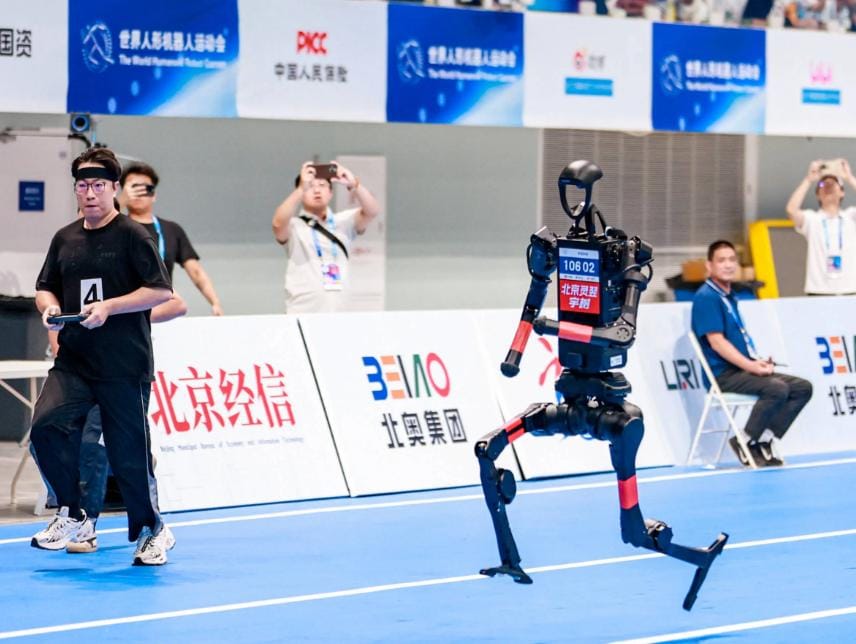
China’s robotics industry is undergoing a decisive shift in late 2025, moving from fragmented competition to a consolidated model where regional specialization drives mass adoption. By integrating Beijing’s policy-driven technical standards, Shanghai’s supply chain capabilities, and Zhejiang’s industrial application scenarios, the sector is establishing a formidable "hardware-scenario-data" closed loop that is rapidly lowering barriers to entry for advanced automation.
The immediate commercial impact of this synergy is a collapse in pricing power. In Shanghai’s commercial service robot market, daily rental prices plummeted below RMB 3,000 (US$413) in December, a sharp decline from the RMB 25,000 (US$3,445) highs seen earlier in the year. This aggressive price erosion, fueled by a localized supply chain and overflow capacity from the electric vehicle sector, has triggered a surge in demand, with fourth-quarter commercial robot orders jumping 300% quarter-on-quarter.
This commoditization marks a strategic pivot from treating robots as precision instruments to deploying them as standardized infrastructure. While global competitors focus on "end-to-end" software breakthroughs, Chinese entities are leveraging a manufacturing cost advantage—estimated at three times that of Western supply chains—to enforce a "Robot-as-a-Service" (RaaS) model. This approach prioritizes scale and data accumulation over immediate hardware margins, fundamentally altering the unit economics of industrial and commercial deployment.
The industry's maturation is now defined by a clear geographic division of labor: Beijing sets the "brain" standards to enforce autonomous decision-making; Shanghai builds the "body" through cost-efficient mass production; and Zhejiang provides the "application" environment, generating the critical real-world data needed to refine algorithms and close the gap between simulation and reality.
Supply Chain Efficiencies Drive Price Collapse
The dramatic reduction in costs stems primarily from the maturity of the Yangtze River Delta’s supply chain. Leveraging the spillover effects from the electric vehicle industry, the localization rate for core components such as servo motors, reducers, and controllers reached nearly 90% in 2025. Production lines originally designed for EV powertrains have been adapted to produce robot joint modules, creating economies of scale that have significantly reduced Bill of Materials (BOM) costs.
According to a robotics supply chain analysis released by Morgan Stanley in October 2025, the BOM cost for a humanoid robot using a Chinese supply chain is approximately US46,000,comparedtoUS46,000,comparedtoUS131,000 for non-Chinese supply chains. This disparity has forced manufacturers to shift strategies. Facing overcapacity, firms have moved from selling assets to leasing services. Aggressive marketing tactics, such as "RMB 1 flash rentals," have appeared in Shanghai, signaling a rush to occupy market share and secure deployment scenarios regardless of short-term profitability.
This shift has effectively transformed robots from heavy balance-sheet assets into flexible cash-flow operational expenses. Industry data indicates that deployment of service robots in the Yangtze River Delta exceeded 5,000 units in the fourth quarter, confirming the transition of these devices into "general-purpose tools" where utility and cost outweigh novelty.
Beijing Enforces Autonomy Standards
While Shanghai focuses on commercial viability, Beijing is tightening technical standards to eliminate low-quality competition. New regulations issued by the Beijing Economic-Technological Development Area for the 2026 humanoid robot competitions have introduced strict "hard constraints" on autonomy. The rules mandate the physical isolation of operators in support vehicles and impose performance penalties on remote-controlled entries, effectively discouraging "human-in-the-loop" shortcuts.
Beijing intends to force the industry toward full autonomy and robust algorithms. The capital’s robotics firms invest an average of over 45% of revenue into R&D, double the national average. Leveraging high-density computing resources and platforms like "Huisikaiwu"—a competitor to GPT-5—Beijing aims to define the operating system standards for the industry, similar to the role Android plays in smartphones. The goal is to shift competition from hardware assembly to algorithmic robustness and embodied intelligence.
Industrial Scenarios Close the Simulation Gap
The province of Zhejiang has emerged as the critical "third pole," bridging the gap between Beijing’s algorithms and Shanghai’s hardware. By deploying robots into apparel manufacturing lines and laboratory automation setups, Zhejiang provides the complex, messy environments necessary for "training" advanced AI.
Unlike computer simulations, these real-world scenarios introduce variables such as variable lighting, oil stains, and physical friction. The data generated from operational failures—handling errors or movement slippage—is fed back into the development loop. This "data flywheel" allows Beijing’s large models to fine-tune for reality, effectively closing the "Sim2Real" (Simulation to Reality) gap. This continuous feedback loop improves the execution success rate, which has risen from 75% to 99.9% over the past year.
Scaling Production and Regulatory Challenges
The integration of these regional strengths has led to tangible milestones in mass production. Agibot (Shanghai) Technology Co., Ltd. (Agibot) announced the rollout of its 5,000th general-purpose embodied robot, while UBTECH Robotics Corp Ltd. (UBTECH) has initiated mass delivery of its Walker S2 model, targeting an annual capacity of 5,000 units by 2026.
Application is also deepening. The "Tiangong 2.0," developed by the Beijing Humanoid Robot Innovation Center, has been integrated into factories operated by Foton Cummins, handling precise material transport. Similarly, Midea Group Co., Ltd. (Midea) has deployed its "Meiluo" humanoid robot in its Jingzhou washing machine factory for over six months, validating the technology's durability in high-intensity manufacturing.
However, as the hardware and software mature, the industry faces looming regulatory hurdles. As robots become ubiquitous "intelligent capacity units," companies must navigate a complex compliance landscape involving the Personal Information Protection Law and new ethics governance standards. Issues surrounding data minimization, open-source code liability, and accountability for physical accidents are set to become the next primary challenges for the sector.