
China's Rokid Races to IPO as Giant Rivals Close In on AI Glasses Market
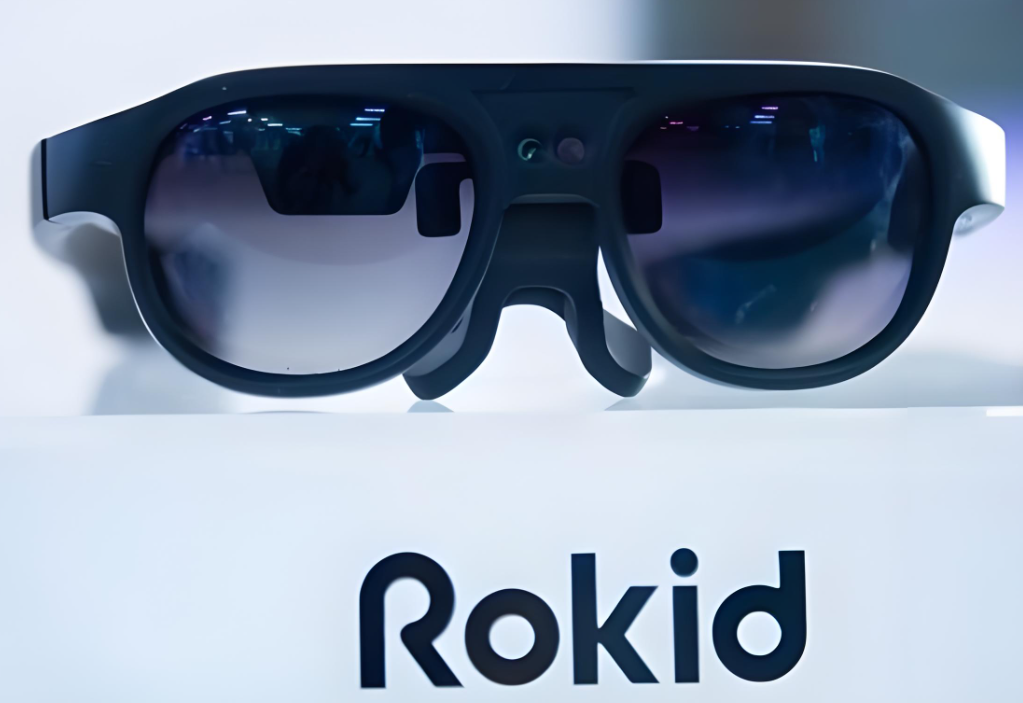
Rokid, a 12-year-old Chinese augmented reality specialist, is accelerating its push for an initial public offering, a strategic move to arm itself for an escalating battle against market titan Meta Platforms Inc. and an impending challenge from Apple Inc.
The Hangzhou-based company, officially Lingban Technology, executed a series of rapid-fire capital increases in early 2026, culminating in a swift application for a main board listing in Hong Kong. The move brought in 39 new shareholders, including manufacturing heavyweight Lens Technology and AI leader SenseTime, while diluting the founding team's stake from nearly 100% to 42%.
This frantic race to the public markets signals an urgent need for capital as the window for independent AI glasses makers narrows. The listing is viewed by investors not just as an exit for early backers—who have injected over RMB 3 billion (approximately US$417 million) since its 2014 inception—but as a critical war chest for the company's survival amid a market consolidation.
Navigating a Giant's World
Rokid faces a market overwhelmingly controlled by Meta, which seized an 85.2% global share in 2025 with 7.4 million units shipped, according to data from Omdia. Meta is further cementing its lead in 2026, aiming to boost annual production capacity to over 20 million units through its partnership with EssilorLuxottica.
The competitive pressure is set to intensify. Apple is expected to unveil its "Apple Glasses" by the end of 2026, a device positioned as a lightweight iPhone companion focused on AI and Siri integration. Google, meanwhile, is re-entering the fray with a three-stage product roadmap and a collaboration with XREAL on Project Aura.
In China, a "hundred-glasses war" is erupting, with over 30 players vying for a market IDC projects will grow 77.7% to 4.5 million units in 2026. Tech giants including Huawei Technologies Co., Xiaomi Corp., and Alibaba Group Holding Ltd. are all launching competing products, leveraging their vast ecosystems, distribution channels, and brand recognition. Xiaomi already claimed a 30% share of the domestic market in 2025.
Scrambling to Scale Up Production
Rokid's IPO push follows a year of growth that exposed critical weaknesses. In 2025, orders for its flagship Rokid Glasses surged to nearly 300,000 units, triple the company’s initial forecast. The demand spike overwhelmed its supply chain, leading to significant delivery delays and highlighting its vulnerability against larger rivals.
This challenge is compounded by a global memory chip shortage in 2026, with analysts from Citigroup and Nomura forecasting DRAM and NAND flash price hikes of up to 88% and 74%, respectively. As data centers consume over 70% of high-end chip capacity, smaller consumer electronics firms face severe supply constraints.
To counter this, Rokid has designated Lens Technology as its exclusive manufacturing partner, aiming to leverage its scale to secure components and stabilize production. The company has set an ambitious shipment target of 1 million units for 2026, a more than threefold increase from its 2025 order volume, and is aiming for over 10 million units by 2028. Its monthly production capacity has reportedly reached 500,000 units.
Pivoting Beyond Hardware Sales
The company is grappling with the industry's harsh economics. High return rates, which hover between 30% and 50% across the sector, underscore a fundamental problem: a lack of a "killer app" that makes AI glasses indispensable. Most functions are still better performed on a smartphone.
This makes a hardware-only business model unsustainable, especially as price wars loom. Rokid’s strategy is to pivot toward a recurring revenue model built on "hardware + services + ecosystem." The company is fostering an open developer community, which has grown to over 20,000 participants, and plans to generate revenue through app store commissions.
Furthermore, it is pursuing integrations with major platforms like Ant Group's Alipay and Tencent's WeChat for payments, as well as content partnerships with AutoNavi for maps and QQ Music for audio. The success of this pivot from a pure hardware manufacturer to a platform operator will be a crucial test of its long-term viability and a key metric for public market investors.