
China's Tech Giants Bleed $14 Billion in Food-Delivery War With No Winner
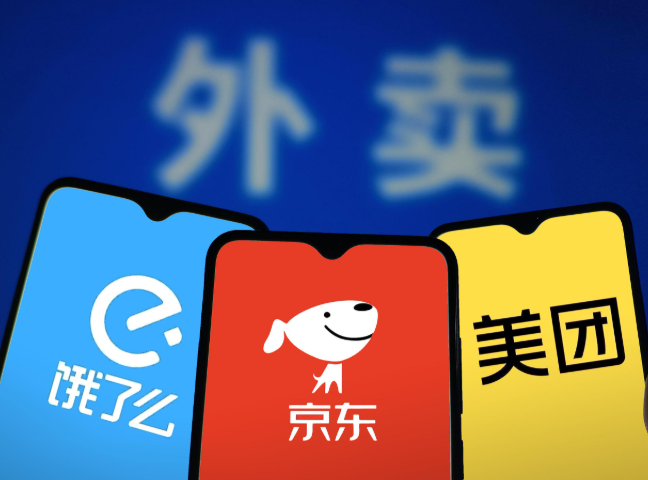
China’s brutal, year-long food-delivery war is grinding to a halt, leaving behind a scarred landscape where tech giants burned nearly RMB 100 billion (US$13.9 billion) in profits with no single victor to claim the prize.
The ceasefire follows a signal from China’s top market regulator, which disclosed an antitrust probe on March 25, effectively ending a subsidy-fueled price war that ravaged the 2025 earnings of Meituan, Alibaba Group, and JD.com.
While the truce sent shares of the embattled companies higher on the day, the year-long battle has permanently altered the industry’s competitive dynamics and investor calculus. A review of market performance over the last 12 months reveals a paradox: Meituan, the incumbent that successfully defended its market leadership, saw its stock punished most severely, plummeting 46.7%.
Cost of War Erases Billions in Profit
The financial toll of the conflict is stark. The three platforms collectively erased nearly RMB 100 billion in potential profits in 2025 as they funneled cash into user subsidies and marketing.
- Meituan: The market leader bore the heaviest burden. Its core local commerce division, which posted a profit of RMB 52.4 billion in 2024, swung to a loss of approximately RMB 6.9 billion last year. The company’s total net loss for 2025 reached a staggering RMB 23.35 billion.
- JD.com: The aggressive challenger reported a loss of RMB 46.64 billion (US$6.48 billion) in its new businesses segment, which includes food delivery. Its full-year marketing expenses surged 75% to RMB 84 billion, while its group net profit was halved. The company also added over 150,000 delivery riders to its 900,000-strong workforce last year.
- Alibaba Group: Already fighting on multiple fronts including AI, Alibaba saw its adjusted net profit for the quarter ending December 2025 plummet 67% year-on-year to about RMB 15.6 billion, with its domestic e-commerce EBITA falling 43%.
Meituan's Pyrrhic Victory Raises Investor Alarms
Despite the immense financial pressure, Meituan successfully defended its market leadership, maintaining a Gross Transaction Value (GTV) share above 60%, according to its Core Local Commerce CEO Wang Puzhong. However, third-party data indicates significant erosion.
Figures from QuestMobile cited by UBS show that in February 2026, Meituan’s daily order share stood at 51%, while Alibaba’s combined services accounted for 42% and JD.com held 7%. This marks a dramatic shift from 2024, when Meituan commanded a ~65% share versus Alibaba’s ~33%.
The market's reaction suggests investors are pricing in a permanently altered future. Meituan’s 46.7% stock decline over the past year, compared to JD.com’s 28.3% drop and Alibaba’s modest 5.5% dip, highlights a critical shift in perception. Analysts argue that the war proved Meituan’s once-impenetrable moat—built on its vast rider network and merchant relationships—is vulnerable to sustained, cash-fueled attacks. The valuation logic that supported Meituan’s high premium has been rewritten; it must now perpetually spend to defend a territory that can be challenged.
In contrast, Alibaba’s valuation, anchored by its core e-commerce, cloud, and AI businesses, was insulated from the delivery war’s losses. For Alibaba, the spend was viewed by investors as a strategic cost to drive user traffic back to its primary Taobao platform.
Challengers Redefine Strategic Playbooks
The war forced a strategic reassessment for all players, with the challengers’ motives extending beyond just food delivery.
For JD.com, the entry into food delivery was a defensive counterattack against Meituan’s move into its core "fast delivery" grocery and electronics space. CEO Xu冉 has since signaled a strategic pivot, stating that the company’s delivery investment in 2026 will be lower than in 2025. The costly foray served as a "stress test," validating its logistics capabilities for other local services.
Alibaba’s objective was more direct: use the high-frequency nature of food delivery to combat slowing growth in its Taobao e-commerce app. The strategy appears to have paid off, with the company reporting that the delivery service brought over 100 million new annual active buyers to Taobao. The formal rebranding of its Ele.me app to "Taobao Flash" in December 2025 cements this integration, marking a potential return on a bet that has cost Alibaba over RMB 150 billion since its acquisition of Ele.me in 2018.
Forced to react, Meituan also evolved under pressure. While defending its food delivery base, it accelerated its "Meituan Select" instant commerce unit, which saw Q4 2025 revenue grow 32% to RMB 8.9 billion. It has also stepped up its international expansion under the brand Keeta, now operating in markets including Hong Kong, Saudi Arabia, and the UAE.
Industry Confronts an Uncertain Future
While platform subsidies are expected to recede, the market structure has been irrevocably broken. The former duopoly of Meituan and Ele.me has been replaced by a tense three-way standoff, with Bytedance’s Douyin—which posted a 59% jump in its lifestyle services GMV last year—looming as a potential fourth contender.
The war’s true victims were the small and medium-sized restaurants. A survey by Lixin Consulting of over 2,200 merchants found that nearly 70% saw revenues decline compared to 2024, with subsidies creating a "deflationary illusion" that damaged in-store traffic and cannibalized profits.
However, the conflict produced one unintended, positive social outcome. To compete for labor, JD.com began offering full social security benefits to its riders in March 2025, a move quickly matched by Meituan and Alibaba. This has effectively made social insurance an industry standard for delivery workers, a lasting legacy of a war that otherwise left few winners.