
China's Satellite Supply Chain: The Infrastructure Race Behind the New Space Economy
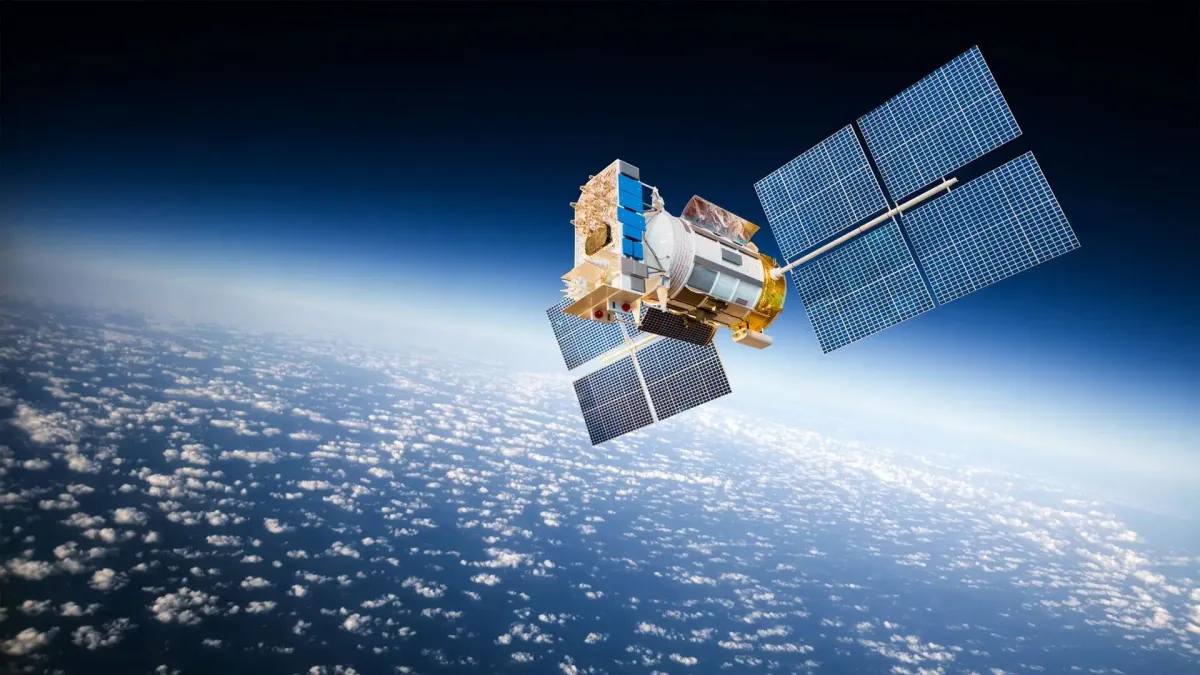
A structured explainer on China's LEO constellation buildout, how the supply chain works, and what it means for the global satellite industry.
What Is This About?
A large-scale infrastructure race is unfolding in low Earth orbit (LEO). China is accelerating the deployment of thousands of communication satellites, aiming to build a credible alternative to SpaceX's Starlink — the only system currently providing large-scale global satellite broadband. This is not simply a technology story. It is a supply chain story, a geopolitical story, and, increasingly, a commercial story with measurable market dimensions.
This explainer maps the structural logic of China's LEO satellite buildout: why it is happening now, how the supply chain is organized, where the value concentrates, and what realistic timelines look like.
Why Is This Happening Now?
Three structural forces are converging simultaneously.
Orbital and spectrum scarcity. Satellite orbits and radio frequencies are finite, governed by the International Telecommunication Union (ITU) on a first-come, first-served basis. The ITU caps LEO satellite capacity at roughly 60,000–100,000 satellites. As of end-2025, more than 10,000 active satellites already occupy LEO — approximately 10–17% of estimated capacity. China's two flagship constellations, GW (12,992 satellites planned) and Qianfan (15,000 planned), have submitted ITU filings and face hard deployment deadlines: operators must launch 10% of their planned satellites within nine years of filing, 50% within twelve years, and 100% within fourteen years. Missing these milestones means proportional loss of spectrum rights. The clock is running.
Policy mandate. China's 14th Five-Year Plan and the subsequent 15th Five-Year Plan framework have designated satellite internet as "new infrastructure" requiring accelerated development. The Ministry of Industry and Information Technology has set a formal target of more than 10 million satellite communication subscribers by 2030. Satellite connectivity is also positioned as a foundational layer for 6G networks and the broader "integrated space-air-ground" communication architecture that China is building.
Reusable rocket economics. Launch cost is the binding constraint on constellation economics. SpaceX's Falcon 9 currently launches payload to LEO at roughly RMB 7,000–10,000 per kilogram. Chinese expendable rockets cost RMB 50,000–60,000 per kilogram — five to eight times more expensive. That gap is narrowing. In July 2026, China's Long March 10B successfully recovered its first-stage booster via net capture at sea — the first such recovery in Chinese history and the first sea-based net recovery globally. In August 2026, private launch company LandSpace successfully conducted a vertical landing recovery test of the Zhuque-3 stainless steel booster. As reusable rocket technology matures domestically, launch economics will shift materially.
How Does the Supply Chain Work?
The satellite internet supply chain has four distinct layers. Understanding where value accumulates in each layer is essential for understanding the industry's investment logic.
Layer 1: Satellite Manufacturing
A LEO communication satellite consists of two major components: the platform (structure, power, thermal control, attitude control, telemetry) and the payload (the communication hardware that actually generates revenue).
In mature, high-volume production — as demonstrated by Starlink's factory output of approximately 70 satellites per week — the platform's fixed costs are spread across large volumes, compressing platform cost to roughly 30% of total satellite cost. The payload, which determines the satellite's communication capability, rises to 70% of value. In China's current early-stage production, this ratio is inverted: platforms account for approximately 70% of cost. As China scales, the payload share is expected to rise, concentrating value in three payload subsystems:
- Phased-array antennas: the primary star-to-ground communication link. Each antenna contains dozens to hundreds of transmit/receive (T/R) modules. Estimated 2025–2030 CAGR: 92%; projected 2030 market: RMB 36.3 billion.
- Inter-satellite laser communication terminals: enable satellite-to-satellite data transfer without ground station dependency, at speeds of 100–400 Gbps per link. China's constellations have not yet deployed these at scale; mass adoption is projected from 2028. Estimated 2025–2030 CAGR: 100%; projected 2030 market: RMB 27.3 billion.
- On-board routers: manage data switching between satellites in the mesh network. Unlike ground routers, they must withstand radiation, extreme temperatures, and operate at very low power. Estimated 2025–2030 CAGR: 84%; projected 2030 market: RMB 11.7 billion.
Overall satellite manufacturing market projection: RMB 119.4 billion by 2030, implying a 2025–2030 CAGR of 76%.
Layer 2: Launch Services
China's launch ecosystem includes both state-owned carriers (CASC's Long March family) and a growing cohort of private launch companies: LandSpace (Zhuque-3), CAS Space (Lijian-2), Galactic Energy (Pallas-1), Tianbing Technology (Tianlong-3), and Space Honor (Hyperbola-3). The critical bottleneck is reusability. Without it, the economics of deploying 10,000+ satellites are prohibitive. The July and August 2026 recovery milestones represent meaningful progress, though China remains years behind SpaceX's operational cadence of 165 Falcon 9 launches in 2025 alone.
Layer 3: Ground Systems
Ground infrastructure connects the satellite constellation to terrestrial networks and end users. It includes:
- Ground stations: relay hubs between satellites and the internet backbone. SpaceX operates 400+ globally to support 10,200 Starlink satellites. Assuming a comparable ratio for Chinese constellations, ground station construction represents a RMB 16.4 billion market by 2030 (2025–2030 CAGR: 70%).
- User terminals: portable phased-array flat-panel receivers. Starlink terminals cost approximately USD 600 at scale. Qianfan's standard terminal, unveiled at MWC Shanghai in June 2026, is 30mm thick and delivers 450 Mbps download and 150 Mbps upload speeds. Chinese LEO broadband user terminal market projected at RMB 13.5 billion by 2030 (2027–2030 CAGR: 161%).
Overall ground equipment market projection: RMB 30 billion by 2030, implying a 2025–2030 CAGR of 91%.
Layer 4: Satellite Connectivity Services
This is where the long-term revenue potential is largest, but it is also the layer furthest from commercial reality today.
Domestic broadband: China's satellite broadband service is expected to enter commercial phase in 2027, after both GW and Qianfan complete their Phase 1 constellations. Projected 2030 domestic broadband market: RMB 6.8 billion (2027–2030 CAGR: 134%). The long-term ceiling is substantially higher — under a scenario where 80% of broadband users shift to LEO, the addressable market exceeds RMB 1.8 trillion.
International broadband: This is Qianfan's primary commercial mandate. Brazil has already approved Shanghai Spacecom to operate satellite services domestically. Qianfan is in active discussions with Malaysia, Thailand, and other Asian governments. The global context: Starlink serves over 12 million paying subscribers at an average revenue per user of USD 66/month, with non-US users representing over 40% of its base. In a world of supply chain diversification, a credible non-US LEO alternative has structural appeal for governments and enterprises outside North America. Projected 2030 overseas broadband market for Chinese operators: RMB 37 billion (2027–2030 CAGR: 215%).
Direct-to-device (D2D) services: Connecting ordinary smartphones directly to satellites — without specialized terminals — is the next frontier. SpaceX leads, with 650 D2D-capable satellites operational by mid-2025, offering text and limited data services through carrier partnerships (T-Mobile, KDDI, Optus, etc.). China's equivalent service is currently limited to high-orbit Tiantong-1 voice and SMS on select Huawei handsets. Mass-market D2D service from Chinese LEO constellations is projected to begin commercializing in 2028. Projected 2030 D2D market in China: RMB 1.3 billion, with long-term scenarios reaching RMB 185–463 billion depending on adoption rates.
How Does China Compare to SpaceX?
The gap is real, but the trajectory matters as much as the current position.
|
Dimension |
China (GW
+ Qianfan) |
SpaceX
(Starlink) |
|
Active
LEO satellites (Q2 2026) |
~377
(combined) |
~10,200 |
|
Annual
launches (2025) |
~180
satellites |
~3,190
satellites |
|
Single
satellite cost |
RMB 10–75
million |
RMB 5–6
million (V2 mini) |
|
Launch
cost per kg |
RMB
50,000–60,000 |
RMB
7,000–10,000 |
|
Inter-satellite
laser links |
Not yet
deployed at scale |
3 × 200
Gbps per V2 mini satellite |
|
Paying
broadband subscribers |
Not yet
in commercial service |
12+
million globally |
|
Vertical
integration |
Fragmented;
state + private ecosystem |
Near-complete;
almost all components in-house |
SpaceX's cost advantage in satellite manufacturing is significant: a Starlink V2 mini costs approximately RMB 5–6 million to manufacture; a comparable Chinese satellite currently costs RMB 10–75 million depending on configuration. China's manufacturing scale and supply chain depth — which overlaps substantially with its semiconductor, electronics, and industrial software ecosystems — provide a plausible path to cost convergence, but that convergence is a 2028–2030 story at the earliest.
One notable asymmetry: despite SpaceX's near-complete vertical integration, it is not entirely decoupled from Chinese supply chains. RF connectors, cables, and structural components for Starlink ground terminals are sourced from Chinese suppliers — illustrating the mutual dependencies that persist even amid geopolitical tension.
Where Are the Constraints and Key Variables?
Constellation deployment pace. The entire supply chain thesis depends on satellites launching on schedule. China's rocket capacity — particularly reusable rockets — remains the primary bottleneck. If deployment lags ITU milestones, spectrum rights could be reduced.
Cost reduction timeline. China's current satellite manufacturing cost is 2–15x higher than Starlink depending on the satellite class. Achieving the scale economies needed to compete commercially in international markets requires volume that the constellations themselves must first create — a chicken-and-egg dynamic.
Technology generational gap. China's first-generation constellation satellites (currently in orbit) lack inter-satellite laser links and direct-to-device capability — features that are standard in current Starlink V2 mini satellites. The second-generation Chinese satellites, expected from 2027–2028, are designed to close this gap.
Geopolitical supply chain risk. Certain critical components — notably FPGAs used in satellite avionics — are still sourced from US and European suppliers. Export controls or sanctions could disrupt production timelines, though they would simultaneously accelerate domestic substitution efforts.
Spectrum competition. In December 2025, a coalition of Chinese satellite operators filed ITU applications for an additional 203,000 satellites across 14 constellations. While this signals long-term ambition, near-term focus remains on GW and Qianfan (combined: 28,000 satellites), which have priority access to launch capacity.
What Comes Next?
The buildout follows a reasonably predictable sequence, with each phase unlocking the next:
2026–2027: Constellation Phase 1. Qianfan targets 324 satellites by end-2026 and 648 by end-2027. GW is on a parallel but slower track. This phase primarily benefits satellite payload and platform manufacturers, who receive orders ahead of launches.
2027–2028: Ground infrastructure scaling. As constellation density reaches service-viable thresholds, ground station construction and user terminal procurement accelerate. Communications equipment component suppliers see the largest upside in this phase.
2027–2028: Domestic commercial broadband launch. The first Chinese LEO broadband services are expected to reach consumers and enterprises, initially in underserved or maritime markets.
2028–2030: International expansion and D2D commercialization. Qianfan's overseas licensing agreements (Brazil confirmed; Malaysia, Thailand in discussion) begin generating revenue. Second-generation satellites with laser inter-links and D2D capability enable the next tier of services.
Post-2030: Scale economics inflection. If China successfully deploys close to 10,000 satellites by 2030 — the forecast implies a 75% CAGR in annual launches from 2025–2030, with 9,470 satellites launched in the 2026–2030 period (approximately 19x the 2020–2025 total) — manufacturing costs should decline sharply, potentially reshaping the competitive economics of global satellite broadband.
The aggregate market across satellite manufacturing, ground equipment, and connectivity services is projected at RMB 194 billion by 2030, implying an 88% CAGR from 2025. That figure is almost certainly conservative if international service revenues scale as modeled.
The Structural Takeaway
China's LEO satellite buildout is not primarily a technology competition with SpaceX — it is an infrastructure investment driven by spectrum scarcity, national security imperatives, and the commercial logic of being the world's only credible non-US provider of global satellite broadband. The supply chain opportunity is real and measurable. The risks — deployment delays, cost reduction timelines, technology gaps, and component supply vulnerabilities — are also real and should be weighted accordingly.
The industry is in its early deployment phase. Value today concentrates in payload manufacturers. Value tomorrow shifts toward ground equipment. Value long-term resides in connectivity services — but that phase requires the satellites to actually be in orbit first.
Related Coverage:
China's Commercial Space Industry: A Structural Guide to Rockets, Satellites, and Orbital Computing