
China's Commercial Space Industry: A Structural Guide to Rockets, Satellites, and Orbital Computing
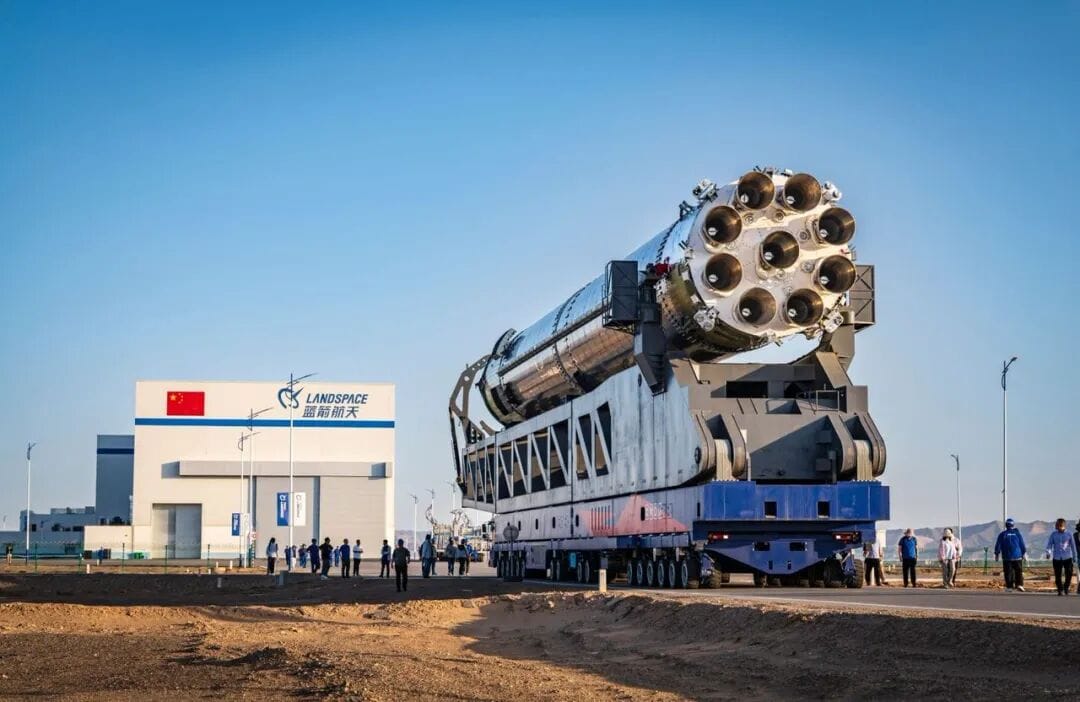
Based on two research reports published by UBS Securities Asia Limited on June 17, 2026 — “Profiling 11 Commercial Space Companies in China” and “China Commercial Space 101” — these articles examine the accelerating IPO pipeline of China's commercial space sector, the companies positioning for public markets, and the listed A-share suppliers expected to benefit from the industry's expansion.
What Is China's Commercial Space Industry?
China's commercial space sector refers to the ecosystem of privately funded companies developing launch vehicles, satellites, orbital computing infrastructure, and supporting technologies — operating alongside, and increasingly in competition with, state-owned aerospace enterprises.
The industry's structural origins trace to 2014, when Beijing formally opened the aerospace sector to private capital. Before that, space was exclusively the domain of state institutions such as CASC (China Aerospace Science and Technology Corporation). The first privately developed Chinese rocket reached orbit in 2019. By 2025, regulators had eased IPO listing requirements specifically for commercial rocket companies — a signal that the sector had matured enough for public market scrutiny.
As of early 2026, China had approximately 1,333 satellites in orbit, with plans to deploy as many as 50,000. The gap between current deployment and long-term ambition defines the investment thesis and the structural demand that underpins the entire industry.
Why Does This Sector Matter Beyond China's Borders?
Three structural forces make China's commercial space industry relevant to global observers:
1. Scale of planned constellation deployment. China's two flagship mega-constellations — Guowang (GW) and Qianfan — together account for roughly 60% of the planned 50,000-satellite network. This represents one of the largest infrastructure buildout programs in history. By comparison, SpaceX's Starlink had approximately 6,000 satellites in orbit as of early 2026.
2. The reusability inflection point. LandSpace's ZQ-3 rocket became China's first reusable rocket to reach orbit in 2025. Reusability is the single most important cost-reduction lever in launch economics: LandSpace estimates that launch costs could fall by up to 45% after five reuses of the first-stage booster. This mirrors the trajectory SpaceX followed with Falcon 9, which transformed launch economics globally.
3. Orbital computing as a new commercialization pathway. Traditional satellite applications — communications, remote sensing, navigation — have struggled to generate strong commercial returns in China, partly because China's well-developed 5G terrestrial network reduces demand for satellite-based connectivity. Space-based computing, where data centers are placed in orbit to access near-continuous solar energy and radiative cooling, represents a structurally different opportunity — one less dependent on consumer willingness to pay for bandwidth.
How Does the Industry Structure Work?
China's commercial space ecosystem can be divided into four layers:
Launch Vehicles (Rockets)
Rockets are the most capital-intensive segment. Development cycles are long, failure rates are high, and cash burn precedes revenue by years. Five leading private rocket companies have either filed IPO applications or entered the counselling stage on China's STAR Market:
- LandSpace: Pioneer in liquid-oxygen methane propulsion; ZQ-3 is China's first reusable orbital rocket. Valued at approximately Rmb20bn after its Series D round.
- Space Pioneer: Leader in multi-satellite separation technology, with a ground test involving 36 satellites on a single rocket. Valued at approximately Rmb22.5bn.
- Galactic Energy: China's private rocket company with the highest cumulative successful launches (23 as of mid-2026). Valued at approximately Rmb15bn.
- i-Space: The first private Chinese company to achieve orbital launch capability (2019); developing the reusable SQX-3. Valued at approximately Rmb16bn.
- CAS Space: The first Chinese commercial launch provider to carry a payload for an international client (Arab Satellite 813). Valued at approximately Rmb15bn.
Rocket Engines
Engine manufacturing is a distinct sub-segment. Jiuzhou Yunjian is the only private supplier of liquid-oxygen methane engines to have been incorporated into the supply chain of national aerospace institutions — a meaningful competitive moat in a sector where state procurement relationships are structurally important.
Satellites
Two private satellite manufacturers are at or near IPO stage:
- GalaxySpace: China's first satellite unicorn; the only private company selected as a core satellite supplier for China Satellite Network alongside state-owned institutes. Valued at over Rmb30bn.
- MinoSpace: Among the earliest end-to-end satellite manufacturers in China's private sector; awarded an Rmb800mn constellation project in 2025. Valued at over Rmb10bn.
Orbital Computing
This is the sector's newest and most speculative layer. Two companies are already operating data centers in orbit:
- Adaspace: Launched China's first AI application satellite and deployed the world's first space-computing satellite constellation in 2025.
- Orbital Dawn: Founded in 2024; the exclusive construction and operating entity for Project 926, a large-scale space-computing constellation. Valued at over Rmb1bn after its Pre-A round.
- Zhejiang Lab: A state-backed AI research institution operating the "Three Body Computing Constellation," with plans to expand to 100 satellites.
What Are the Structural Cost Drivers?
Launch cost reduction is the central economic variable for the entire industry. Two mechanisms drive it:
Reusability: Recovering and refurbishing the first-stage booster — which contains the majority of a rocket's value — dramatically reduces per-launch cost. The economics improve non-linearly: the more reuses achieved, the lower the amortized cost per flight.
Manufacturing learning curves: China's track record in other advanced manufacturing sectors is instructive. In solar PV, China achieved a learning rate of approximately 35% (meaning costs fell 35% for every doubling of cumulative production volume). In lithium batteries, the rate was approximately 26%. Applying similar learning rates to launch vehicles, and assuming cumulative Chinese commercial launches approach 1,000 by 2030 (from roughly 95 in 2025), average launch costs could fall to the US$900–1,900/kg range, down from approximately US$4,000/kg in 2025.
Industrial ecosystem leverage: Space Pioneer estimates that approximately 95% of its rocket components can be sourced from suppliers in the automotive, aviation, and machinery industries. This is a structural advantage: China's deep manufacturing base in these adjacent sectors provides a cost-competitive supply chain that most other countries cannot replicate.
Why Is Space-Based Computing Structurally Different From Satellite Communications?
Satellite communications in China face a fundamental demand constraint: China's 5G infrastructure is among the most developed in the world, which reduces consumer willingness to pay for satellite-based connectivity. This explains why China's commercial satellite sector has historically struggled to generate strong returns despite significant investment.
Space-based computing operates on a different logic. The demand driver is not consumer connectivity but energy security for AI infrastructure. Data centers require enormous and reliable power. By placing computing infrastructure in sun-synchronous (dusk-dawn) orbit, operators can access near-continuous solar energy — estimated at approximately 1,400 watts per square meter in orbit, compared to intermittent terrestrial solar — while also benefiting from the natural radiative cooling of space and the absence of land permitting requirements.
However, cost parity with terrestrial data centers remains a significant barrier. Achieving parity would require both launch costs and space-grade solar panel costs to fall by roughly 80% from current levels. The more viable near-term model is "space data processed in space" — where data generated in orbit (from Earth observation satellites, for example) is processed onboard rather than transmitted to the ground. This avoids the cost-comparison problem entirely, since it solves a bottleneck that terrestrial infrastructure cannot address.
Who Are the Key Suppliers, and Why Do They Matter?
The commercial space buildout creates structural demand across a broad upstream supply chain. Several publicly listed Chinese companies appear repeatedly as suppliers across multiple rocket and satellite manufacturers:
- Bright Laser Technologies (688333.SH): 3D printing for rocket structures; supplies LandSpace, Space Pioneer, i-Space, and Jiuzhou Yunjian.
- Sirui Advanced Materials (688102.SH): Advanced materials for rocket structures; supplies LandSpace, i-Space, CAS Space, and Jiuzhou Yunjian.
- GOVA Technology (688539.SH): Supplies LandSpace, Space Pioneer, and CAS Space.
- Essence Fastening Systems (301005.SZ): Fastening systems for rocket structures; supplies LandSpace, Space Pioneer, and CAS Space.
- Tianyin Electromechanical (300342.SZ): Supplies GalaxySpace and MinoSpace.
Two technology segments are identified as particularly high-potential within the satellite supply chain: space solar cells (where HJT technology currently represents the most practical solution, with perovskites as a longer-term candidate) and laser inter-satellite communication (where data rates of 100–200 Gbps are becoming standard for next-generation constellations, compared to 1–2 Gbps for traditional RF systems).
What Are the Key Constraints and Risk Factors?
Policy dependence. China's commercial space sector relies heavily on government support — both direct funding and the procurement commitments of state-backed constellation programs. Policy shifts or budget reallocation could materially alter the industry's trajectory.
LEO resource scarcity. Low Earth orbit is a finite resource. The ITU's milestone-based filing system creates binding deployment schedules, but it also means that orbital slots and spectrum allocations are subject to competitive pressure. The risk of orbital congestion — and the associated debris accumulation problem known as the Kessler Syndrome — is a structural ceiling on the total number of satellites that can be safely deployed.
Technology iteration risk. Reusable rocket technology is still being validated in China. Space Pioneer's TL-3 heavy-lift vehicle was undergoing root-cause analysis following an anomaly as of mid-2026. Launch failures impose both financial and reputational costs that can set back an entire company's development timeline.
Cost reduction pace. Space-based computing only becomes economically competitive if both launch costs and solar panel costs fall significantly. If cost reductions proceed more slowly than projected, the orbital computing opportunity shifts from medium-term to long-term.
What Comes Next? Key Milestones to Watch
The industry's near-term development follows a clear phased logic:
2026 — Rocket technology validation. The critical milestones are offshore rocket recovery tests by Galactic Energy and i-Space, and the resumption of Space Pioneer's TL-3 program. Successful recovery demonstrations would confirm that China's reusable launch capability is not limited to a single company.
2027 — Constellation build-out acceleration. The Qianfan constellation's Phase I deployment (targeting 1,296 satellites) is scheduled for 2027. This would represent the single largest annual satellite deployment in Chinese history and would create sustained, predictable demand for both launch services and satellite manufacturing.
2027–2028 — Orbital computing early validation. Google has announced plans to test space-based AI computing infrastructure with two prototype satellites by early 2027. Zhejiang Lab aims to expand its constellation to 100 satellites. These deployments will provide the first real-world data on the economics and technical performance of orbital computing at meaningful scale.
Beyond 2028 — Cost parity threshold. The long-term viability of space-based computing as a mainstream data center alternative depends on achieving the roughly 80% cost reduction required in both launch and solar panel costs. This is a decade-scale transition, not a near-term event.
Why Might Only a Few Companies Ultimately Survive?
The commercial launch industry exhibits strong winner-take-most dynamics for structural reasons. Launch is a scale business: higher launch frequency drives faster learning curve progression, which drives lower costs, which drives more customers, which drives higher frequency. Companies that fall behind on launch cadence risk entering a cost disadvantage that compounds over time.
The STAR Market's eased listing requirements — which allow rocket companies to qualify for IPO based on technical milestones (such as successful orbital launch of a medium- or large-lift reusable vehicle) rather than revenue or profit thresholds — will accelerate capital formation for leading players. But the same capital access that funds expansion also raises the competitive bar: well-funded leaders can invest in next-generation vehicles while smaller competitors are still validating first-generation technology.
In satellite manufacturing, the dynamics are somewhat different: the diversity of constellation programs (GW, Qianfan, and numerous smaller commercial and government constellations) creates room for multiple suppliers. But here too, scale in manufacturing drives cost advantages that will likely concentrate market share over time.
The analogy most frequently drawn by industry observers is China's automotive sector in the late 1990s, when dozens of private manufacturers entered the market before consolidation reduced the field to a handful of scaled players. The timeline for commercial space consolidation is likely longer — given the capital intensity and technology complexity — but the structural direction is the same.
Related Coverage:
CAS Space Eyes IPO With $21 Billion Valuation After 11 Launches