
BYD Datang EV Launch Signals BYD’s Push to Reshape China’s Premium SUV Market
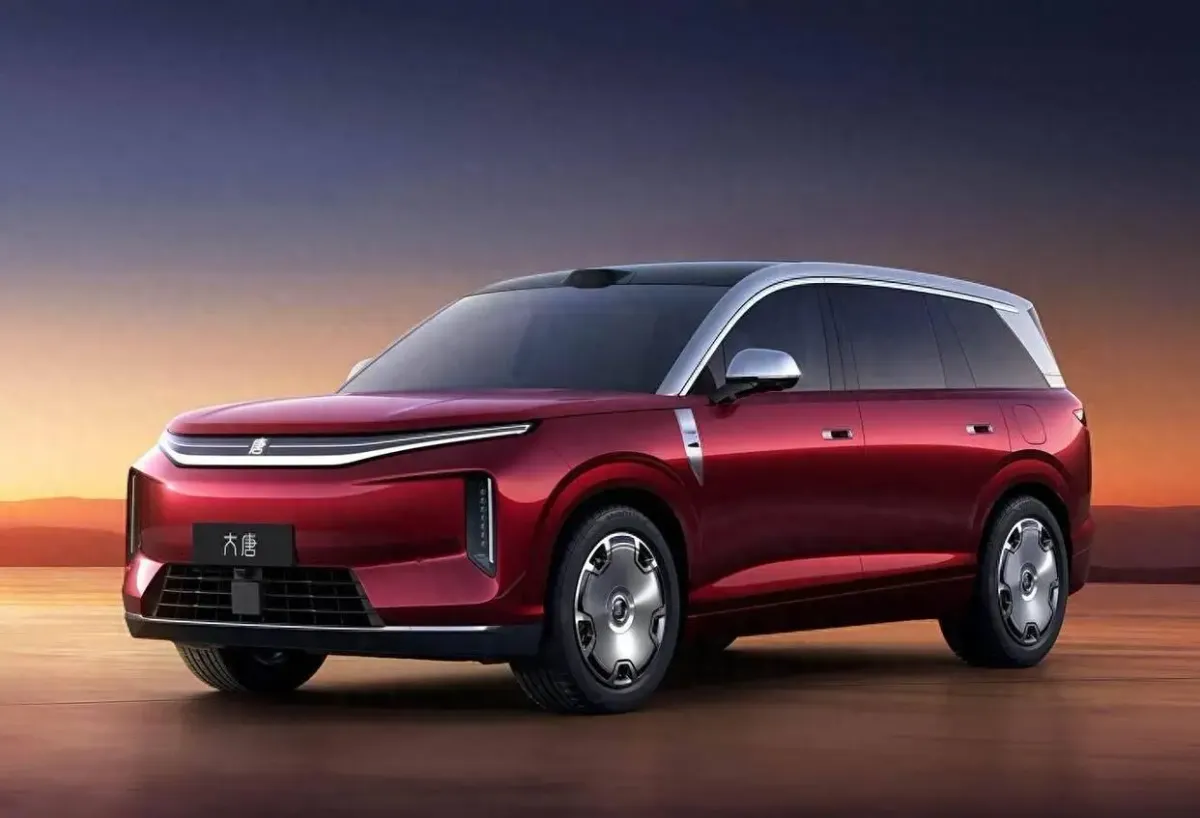
BYD has priced its full-size Datang electric SUV at RMB 239,900–309,900 (US$33,319–US$43,042), a range aggressive enough to structurally undercut the entire mid-to-large SUV segment — and the timing is no accident.
The Datang EV's official launch on June 17, 2026, came roughly two months after a preview price was unveiled at the Beijing Auto Show, a delay BYD attributed to production ramp-up of its second-generation Blade Battery and assembly-line reconfiguration to absorb a large pre-order backlog. The gap between preview and launch is itself a signal: BYD moved only when it was confident in delivery cadence, not merely to capture headlines.
Market response has been immediate. Industry observers note that conversion rates from pre-orders to confirmed purchases are expected to remain high, given the vehicle's combination of 800–950 km pure-electric range, 1,000V high-voltage architecture, and ultra-fast charging capability — a technical bundle that no comparable model in the RMB 200,000–300,000 price band currently replicates.
Second-Gen Blade Battery Redefines the Value Equation in the RMB 240K–310K Band
The Datang's core competitive proposition rests on two interlocking technologies: the second-generation Blade Battery and BYD's flash-charging system. Together, they deliver a baseline pure-electric range of 800 km, with the long-range variant reaching 950 km — figures that were previously exclusive to vehicles priced well above RMB 400,000.
Closest segment rival Leapmotor D19, which also targets the high-value-for-money positioning, trails the Datang on pure-electric range by a material margin. The pricing gap between what BYD is offering and what competitors can profitably deliver at this specification level reflects the structural cost advantage BYD has accumulated through vertical integration across battery cells, power electronics, and drivetrain components.
Critically, BYD has chosen not to monetize this technological lead through premium pricing — a deliberate strategy. By pricing the Datang at near-cost-competitive levels, BYD is not merely winning individual transactions; it is setting a price ceiling that rivals with higher cost structures cannot sustainably match.
Pure-EV Sales Overtaking Plug-In Hybrids Marks a Structural Inflection Point
The Datang launch coincides with what may be a watershed moment in BYD's own product mix. In May 2026, BYD's battery-electric vehicle (BEV) sales reached approximately 198,000 units, surpassing plug-in hybrid electric vehicle (PHEV) sales of roughly 178,000 units — the first month on record where BEVs outpaced PHEVs in BYD's lineup.
This inversion is not incidental. For years, BYD's PHEV models — sold under its DM (Dual Mode) platform — drove volume by addressing range anxiety in a market where charging infrastructure remained uneven. The May data suggests that infrastructure maturation, combined with fast-charging advances, is eroding the practical advantage of hybrid powertrains for a growing share of Chinese consumers.
BYD's product sequencing reinforces this read. For its last two major launches — the Song Ultra and now the Datang — BYD has released the BEV variant first, reversing a prior convention of leading with PHEV. This sequencing is a strategic declaration: BYD is allocating its most advanced battery production capacity and marketing resources to pure-electric models, with PHEV versions positioned as secondary follow-on products.
Delivery Execution Becomes the Critical Variable for Order Conversion
The Datang's commercial success now hinges less on demand generation — pre-order volumes are reported to be substantial — and more on BYD's ability to execute delivery at scale. Second-generation Blade Battery production is still in ramp-up phase, and high order volumes require careful production scheduling to avoid the customer experience deterioration that has damaged rivals' reputations at launch.
First-batch user feedback will be disproportionately influential. In China's hyper-connected automotive consumer market, early adopters function as de facto distribution channels: positive word-of-mouth accelerates the conversion of the broader order book, while quality or delivery complaints can suppress momentum within days. BYD's two-month pre-launch preparation period suggests management is acutely aware of this dynamic.
BYD's "Open Strategy": Sealing the Ceiling, Not Just Winning the Floor
The Datang pricing strategy is best understood not as a discounting exercise but as a market-structure intervention. At RMB 239,900 for a full-size BEV with 800 km range and 1,000V fast-charging, BYD is establishing a technical and price benchmark that competitors — whether domestic challengers or joint-venture brands — would need to match at cost structures most do not currently possess.
For other automakers, a price point of RMB 240,000 on a vehicle of this specification may represent a survival-level margin. For BYD, with battery costs declining along its proprietary learning curve and manufacturing scale across multiple gigafactories, it represents a calculated land-grab: compress the viable price range for competitors, accelerate BEV adoption industry-wide, and use volume to further reduce unit costs.
The PHEV segment will not disappear in the near term. BYD's existing DM platform vehicles continue to sell strongly, and a Datang PHEV variant is expected to follow. But the strategic center of gravity at BYD has visibly shifted. The company is, in its own trajectory, entering what it appears to view as the final transition phase into a pure-electric era — and the Datang is its most explicit statement of that intent to date.
Related Coverage:
BYD Hits Record 12th in Germany as EV Share Surges to 25%, Squeezing Home-Market Giants