
China's Self-Driving Delivery Sector Heats Up With $480 Million Funding Spree
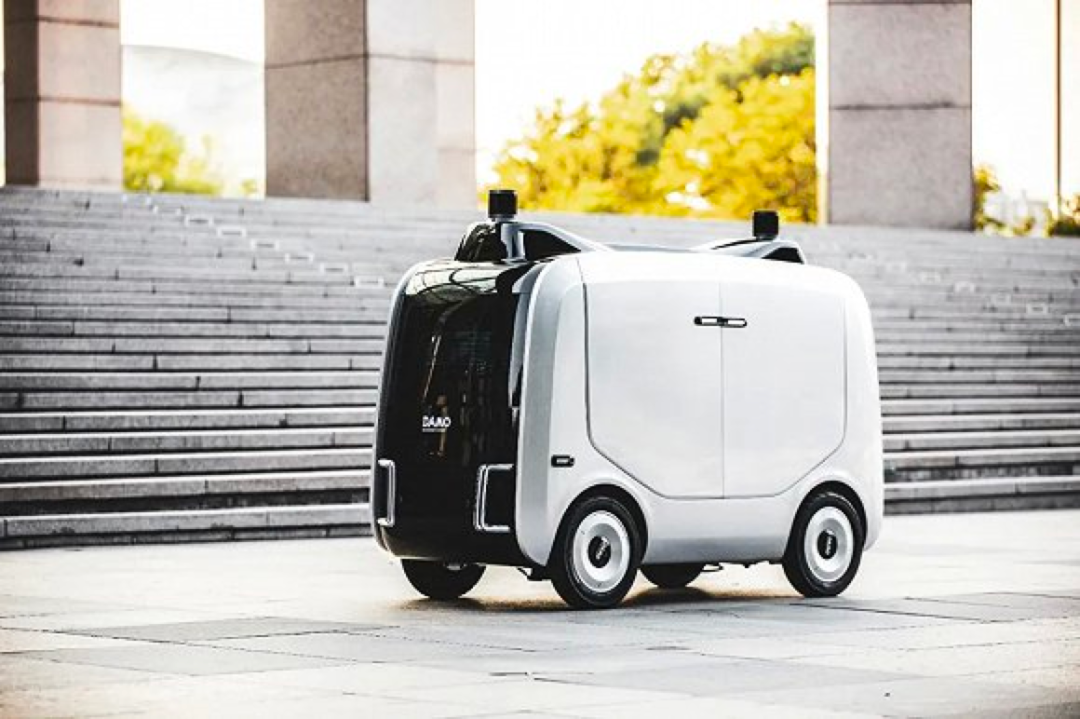
China’s autonomous delivery vehicle sector is rapidly moving from niche trials to commercial scale, fueled by a surge in investment, falling hardware costs, and a viable business model centered on urban logistics. As startups and established auto suppliers race to deploy thousands of electric vans, the industry is emerging as one of the first and most promising applications of driverless technology to achieve mass adoption.
Investor confidence is surging, with three leading startups—Neolix, Jiushi (Suzhou) Intelligent Technology, and White Rhino Zhida (Beijing) Technology—collectively securing over RMB 3.5 billion yuan (approximately $480 million) in financing in 2025 alone. The influx of capital is accelerating a fierce battle for market share, focused not just on technology but on manufacturing scale, operational efficiency, and aggressive pricing strategies to win over customers.
This push is translating into a dramatic production ramp-up. Neolix announced the production of its 10,000th vehicle on September 23, marking the world’s first autonomous delivery fleet of this size, and both Neolix and I-T-Robot are targeting 10,000 unit deliveries each this year. This represents an exponential leap from the just over 6,000 vehicles operating across the country as of the first half of 2025.
The commercialization boom is underpinned by a clear economic case for small businesses. A factory owner in Jiangsu, for example, recently purchased a driverless van for around 15,000 yuan plus a monthly service fee of 1,800 yuan. He reports the vehicle reliably handles multiple daily routes, effectively replacing a human driver whose salary would start at 5,000 to 6,000 yuan per month, demonstrating a compelling return on investment that is driving adoption.
Maturing Use Case Drives Product Standardization
The industry's recent breakthrough follows years of exploration that has now converged on a specific, high-value logistics scenario: middle-mile delivery. Instead of complex last-mile routes to individual consumers, these vehicles now primarily handle bulk transport between fixed points, such as from a courier company’s distribution center to a neighborhood pickup station.
This refined focus simplifies operational challenges, as vehicles can operate on pre-mapped, repeatable routes. It has also driven product standardization toward larger vehicles, with cargo capacities of 5 cubic meters or more, which are more spacious than a typical minivan due to the absence of a driver’s cabin. From this core use case in package delivery, the market is expanding into on-demand logistics and specialized urban distribution for fresh produce and medicine.
The clarity of this product definition has attracted established automotive suppliers. Desay SV Automotive and Minieye, both major players in the passenger car sector, unveiled their own autonomous delivery vans in September. Desay SV’s "Chuanyun S6" offers a 6-cubic-meter capacity, while Minieye’s "Xiaozhu" vehicle comes in 5.5- and 8.5-cubic-meter variants, with the larger model also targeting industrial and port logistics.
Passenger Car Boom Slashes Vehicle Costs
The dramatic cost reduction in autonomous delivery vehicles is largely a spillover effect from China’s hyper-competitive passenger electric vehicle market. Intense competition has driven down the price of key components like LiDAR sensors, while also creating a clear technology roadmap and a deep pool of engineering talent.
New entrants are leveraging their scale in the passenger car market to gain a competitive edge. Minieye CEO Liu Guoqing stated his company can procure identical automotive-grade components for 40% less than competitors without its supply chain access. This focus on automotive-grade quality aims to extend vehicle lifespans to at least three years, which is seen as critical for achieving profitability.
Incumbents are also evolving. Neolix, which utilizes production lines from a former Li Auto low-speed EV project, has optimized its sensor suite to a single LiDAR and 12 cameras. White Rhino has reduced its computing needs to a single Nvidia Orin chip. These cost-saving measures, combined with partnerships with established commercial vehicle manufacturers like XCMG and Geely Farizon, are making the vehicles increasingly affordable.
Price Wars and New Business Models Target Mass Market
To accelerate adoption, companies have launched aggressive pricing strategies and flexible business models. The focus is shifting from large corporate clients like SF Express to a vast, untapped market of small businesses and individual franchisees, who value standardized products over custom solutions.
I-T-Robot made waves in May by launching a new vehicle with a sticker price of just 19,800 yuan, supplemented by a monthly "Full Self-Driving" (FSD) service fee starting at 1,800 yuan. Not to be outdone, Neolix has rolled out promotional financing including "zero down payment" and "zero interest" plans for its flagship model, which sells for 115,500 yuan with a lifetime FSD subscription included.
According to a Neolix sales representative, this price competition is primarily aimed at educating the market and lowering the barrier to entry, rather than engaging in a cutthroat battle for survival at this early stage. Many early adopters are reportedly purchasing models from multiple brands to compare performance in real-world operations.
Operational Scale and Regulation Remain Key Hurdles
With vehicle sales margins razor-thin, long-term profitability hinges on operational efficiency at scale. Key challenges include the cost of deploying vehicles, which requires a specialized mapping vehicle to survey new routes, and the labor involved in remote monitoring and intervention.
Companies are working to automate these processes. Neolix is developing the capability for its vehicles to create maps themselves, while I-T-Robot is pursuing a "light map" approach to reduce reliance on high-definition maps. According to Minieye's CEO, achieving city-level density is crucial; operating 100 vehicles in a single city costs only about three times as much as operating 10, cutting the per-vehicle operational cost by 70%. The company’s strategy involves targeting logistics-heavy cities and rapidly deploying 300-500 vehicles to achieve economies of scale.
However, the biggest immediate obstacle to scaling is regulation. While national and local governments have expressed strong support—with China Post recently announcing a tender to procure 7,000 units—these vehicles still lack a formal legal identity. They currently operate under a patchwork of local testing and demonstration permits, which limits the number of vehicles allowed on public roads in any given city. Until a clear national framework for road rights is established, the path from a promising business to a fully scaled industry will remain a gradual process.