
China’s Tech Giants Reshape Global Imaging With AI and Mobile Focus
The global imaging industry’s center of gravity is shifting to China, a historic transition powered by a mobile-first philosophy, a colossal domestic market, and formidable strengths in artificial intelligence and supply chain integration. This move marks the third major power transfer in the industry's history, following Germany’s era of optical precision and Japan's age of electronic dominance.
Chinese technology firms are no longer just participants but are now setting the pace, defining new product categories and user experiences that challenge traditional camera paradigms. Companies from smartphone maker OPPO to drone leader DJI are leveraging computational photography and advanced manufacturing to place powerful imaging tools in the hands of mass-market consumers, with innovations like OPPO’s Find X9 series making 8K ultra-clear video a new standard for mobile devices.
This pivot is disrupting the longstanding duopoly of Japanese and German titans and reshaping the industry's value chain from the ground up. For investors, the trend signals a new competitive landscape where China's unique ecosystem—encompassing everything from domestic sensor development to vibrant social sharing platforms—is creating a self-sustaining cycle of rapid innovation and commercialization.
“China's imaging industry is advancing together with innovations in optics, sensors, and foundational algorithms, all supported by a rich sharing ecosystem,” Duan Yaohui, Senior Vice President of OPPO, said in a recent interview. “I have every reason to believe that the future of imaging is in China.”
A Historic Power Shift
The history of modern imaging has been defined by two distinct eras. The first belonged to Germany, where optical giants like Leica, Zeiss, and Schneider established the bedrock of lens design and precision manufacturing. Their mastery of glass and mechanical engineering produced legendary cameras whose image quality remains impressive today.
The second era was seized by Japan, which adeptly rode the wave of electronics and semiconductors. Following World War II, companies like Sony Corp., Canon Inc., and Nikon Corp. pioneered breakthroughs in CCD and CMOS sensors, leading the transition from film to digital. They outmaneuvered their German rivals by focusing on electronic single-lens reflex (SLR) technology, driving down prices, and achieving mass-market scale. This strategy made cameras an accessible consumer product and cemented Japan's leadership for decades. That era peaked in 2010 with global camera sales hitting an all-time high of 120 million units, a figure that plummeted to just 8.3 million by 2024.
The Mobile-First Revolution
The decline of the dedicated camera coincided precisely with the rise of the smartphone. Global smartphone shipments grew from 297 million in 2010 to 12.4 billion in 2024, and with them, the camera became the most-used application. This transition to mobile imaging is built on three technological pillars where smartphone makers now hold a decisive advantage.
First is the sensor race. Developing a new sensor can cost tens of millions of dollars, a risky investment for a shrinking camera market that might only update a model every few years. In contrast, high-volume smartphone brands launch multiple models annually, driving relentless iteration in CMOS technology and enabling 200-megapixel sensors on a chip the size of a fingernail.
Second is a vast computational power gap. While many digital cameras still use processors built on legacy 40-60nm process nodes, smartphones feature cutting-edge 3nm and 5nm chips. "Whether it's a Qualcomm or MediaTek chip, phones are now using 3-nanometer and 5-nanometer technology," said Gu Ze, a veteran in the imaging sensor industry. “In terms of computing power, capability, and power consumption, today’s phones are far stronger.” This allows for sophisticated computational photography techniques like multi-frame synthesis and AI-driven noise reduction in real-time.
Finally, China possesses an unparalleled "shoot, edit, share" ecosystem. Platforms like Douyin, Xiaohongshu, and WeChat are not just content outlets but engines that drive imaging innovation. They form the final link in a vertically integrated industry chain, creating a complete loop from capture to consumption that is fuelling demand for better mobile imaging.
China’s Unmatched Industrial Might
The imaging revolution is happening in China due to a unique "industrial cluster" advantage that other nations cannot easily replicate. This advantage rests on a virtuous cycle of market demand, profitability, and supply chain investment. “Market demand is decided by China; it is the world’s largest consumer market for mobile imaging, and that is China’s trump card,” said Li Jun, Senior Director of Marketing at Q Technology (Group) Company Limited (丘钛科技(集团)有限公司).
This massive market allows Chinese firms to reinvest profits into R&D and manufacturing at scale. As a result, suppliers like Sunny Optical Technology (Group) Co., Ltd. and Q Technology have become global leaders, with the top three module makers collectively holding over 60% of the market in 2024. These companies have perfected vertical integration, developing in-house capabilities for nearly every core component except the main processing chip. This "one-stop shop" model gives phone brands lower costs, greater quality control, and faster response times.
This ecosystem is further amplified by China’s leadership in automated, AI-driven manufacturing. The sheer scale of demand—billions of mobile camera lenses annually—is met by a hyper-efficient system. “China has the most mature industrial chain, from raw materials to upstream and downstream support, coupled with large-scale automated production, digital process management, and intelligent control,” said Zhou Qiqun, Head of the Camera Module Department at OPPO. This speed and flexibility are a core competitive advantage. Zhou noted that in the past, prototyping a new camera module could take six months; now, with in-house 3D printers and advanced equipment, a working demo can be built in about a month.
A New Blueprint for Innovation
Beyond manufacturing prowess, Chinese firms are increasingly leading with user-centric innovation. OPPO’s Find X9 series exemplifies this approach, designed specifically to address emergent consumer needs, such as capturing high-quality video at concerts.
The phone’s system offers "all-focal-length 8K ultra-clear" video, supported by a 200-megapixel telephoto lens. This allows users to capture detailed, high-resolution footage from afar without loss of quality, a common pain point for concertgoers. The technology, powered by OPPO’s self-developed LUMO super-pixel fusion engine and advanced core-chain computing that offloads tasks to the phone's 3nm flagship chip, ensures stable, low-power 4K recording for up to an hour.
The company is also innovating on the software and ecosystem front. It has reinvented "Live Photos," enabling 4K-quality dynamic images, and collaborated with the social platform Xiaohongshu to allow direct sharing of this high-resolution content. This focus on user experience is backed by a massive investment in R&D; OPPO's imaging technology center now employs over 1,000 people across camera, display, and audio teams.
Beyond the Smartphone
The innovation extends beyond smartphones. Chinese companies are creating new categories by targeting specialized needs. Insta360 sidestepped competition with traditional camera makers by pioneering 360-degree cameras and creating viral features like the "invisible selfie stick." Its strategy focuses on lowering the barrier to creation and shifting the creative process from shooting to post-production editing, making it an intuitive and fun experience.
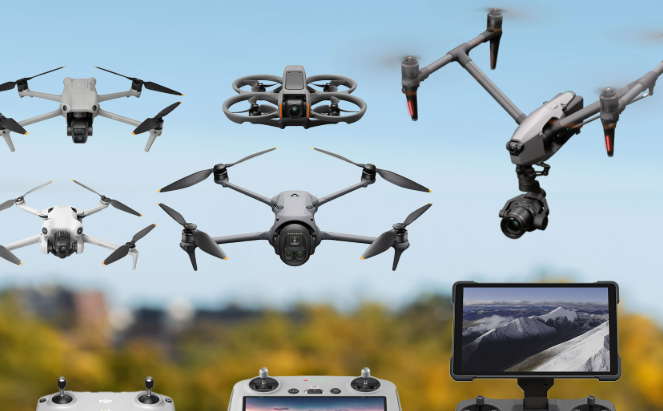
Meanwhile, a market leader in its domain, DJI has excelled at making professional-grade technology accessible to an expanding consumer base. It has systematically trickled down high-end features from its professional drones to more affordable consumer models and handheld gimbals. DJI’s strength lies in building a reliable, integrated ecosystem of hardware and software that helps creators avoid mistakes from happening in the first place, ensuring a dependable, high-quality output.
A Vision for the Future: Emulating the Human Eye
Looking back, the journey from 2-megapixel phone cameras to today’s 200-megapixel powerhouses reflects a relentless drive toward a singular goal. “Why do people take pictures? Because their eyes see a moment worth recording,” said OPPO’s Zhou Qiqun. “OPPO's core principle for cameras is to study the human eye. How it works and how vision is formed is the direction we should strive for.”
This philosophy reframes the pursuit of high-pixel sensors not as a marketing game but as a necessary step toward achieving true "what you see is what you get" fidelity. Chinese innovators have successfully turned the smartphone into a powerful imaging studio for everyone.
With its unparalleled market scale, advanced manufacturing, integrated supply chain, and a new generation of user-focused innovators like OPPO, DJI, and Insta360, China is not just competing but leading. This moment marks the beginning of a new era, one in which the global imaging industry will be increasingly defined by Chinese innovation.