
Chinese Analog Chipmaker Novosense Offers 487 Million Yuan for a Loss-Making Radar-Chip Firm
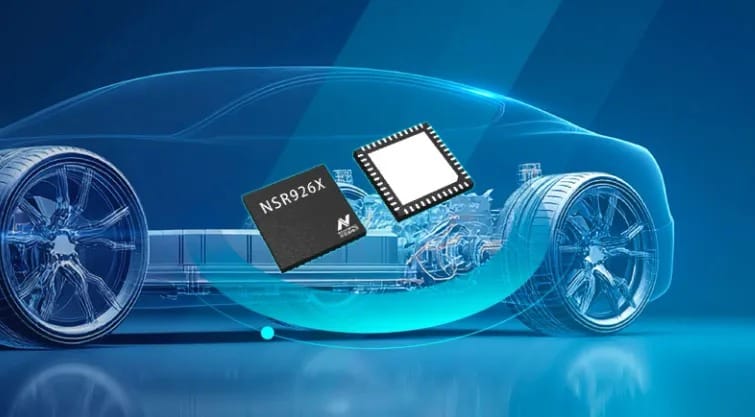
Suzhou Novosense Microelectronics, the Chinese analog-chip designer listed in Shanghai and Hong Kong, has agreed to pay 486.93 million yuan in cash for a 78.1520% stake in Ningbo Gekong Intelligent Technology, a radar-chip firm that is still losing money and has not begun mass production of its first automotive radar chip.
The purchase, approved by Novosense’s board on Monday and disclosed as Shanghai Stock Exchange announcement 2026-058, would make Gekong a consolidated subsidiary. The deal is not classified as a related-party transaction or a major asset restructuring, and it does not need a shareholder vote. Closing is not assured: as of the announcement, the conditions for completion had not all been met, and Novosense had not yet taken title to the shares.
Novosense, also known as 纳芯微 and listed as 688052.SH and 2676.HK, designs analog and mixed-signal chips in sensors, signal chain and power management, with a focus on automotive, industrial and energy, and consumer devices. It completed a Hong Kong listing in December 2025.
In the announcement, the company said the acquisition would add microwave and millimeter-wave radar sensor chips to that lineup and extend its automotive-electronics and sensing coverage from individual chips toward broader chip-and-system packages.
What Gekong actually sells today is more modest than that ambition. Founded in December 2017 and based in Ningbo’s high-tech zone, the company designs microwave and millimeter-wave radar sensor chips and modules, plus production-test and waveform-analysis software. Those products are used in smart lighting, home appliances, security, the internet of things, industrial control and intelligent transportation.
Chips in the 5.8 GHz, 10.5 GHz, 24 GHz and 60 GHz bands are already in volume production. Its first 77 GHz millimeter-wave radar system-on-chip, the product that matters for cars, has finished development and is still being introduced at leading customers in China.
That gap shows up in the accounts. Audited carve-out figures prepared for the deal, which exclude a Nanjing module business that Gekong is still in the process of spinning off, show 2025 revenue of 77.59 million yuan and a net loss of 56.43 million yuan. Research and development spending was 69.14 million yuan, or 89% of sales.
In the first four months of 2026, revenue was 34.63 million yuan, the net loss was 14.32 million yuan, and R&D still absorbed 75% of sales. Novosense said the losses reflect heavy spending on automotive-grade chips and the long cycle for development, qualification and customer adoption. The 77 GHz product “has not yet reached mass production, and its revenue is still too small to cover research and operating costs.”
The company is nonetheless paying a control premium for that roadmap. Shanghai Dongzhou Assets Appraisal valued 100% of Gekong’s equity at 635 million yuan as of April 30, 2026, using an income approach, against book net assets of 172.36 million yuan, a 268% markup.
A market-approach valuation came in at 670 million yuan; Novosense said it took the more conservative income-approach figure as the reference. The cash being paid for the 78.1520% stake is 486.93 million yuan, and there is no performance earn-out.
The sellers are not all exiting at the same price. Novosense used what it called differentiated pricing within the overall appraisal: the heirs of Gekong’s late founder, Lin Shuiyang, an employee shareholding platform, and six early financial investors were priced off book net assets at the valuation date; the other financial investors were priced with reference to their own investment cost.
Among the institutions selling are Intel Asia-Pacific Research & Development, which is transferring 7.1222% for 50 million yuan, to be paid in a single installment, and Hubei Xiaomi Yangtze River Industry Fund, which is transferring 6.1251% for 39.20 million yuan.
The remaining 21.8480% stays with people Novosense wants to keep. Song Ying, a co-founder, the company’s legal representative and its research head, is not selling his 2.4856% stake. Employee platforms Ningbo Jingxin, Ningbo Jingqing and Ningbo Jingxuan will together hold 19.3624%.
Those residual holdings cannot be transferred or pledged without Novosense’s written consent, and departing partners can be forced to sell. Core staff have also signed non-compete agreements covering their time at the company, their time as shareholders, and two years after they leave.
Novosense can pay cash, but it also plans to borrow. It will fund the purchase with its own money and with a planned acquisition loan of up to 350 million yuan, for a term of no more than 10 years.
As of Sept. 30, 2026, the company said it held about 2.67 billion yuan in cash and trading financial assets. After the loan, it estimated its debt-to-asset ratio at about 28.77%.
In its third-quarter report, Novosense’s sales were growing quickly, but profits were still thin: third-quarter revenue was 1.69 billion yuan, double the year-earlier period, and net profit attributable to shareholders was 16.06 million yuan.
For the first nine months, revenue was 4.23 billion yuan, up 79%, and attributable net profit was 83.66 million yuan, but profit excluding one-off items was still a loss of 35.33 million yuan. Operating cash flow for the nine months was an outflow of 815 million yuan.
The commercial judgment is therefore narrower than a simple expansion into car radar. Novosense is buying control of a still-unprofitable design house whose volume business is in lighting, appliances and other lower-frequency radar, and whose automotive chip is only now going into customer trials.
Early backers, including an Intel affiliate and a Xiaomi-backed fund, are selling. There is no profit guarantee to protect the buyer if the 77 GHz product is slow to land.
If Gekong cannot turn a profit after the deal closes, Novosense warned that the target will weigh on consolidated earnings in the near term, and that goodwill created on closing will have to be tested for impairment every year.
Related Coverage:
Chinese Chip-Tool Power Supplier Shenzhou Semiconductor Clears STAR IPO Review
Robotics, Chips, and Display Tech Boom: Strongest Chinese Lineup Heads to CES 2026