
Chinese Appliance Giants Bet on AI Glasses to Seize Next Hardware Frontier
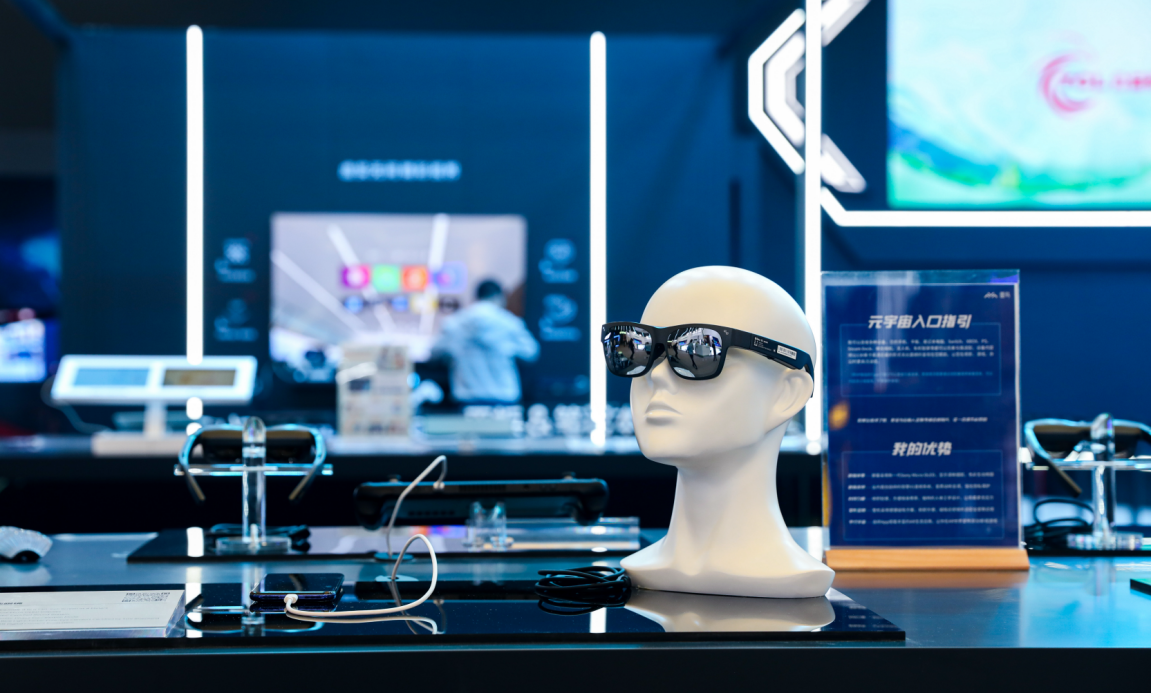
China’s traditional home appliance heavyweights are increasingly pivoting toward the artificial intelligence (AI) eyewear sector, leveraging their extensive supply chain capabilities to secure a foothold in a market projected to exceed RMB 100 billion (US$13.7 billion). Leading manufacturers, including TCL Electronics and Hisense Visual Technology, are moving aggressively to transition from mature household electronics to the high-growth domain of wearable optical technology.
The momentum in this sector accelerated significantly in 2025, marked by strategic alliances and new production capabilities. Notable developments include Hisense Visual Technology’s partnership with XREAL in February to co-develop high-end optical solutions, and Ningbo Biyi Appliances’ confirmation in November regarding the establishment of dedicated assembly lines for AR glasses. These moves underscore a strategic shift where legacy manufacturers are utilizing their expertise in display technology and precision manufacturing to address the complex hardware demands of AI glasses, effectively moving beyond the "geek toy" phase into mass consumer adoption.
This industrial migration is driven by a confluence of technological breakthroughs and market validation following the success of Meta’s smart glasses. Analysts forecast global shipments of AI glasses to surpass 10 million units in 2025, fueled by the deployment of edge-side small models capable of natural interaction despite lower power consumption. For Chinese manufacturers, the entry logic centers on capturing high-value components—specifically optical modules and chips—rather than merely acting as final assemblers in an ecosystem likely to be dominated by operating system giants.
Investors are closely monitoring this sector as a critical growth engine to offset slowing demand in traditional appliances. While the market potential is vast—with an addressable market of 1.45 billion optical frames globally—the competitive landscape remains bifurcated. Hardware manufacturers are racing to secure proprietary optical technologies to avoid the commoditization trap seen in the smartphone era, where software ecosystem owners captured the majority of industry profits.
Leveraging Supply Chain Depth
The entry of appliance manufacturers into the AI glasses space is not an experimental venture but a calculated application of industrial advantages. According to Founder Securities, these companies are aiming to occupy the "value highlands" of the next-generation hardware platform. The cost structure of display-enabled AI glasses reveals why: optical display modules account for 35% to 45% of total costs, while main control chips constitute another 20% to 30%.
By utilizing existing capabilities in semiconductor-grade lithography, precision etching, and miniaturization, these firms are attempting to control the most expensive components of the bill of materials. This vertical integration strategy is designed to create a defensive moat against pure-play software companies and traditional eyewear brands.
Diverse Entry Strategies
Different players are adopting distinct approaches based on their core competencies, ranging from proprietary branding to specialized OEM services and component supply.
Brand and Technology Integration: TCL Electronics has invested heavily in RayNeo Innovation, securing a stake of over 35% in conjunction with its founder. RayNeo leverages synergies with TCL’s display arm, using semiconductor-grade lithography equipment to manufacture high-precision optical waveguides. Their product portfolio has expanded to include the Air series for immersive viewing and the X3 Pro, which features proprietary MicroLED optical engines and diffraction optical waveguides.
Similarly, Hisense Visual Technology has engaged in a dual strategy. Beyond launching its own Vidda G11 smart glasses and MR V3 Pro for enterprise use, Hisense formalized a strategic cooperation with XREAL in February 2025. This partnership combines Hisense’s display technology and AI large model capabilities with XREAL’s spatial computing expertise to target the global market.
Manufacturing and Assembly (OEM): Ningbo Biyi Appliances, known for small appliances like air fryers, is migrating its precision manufacturing capabilities to wearable tech. Biyi invested RMB 30 million (US$4.1 million) in newly emerging optical firm Lihui Optoelectronics to secure geometric waveguide technology. In November 2025, Biyi revealed it had established carrier facilities for AR glasses assembly, aiming to solve specific manufacturing pain points such as lens scratching during handling and high-precision adhesive dispensing for irregular frames.
Core Components: Appotronics is focusing exclusively on the upstream supply chain, providing LCoS optical engines and waveguide solutions rather than finished consumer products. The company has secured an initial order for 10,000 units from Gudong Intelligence and is actively repurposing its laser display technology for miniature AR applications, validating the "same tech, new application" model.
Market Potential and Consumer Behavior
The total addressable market for AI glasses is substantial. Excluding sunglasses, global annual eyewear sales stand at approximately 1.45 billion pairs. If AI-enabled versions achieve just a 10% penetration rate, global shipments could reach 145 million units.
Consumption patterns differ markedly by region. Mature markets are driven by "emotional value," such as content creation and social sharing exemplified by Meta’s user base. In contrast, developing markets, particularly China, prioritize "productivity and tool internalization," where users pay for efficiency gains. This aligns with forecasts that the retail scale of eyewear products in China alone will reach RMB 128.3 billion (US$17.6 billion) by 2029, providing a solid foundation for AI glasses integration.
The Ecosystem Battle
Despite the hardware innovations, a long-term risk remains regarding value distribution. The industry trajectory mirrors the smartphone evolution, where OS owners (like Apple and Google) eventually captured the bulk of systemic value through app ecosystems and service revenue, squeezing margins for hardware assemblers.
Currently, the hardware giants are investing in the "hard tech" of optics and chips to maintain bargaining power. However, as the industry evolves from hardware miniaturization toward full metaverse and social integration, the entities that control the operating system and ecosystem interface—akin to the iOS or Android of eyewear—are poised to extract significant value, potentially challenging the margins of pure hardware manufacturers in the long run.